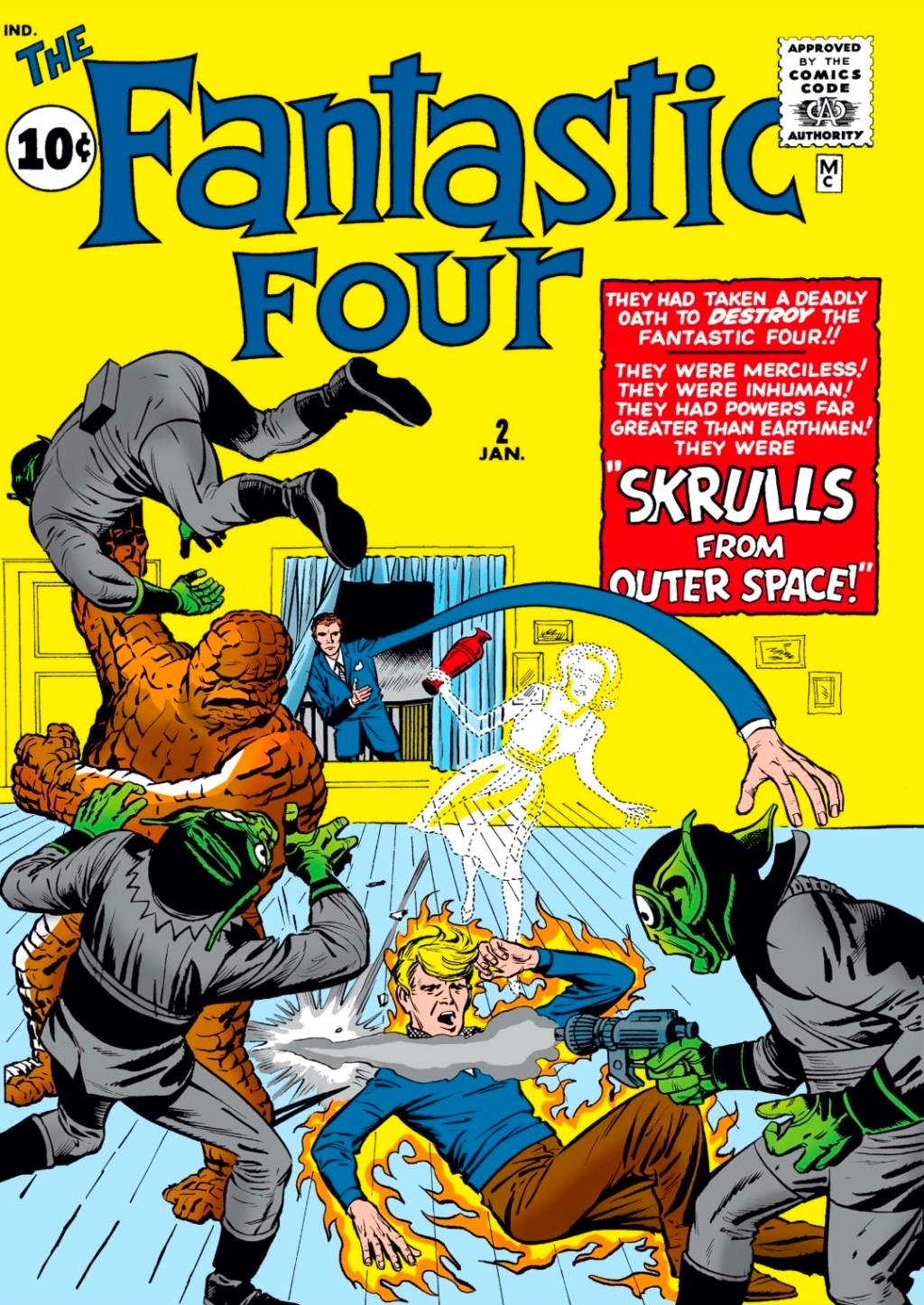
Written by Stan Lee – Penciled by Jack Kirby – Inked by George Klein – Lettered by Art Simek
The Skrull arrives — Marvel still feels like it’s making a sci-fi horror book.
This is an important step forward for Marvel comics. It introduces the Skrulls. It drops a Daily Bugle reference. It mentions Journey Into Mystery and Tales To Astonish (which were still anthology books at the time) and it seems to widen the world just a little beyond the first issue of Fantastic Four.
And yet it still plays like a pulp 1950s sci-fi alien story.
The Fantastic Four are now public figures, but they don’t feel like polished superheroes. They hide in a cabin. They wear plain clothes. They keep rifles nearby. When we see Johnny casually handling a gun it feels less like superhero business and more like a Cold War B-movie.
They aren’t really a team. They behave more like a group of people forced together. They don’t plan, they react. They argue. They improvise.
And Ben? Well, Ben is, to put it kindly, unsettled.
When he shouts, “At least you’re human!” at Johnny, it isn’t playful bickering. It’s a real cry of bitterness and anger. Early Ben feels less like the blue-eyed Thing and more like a creature who hasn’t accepted what he’s become. His design is still rough around the edges — uneven, heavy, almost burdened by its own weight. And his appearance adds to that Hollywood horror feel to this book.
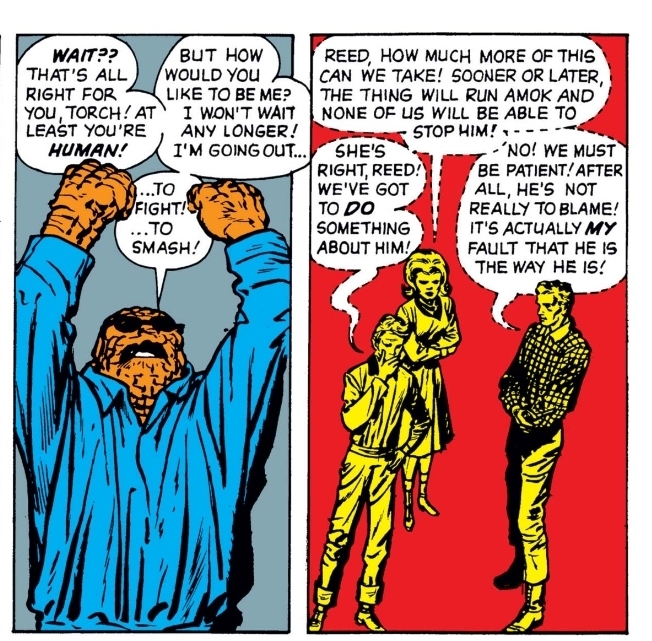
There’s a little bit of the Claude Rains Invisible Man in him here — not just thematically, but visually. The transformed man who can’t comfortably exist in the world anymore. The anger that comes from humiliation. The sense that he’s barely holding it together. The only difference is where The Invisible Man turned to madness, Ben directs his rage at the antagonists. But is he really invested in saving Earth or is this just an opportunity to recklessly lash out?
Reed’s admission that Ben’s condition is his fault lands hard this early when you realize it is a recurring theme for The Fantastic Four. That guilt — which will echo for decades — isn’t grand yet. It’s immediate. Personal. He’s not worrying about the universe. He’s worried about what might happen if his friend snaps.
Then the Skrulls arrive.
The infiltration angle is pure sci-fi paranoia — impostors, deception, mistrust. But the resolution doesn’t feel like the beginning of some sweeping cosmic saga. It feels like the final twist of a stand-alone alien tale from the pages of a Marvel anthology series.
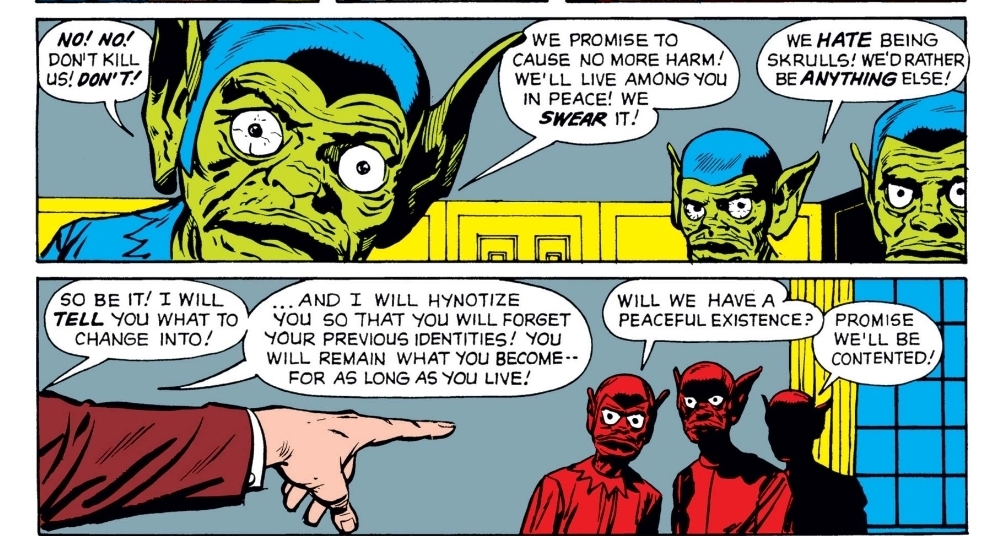
Reed obliges the Skrull’s request for punishment that promises them peace — in the strangest way possible. Hypnosis. Identity erased. Transformed into cows.
It’s clever. It’s absurd. It’s slightly cruel. And in this moment, the Skrulls feel almost disposable — like so many alien species Lee and Kirby had tossed into earlier monster stories. There’s no sense yet that this race will become one of Marvel’s great recurring threats. Here, they’re simply outwitted and written off in the way so many of the pre-Fantastic Four books would. It almost feels as if this story was retrofitted for this book instead of being born organically.
That’s what makes Fantastic Four #2 so interesting. It’s widening the scope of the series while still operating with the instincts of a pulp horror and science-fiction comic. It’s got one foot in the future and one foot in the past while it tries to figure out what kind of superhero book it wants to be.
Marvel in the 60s – Entry #2
 Everything
Leave a comment