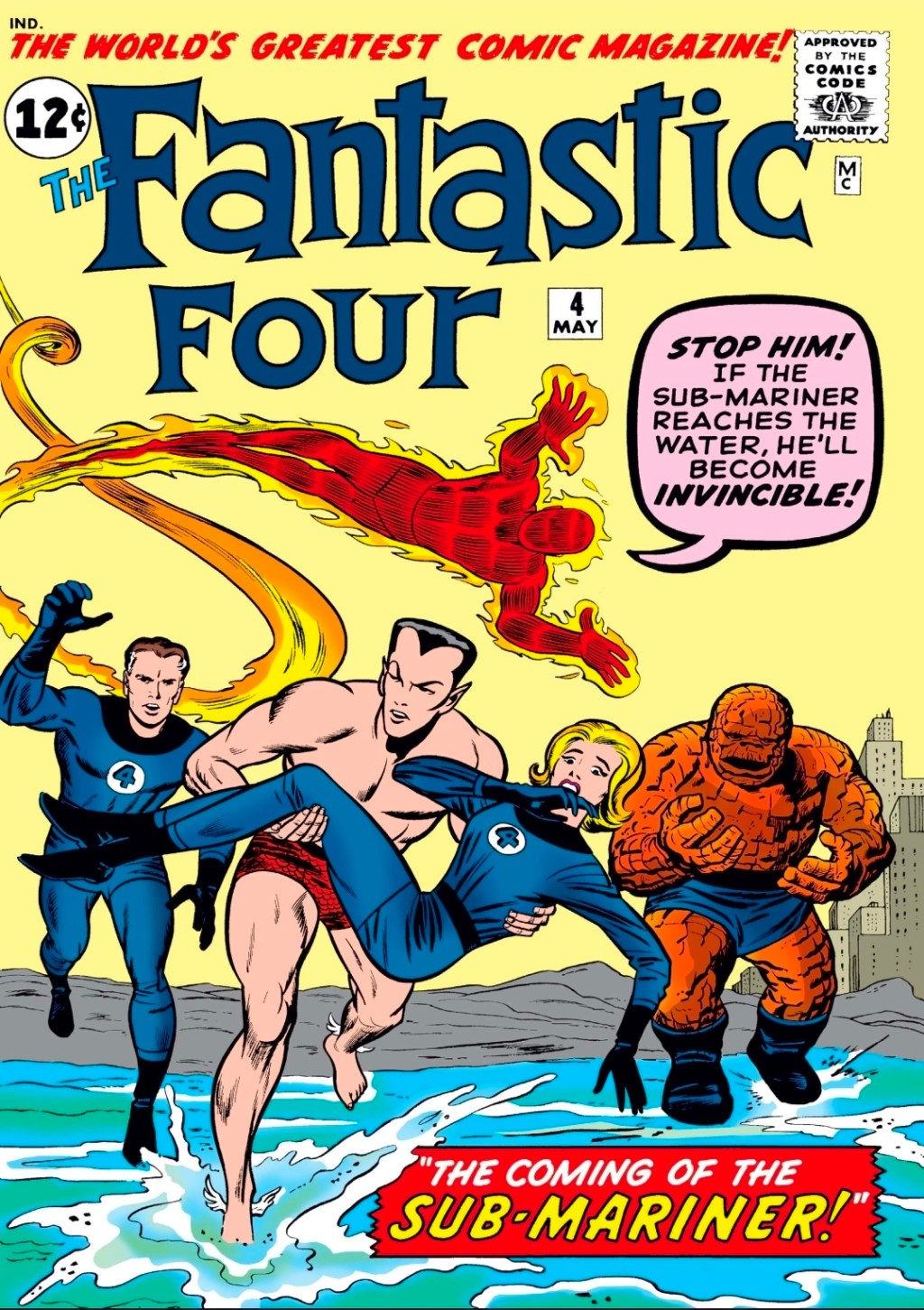
Written by Stan Lee – Penciled by Jack Kirby – Inked by Dick Ayers – Lettered by Art Simek
The moment Marvel realizes it has a past and a future.
Four issues in, and something shifts.
The book opens not with the set-up of this month’s adventure, but with a continuation of an ongoing plot — the team still dealing with Johnny’s disappearance from the previous issue. That alone feels different. This isn’t a story resetting itself. It’s remembering.
And because of that, Marvel stops feeling like an anthology and starts feeling like a world being lived in.
There are small signs everywhere showing Marvel’s evolution in developing characters. Little bits of humor, like the moment when onlookers watch in slapstick shock as liquid disappear from a glass while an invisible Sue casually drinks through a straw. It’s playful. Human. A reminder that these characters live in their powers, not just fight with them.
Even the bottom-of-the-page teasers asking “What is The Hulk?” makes this feel like a company stretching outward. Something is coming. The world is getting bigger.
The melodrama shifts too. Ben has a huge emotional moment that reframes his curse as The Thing. For a brief moment, he transforms back into human form — not triumphantly, but painfully. It’s not a cure. It’s a glimpse.
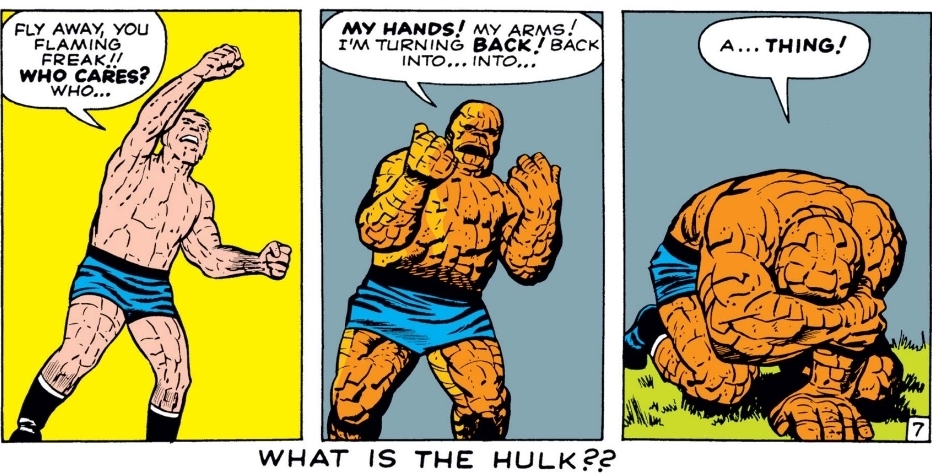
The cruelty of it lands harder than any punch in the book. The Thing isn’t just a monster filled with rage anymore; he’s a man trapped inside one. Those flashes of humanity add melodrama in a way that feels almost like a soap-opera. Marvel leans into suffering as character development.
And then Johnny finds the Submariner, and that’s when you really see how this issue changes everything.
Namor is not a new throwaway villain of the month — he is a revival. A character from Marvel’s Golden Age, pulled forward into 1962 like a piece of buried history resurfacing.
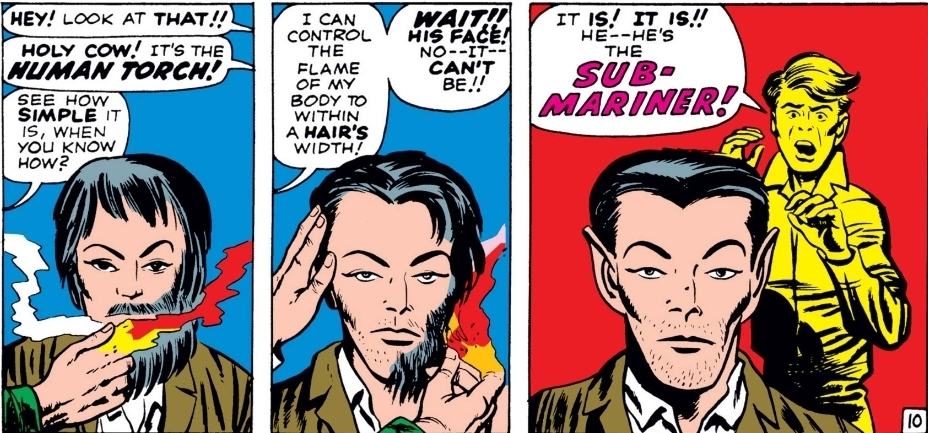
That choice matters. This isn’t just a new antagonist. It’s the past reasserting itself. Marvel acknowledging that it existed before the Fantastic Four.
And Kirby rises to the occasion in creating this brand new world.
The underwater sequences expand the canvas. Sea monsters, ruined kingdoms, dynamic movement. The scale grows exponentially with each page. The team use their powers in more inventive ways. The action staging is more expansive. The imagination is widening.
Ben walking into the mouth of a giant sea creature with a nuclear device strapped to his back is pure atomic-age pulp — wild, reckless, very 1950s sci-fi. The imagery of the Cold War is still humming beneath the surface.
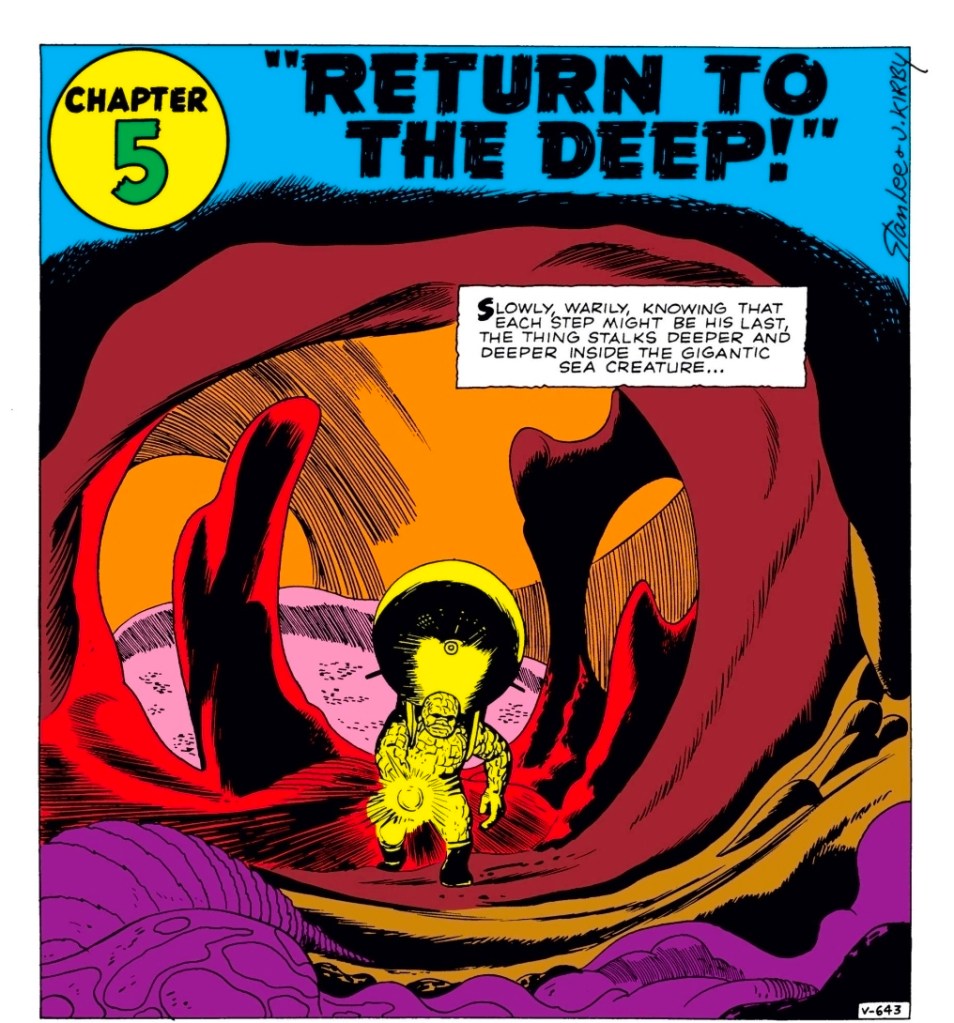
But the most intriguing thread that points to the uniqueness of Marvel storytelling might be a little more subtle than a rock monster walking into a giant sea creatures mouth with a nuclear bomb.
It the dynamic between Namor and Sue.
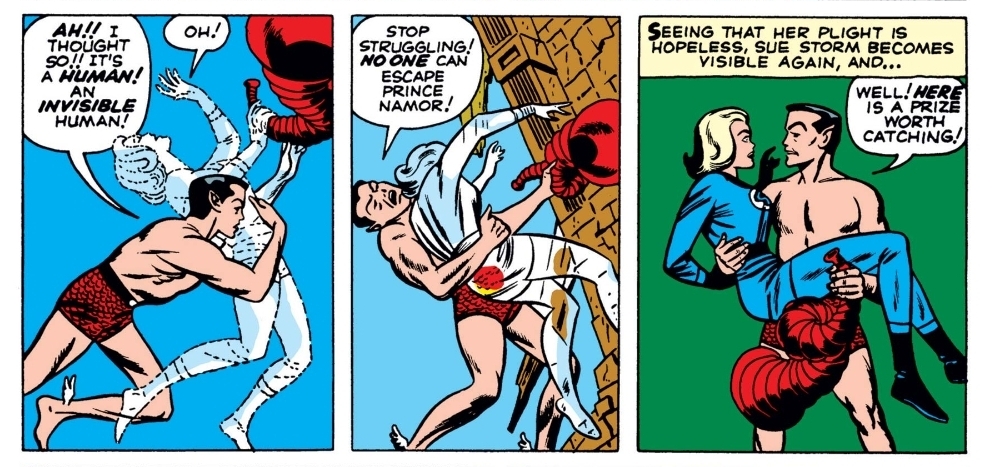
There’s a strange charge to their interactions. Namor is lean, almost androgynous in these early panels — elegant rather than imposing. Which makes his position as a sexual figure an interesting choice in 1962. He and Sue have a physical attraction to each other rooted in passion that introduces something new to the book: a romantic rivalry that feels less awkward than the Reed/Ben jealousy and more dangerous.
Marvel is experimenting not just with action, but with desire and that changes the temperature of the series.
By the end of issue four, the Fantastic Four aren’t just fighting threats. They’re entangled in history. In emotion. In consequence. In legacy.
The book remembers what came before.
It teases what’s coming next.
Marvel in the 60s – Entry #5
 Everything
Leave a comment