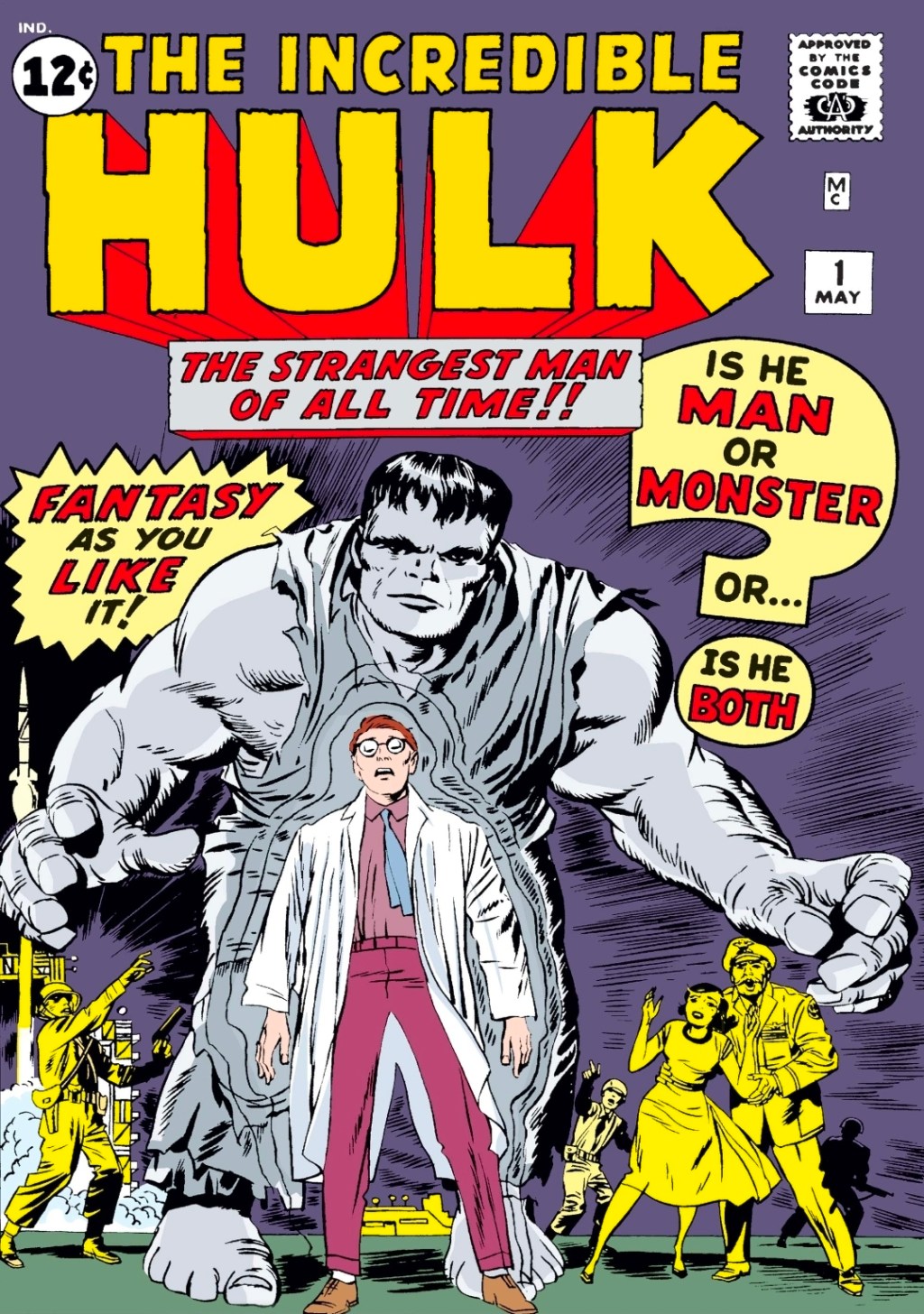
Written by Stan Lee – Penciled by Jack Kirby – Inked by Paul Reinman – Lettered by Art Simek
Marvel trades cosmic adventure for gamma radiation — and stares directly into the atomic bomb.
If Fantastic Four felt like science-fiction spectacle evolving into superhero myth, Hulk #1 feels heavier. Darker. Gothic. It is more attached to the fears of living in the Atomic Age than the wonder of it.
Lee and Kirby lean hard into the Frankenstein imagery — the grey skin (thanks to an early printing quirk that accidentally creates the Grey Hulk), the lumbering silhouette, the sense of man turned monster by science he barely controls. But emotionally, this plays more like Jekyll and Hyde.
Because Bruce Banner isn’t like Ben Grimm. Bruce isn’t just transformed. He’s split.
The gamma bomb test sequence hits differently now than when I read this in a reprint as a kid. Banner racing into ground zero to save Rick Jones is genuinely heroic — and the panels of the blast are harrowing. Kirby stretches the moment. The detonation. The radiation. Banner’s face locked in a trance. The note from Lee which informs the reader that hours later he is still screaming.
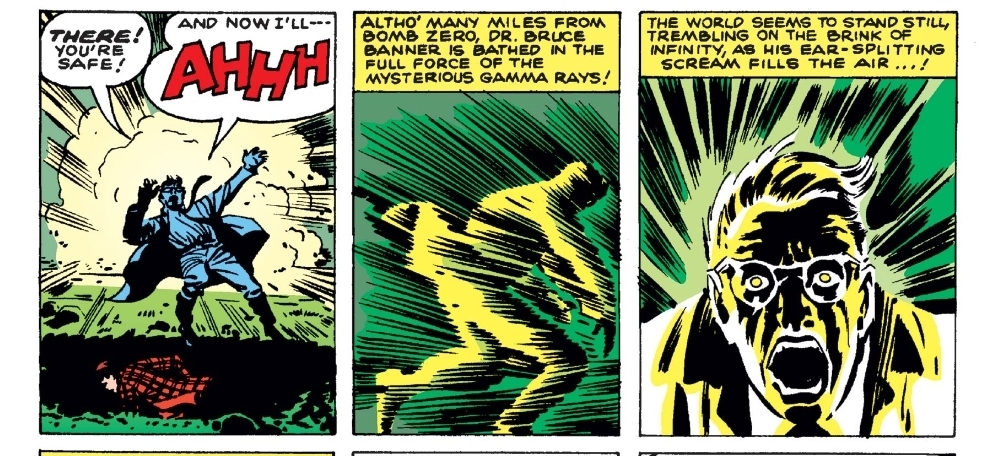
That’s not spectacle. That’s trauma. A theme that will follow The Hulk around for decades to come.
The transformation of Bruce Banner into The Hulk being tied to the moon gives the book a Universal monster movie atmosphere. It’s werewolf logic. And the coloring gives this book some real gothic tension. The army base at dusk feels like a horror set rather that an action sequence.
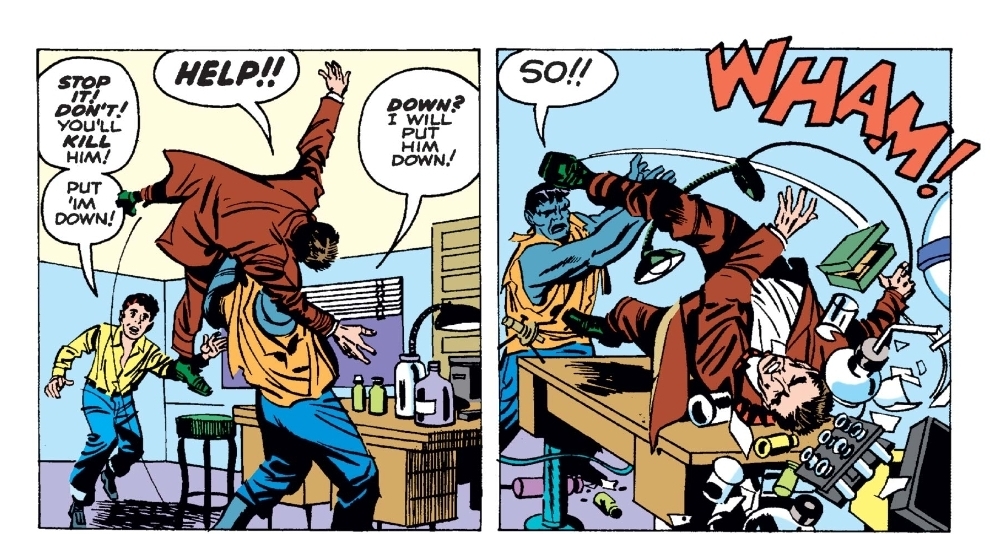
Another thing to note: this Hulk is not the later misunderstood childlike brute. He speaks. He plots. He’s cruel. Banner risks his life for Rick — Hulk swats him aside like an inconvenience. There’s no softness here.
And that’s where the masculinity thread sneaks in.
Banner is drawn small. Slight. Almost frail. General Ross openly mocks him as weak — a “milksop.” Betty defends him. The contrast between Banner and Hulk is exaggerated visually and emotionally. Strength vs intellect. Rage vs repression.
You can almost see the seeds of something Marvel, and comics as a whole, will explore in the future — masculinity as performance. Rage as buried identity. Even though I know where the character goes later, it’s fascinating to watch the early hints of instability and suppressed fury.
The first half of this issue feels like a gothic atomic horror story. The second half pivots hard into Cold War atomic dread.
The Gargoyle enters — twisted, isolated, brilliant. A monster behind the Iron Curtain. Suddenly we’re not in a lab anymore. We’re in global politics. Communism. Rocket bases. International tension.
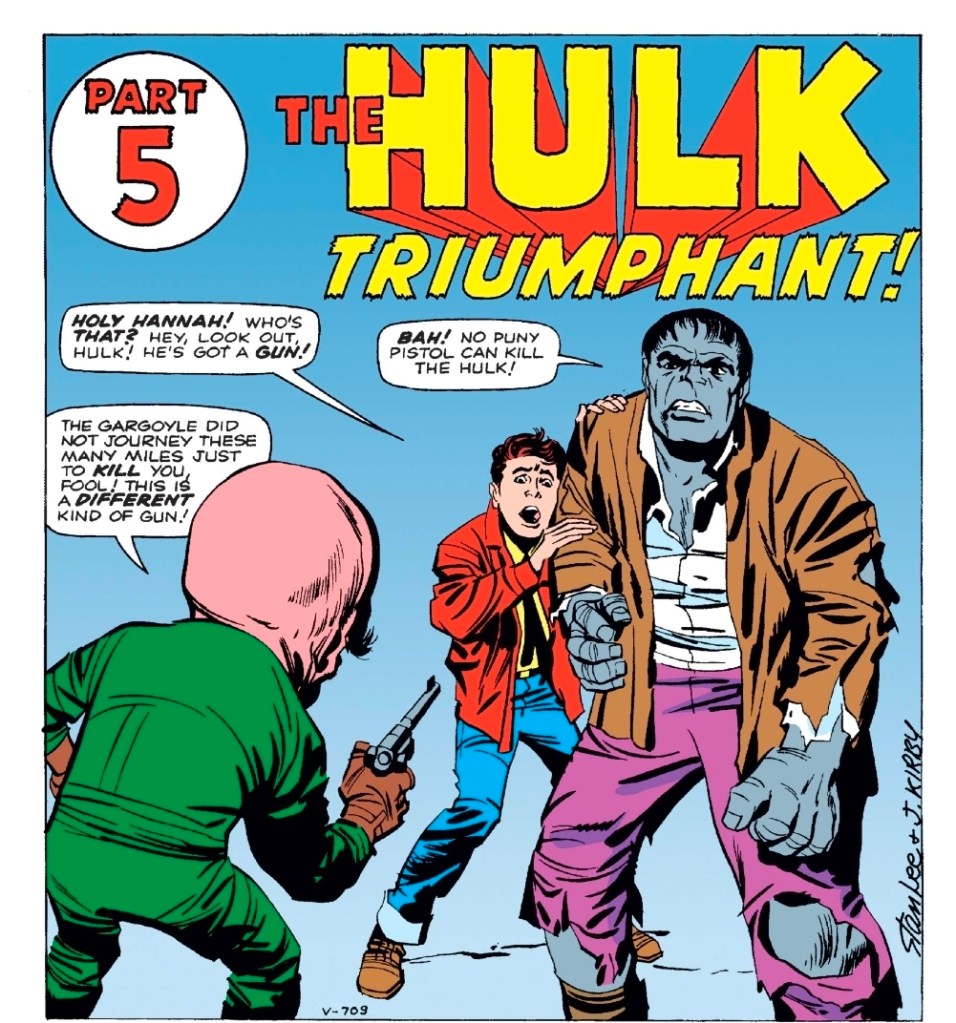
Even though the subjects may not be approached with a sure hand, they expand Marvel outward in a way even the Fantastic Four hadn’t yet. The stakes are global. The politics are explicit. The fear of the bomb is palpable.
Kirby’s action across panels is kinetic and inventive. Hulk smashing a gun across multiple beats until the debris slips from his hand carries a faint anti-war undercurrent. Or at least anti-weapon. The Hulk’s violence feels aimed at the machinery of war itself.
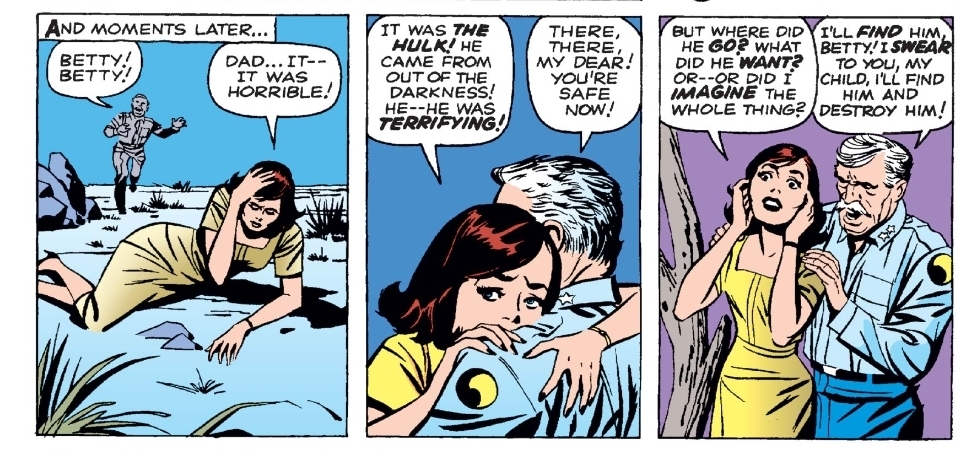
Everything in the book isn’t always handled with grace. Betty, unfortunately, is still mostly a damsel in distress here. The romantic subplot between her and Banner does introduce a new wrinkle in Marvel storytelling. Their love is quiet, almost repressed — unspoken affection neither one dares articulate. Rick Jones, young and brash, feels like he’s there to break up the melodrama with energy and recklessness like a younger sibling.
And then the ending happens in a flash, as if Lee and Kirby realized they were running out of pages. The Gargoyle take Rick and The Hulk to Russia. Banner cures him, turning the twisted Gargoyle into basically Yul Brynner. The Gargoyle choosing sacrifice. Denouncing his “evil” communist ways. Sending Banner and Rick home. It’s tragic. Abrupt. Strangely noble. And perhaps a bit naive.
Hulk #1 is an odd duck. Half universal horror film. Half Cold War thriller. Not yet a clean superhero book. But in its messiness, it might expand Marvel’s world even more aggressively than Fantastic Four did. And it introduces real world fears into this fictional universe.
This isn’t just monsters and adventure.
This is atomic anxiety made flesh.
Marvel in the 60s – Entry #6
 Everything
Leave a comment