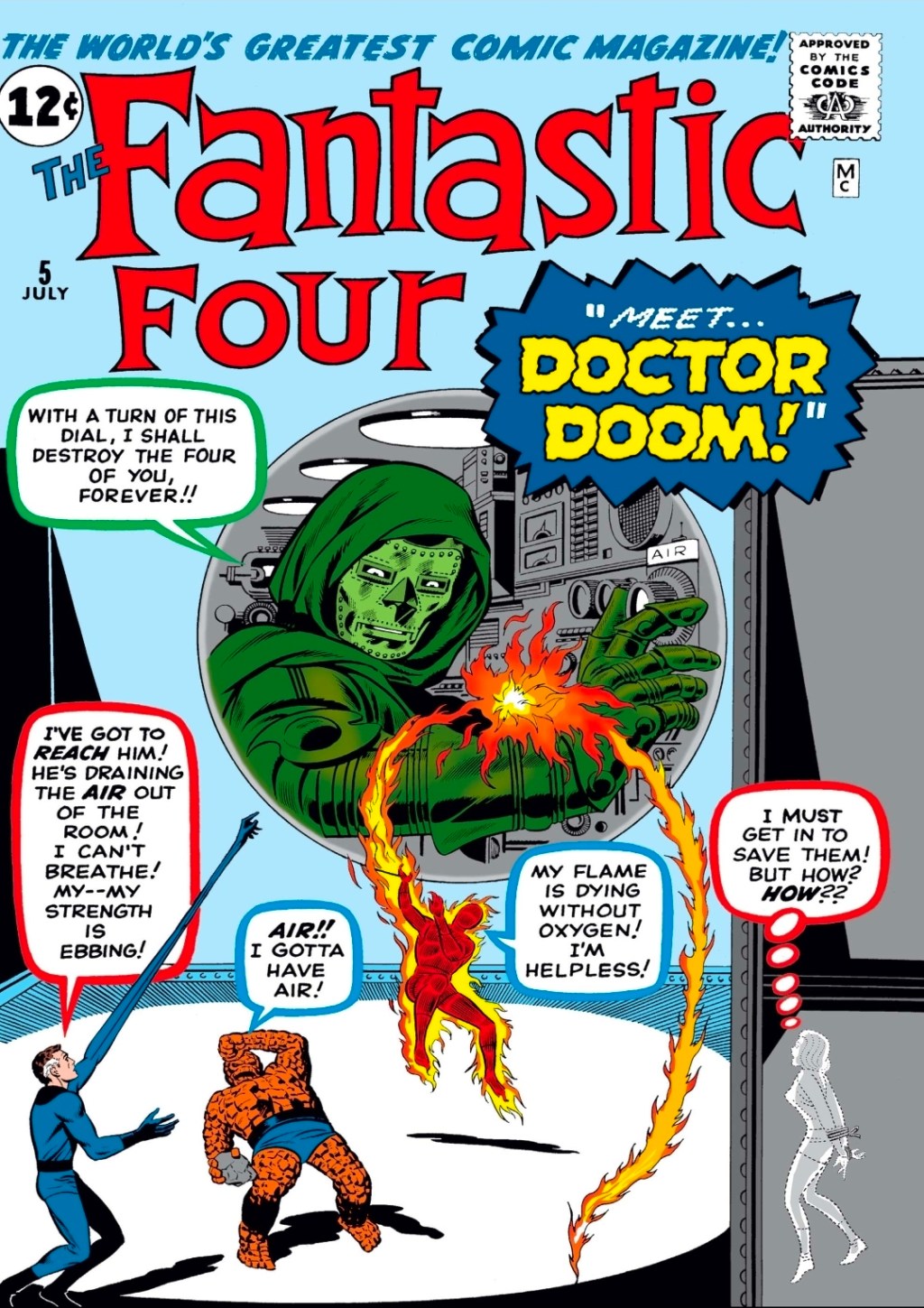
Written by Stan Lee – Penciled by Jack Kirby – Inked by Joe Sinnott – Lettered by Art Simek
The issue where Marvel realizes villains matter.
If Fantastic Four #1 felt like a monster book experimenting with superheroes, Fantastic Four #5 feels like the moment Marvel understands it needs mythology — and a worthy adversary.
The first thing that stands out marking new territory for Marvel, is that this one opens with Doctor Doom and not The Fantastic Four.
No previous issue has led by planting its flag on the villain first. That choice feels intentional on a different level than just for the plot. Lee and Kirby seem to know they’ve created something bigger than another disposable alien or subterranean ruler. Doom isn’t a one-off. He arrives fully formed — masked, regal, dramatic — like a gothic aristocrat who wandered in from a Universal monster movie. If Ben is The Invisible Man, Banner and the Hulk Jekyll and Hyde, then Doom is Dracula.
And then they do something even smarter: they connect him to Reed. Making Reed Van Helsing. having the two be college rivals with a shared history is a stroke of genius. It creates this divide between the two that will never be repaired.
That one decision turns a standard supervillain into an arch-enemy. This isn’t random chaos. It’s ego. It’s pride. It’s jealousy calcified into armor. And it is delicious.
From there, the book explodes outward.
Doom’s time machine is pure Kirby — bold, simple, instantly iconic.
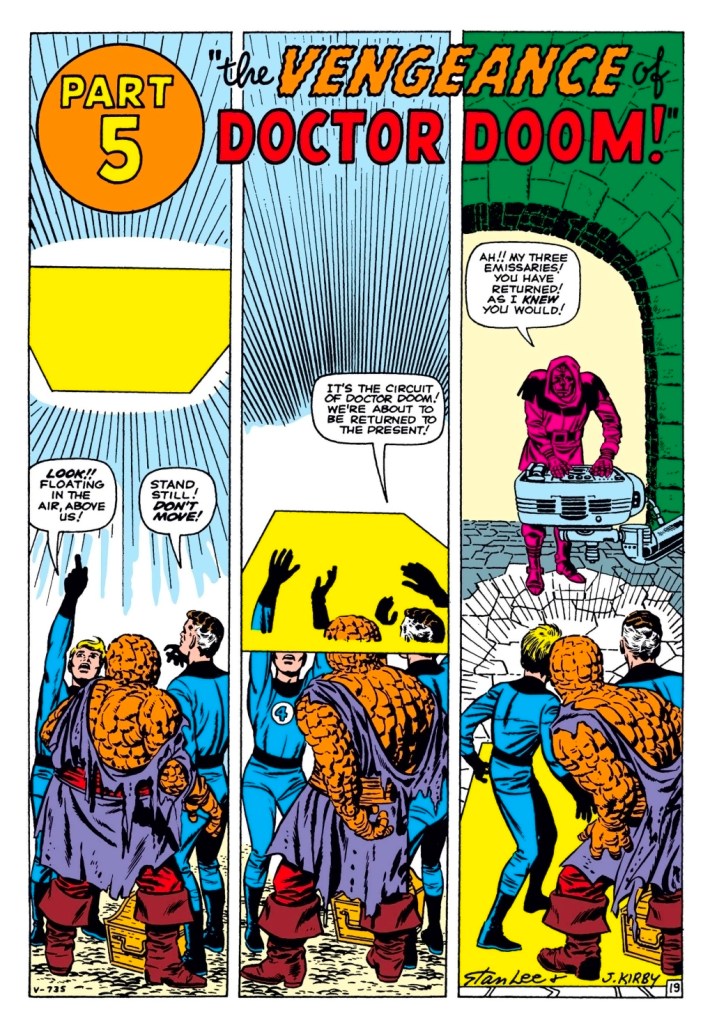
The sequences sending the team into the past opens up sweeping pirate adventure panels that feel lush and cinematic. And it makes the heroes look, well, heroic. These aren’t monsters anymore. Now, they are starting to resemble movie stars.
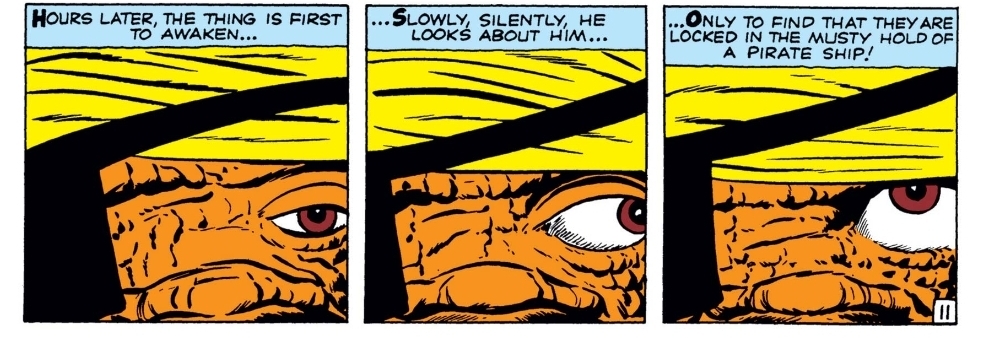
Ben as Blackbeard is ridiculous and perfect at the same time. There is a page where Kirby uses three panels to show close-ups on Ben’s eye as he wakes up in the hold of the ship that create this slow burn drama that’s like nothing I’ve seen before while reading these books. Kirby’s storytelling is leaping forward issue by issue.
The powers here feel more comic-bookish than ever before.
Johnny melting pirate cutlasses. Reed stretching himself into a literal bridge between ships. Ben rampaging through a 17th-century battlefield waving the mast of a ship. The scale is bigger. The imagination freer. The book no longer feels like sci-fi horror with costumes — it feels like full-blown superhero spectacle.
And yet the emotional core is still intact.
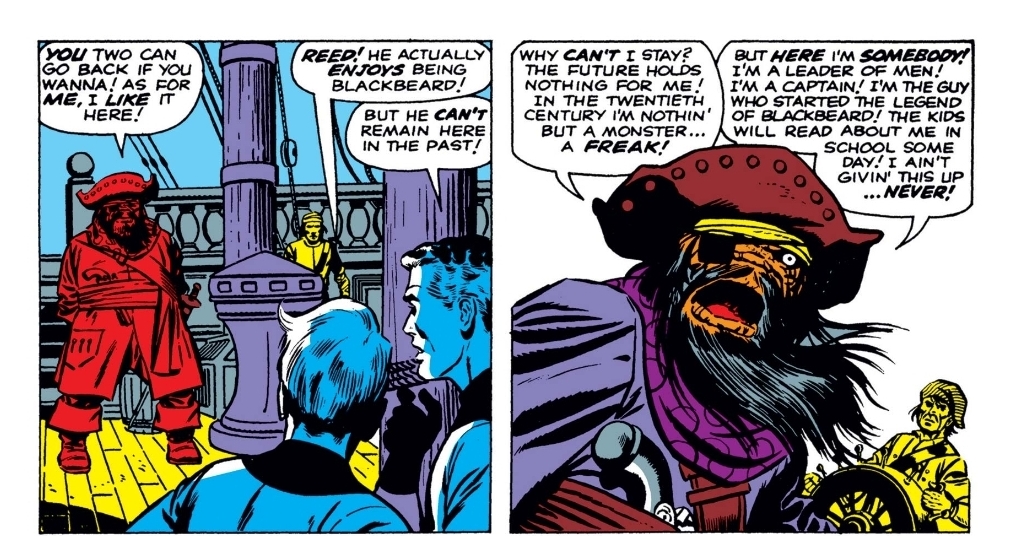
Ben wanting to stay behind as Blackbeard is more than a gag. It’s the perpetual longing he has to be normal again. The desire to live in a world where he isn’t a monster. That juxtaposition of his power and his insecurity is already becoming one of Marvel’s defining traits.
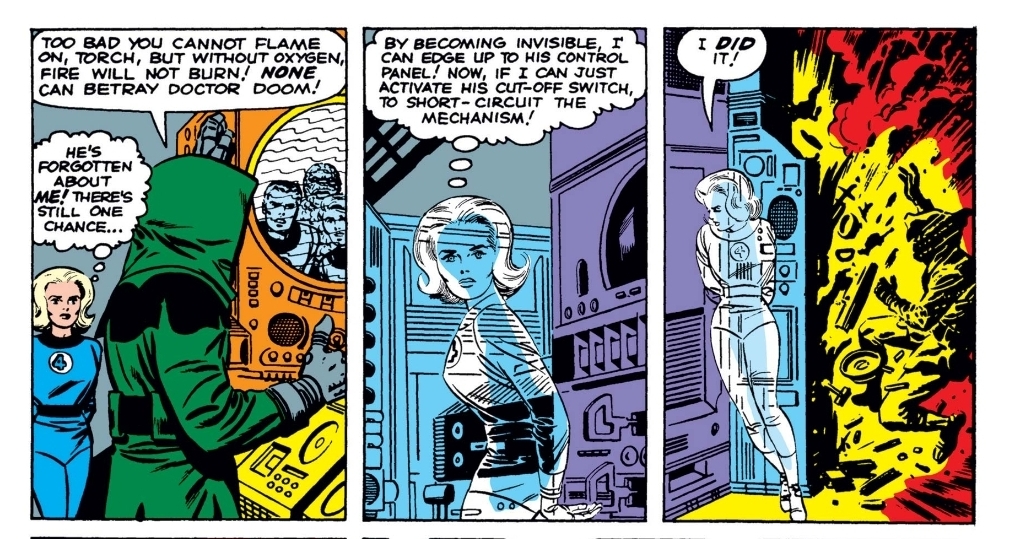
Sue, too, finally asserts herself. Her sabotage of Doom’s machine isn’t accidental or passive. It’s decisive. It’s active. She isn’t just present — she’s crucial. And Kirby’s rendering of this is so unique. It’s cinematic. I know I keep using that word, but it is hard to describe how these pictures seem to move without repeating myself.
There are fascinating connective hints as well. Johnny reading an issue of The Hulk (and then immediately burning it — a crime against collectors everywhere) makes you wonder how consciously Lee and Kirby were building a shared world. Were they planning on the Hulk existing in a comic book alongside The Fantastic Four yet? Or were they still in anthology mode? Whether or not it was intentional, it feels like the pieces are starting to click.
And then there’s the Doombot. The idea that Doom might not even have been there — that he could already be operating through mechanical doubles — is wild for 1962. his escape makes him larger than any other antagonist we have met so far. Because, there is an unspoken promise that he will return, and that he isn’t going to be defeated and disposed of like so many other villains already have.
This issue doesn’t just introduce Doctor Doom.
It establishes that villains can endure.
They can return. They can evolve. They can matter.
And once that happens, the Marvel Universe — or whatever it’s about to become — suddenly feels permanent.
Marvel in the 60s – Entry #7
 Everything
Leave a comment