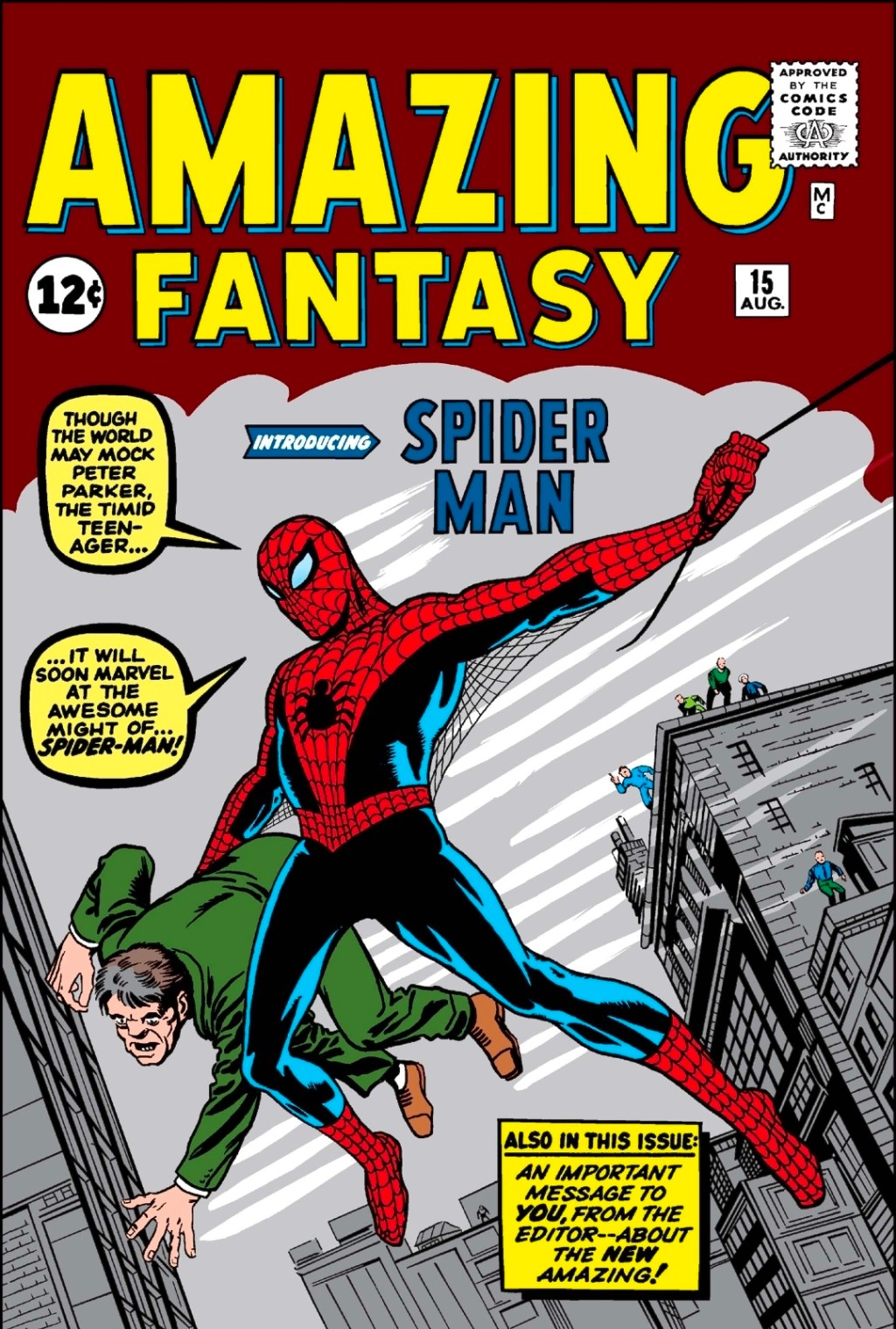
Written by Stan Lee – Penciled & Inked by Steve Ditko – Lettered by Art Simek
The moment Marvel grows a conscience.
By August 1962, Marvel has monsters, accidents, and spectacle. The Fantastic Four have adventures. The Hulk smashes. But none of those books carry a strong moral conviction. They’re reactive. Chaotic. Emotional.
Amazing Fantasy #15 is different.
This isn’t just an origin story.
It’s a morality play.
Peter Parker isn’t defined by the radioactive spider bite. He’s defined by what he does after it. When he first gains his powers, he doesn’t see responsibility — he sees advantage. He sees opportunity. He believes his abilities place him above the rules. He’s better than everyone else.
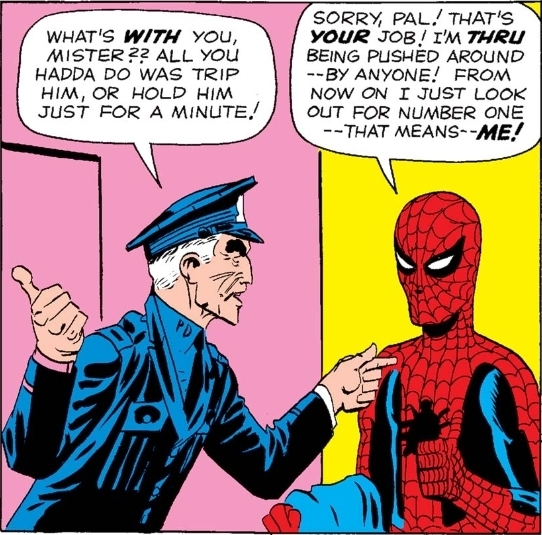
When the thief runs past him, Peter doesn’t intervene because it’s “not his problem.” It’s petty. It’s human. It’s selfish.
And it costs him everything.
Uncle Ben’s death may be the single most important event in Marvel Comics. As far as comic book deaths go. It doesn’t just shape Peter — it introduces a principle that the earlier books don’t fully embrace yet: power demands responsibility.
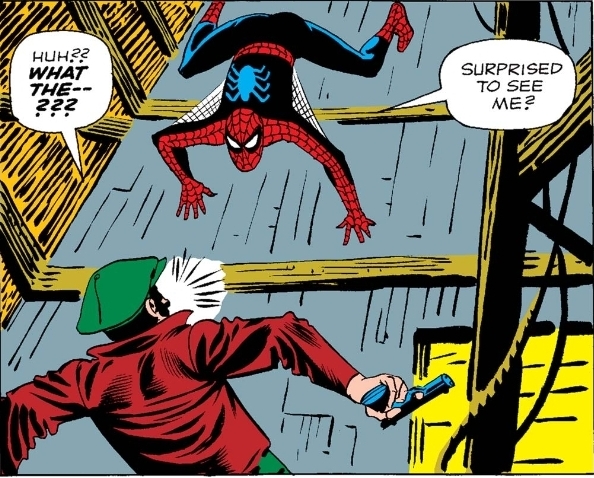
When the issue shifts after Ben’s murder, the tone changes. The shadows deepen. The energy tightens. This isn’t monster spectacle anymore. It’s guilt. It’s consequence. It’s self-reckoning.
If the Fantastic Four feel like Universal monsters discovering heroism, Peter Parker feels closer to Shakespeare. A tragic figure undone by his own flaw, then rebuilt by his choice to be better.
And he’s in high school.
That’s a wild swing. A skinny, awkward teenager as the protagonist. Not a scientist. Not an astronaut. Not a military experiment. A kid navigating ego, insecurity, and grief.
Ditko’s art makes that shift land.
Where Kirby reinvents the world, Ditko reinvents people. Peter’s thin frame. The way he slouches. The anxious posture. And once in costume — the crouches, the angles, the coiled movement. Spider-Man already looks different from every other hero on the page.
The costume arrives fully formed. The web pattern. The mask. The silhouette.And the web-shooters? Genius detail. Peter builds them himself. It reinforces that he isn’t just a victim of science — he’s a participant in it. A teenage intellect shaping his own tools. A sharp contrast to Reed’s stiff authority and Banner’s instability.
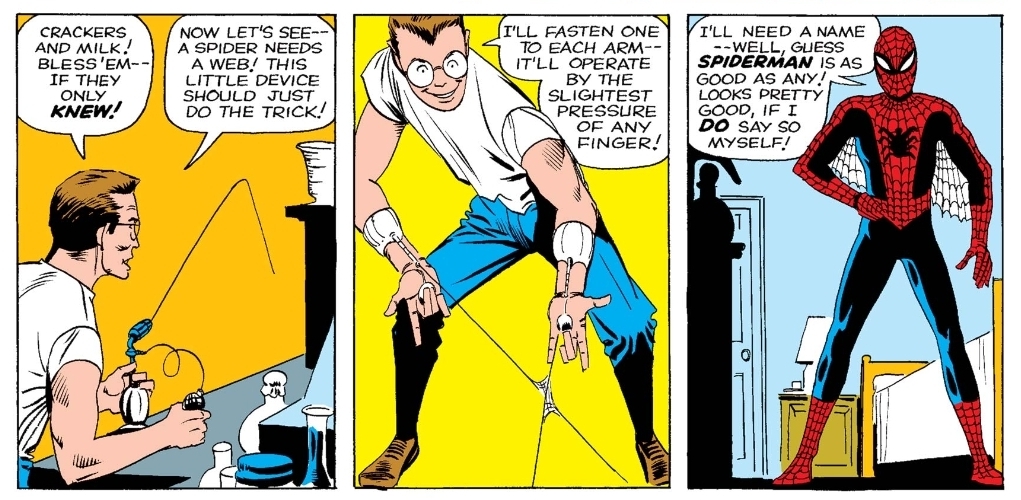
By the end of this issue, Spider-Man is already Spider-Man.
Other early Marvel characters will evolve into themselves over time.
Peter Parker arrives with his moral compass locked in place.
the Fantastic Four launched Marvel.
But Spider-Man’s debut in Amazing Fantasy #15 gave Marvel a soul
Marvel in the 60s – Entry #8
 Everything
Leave a comment