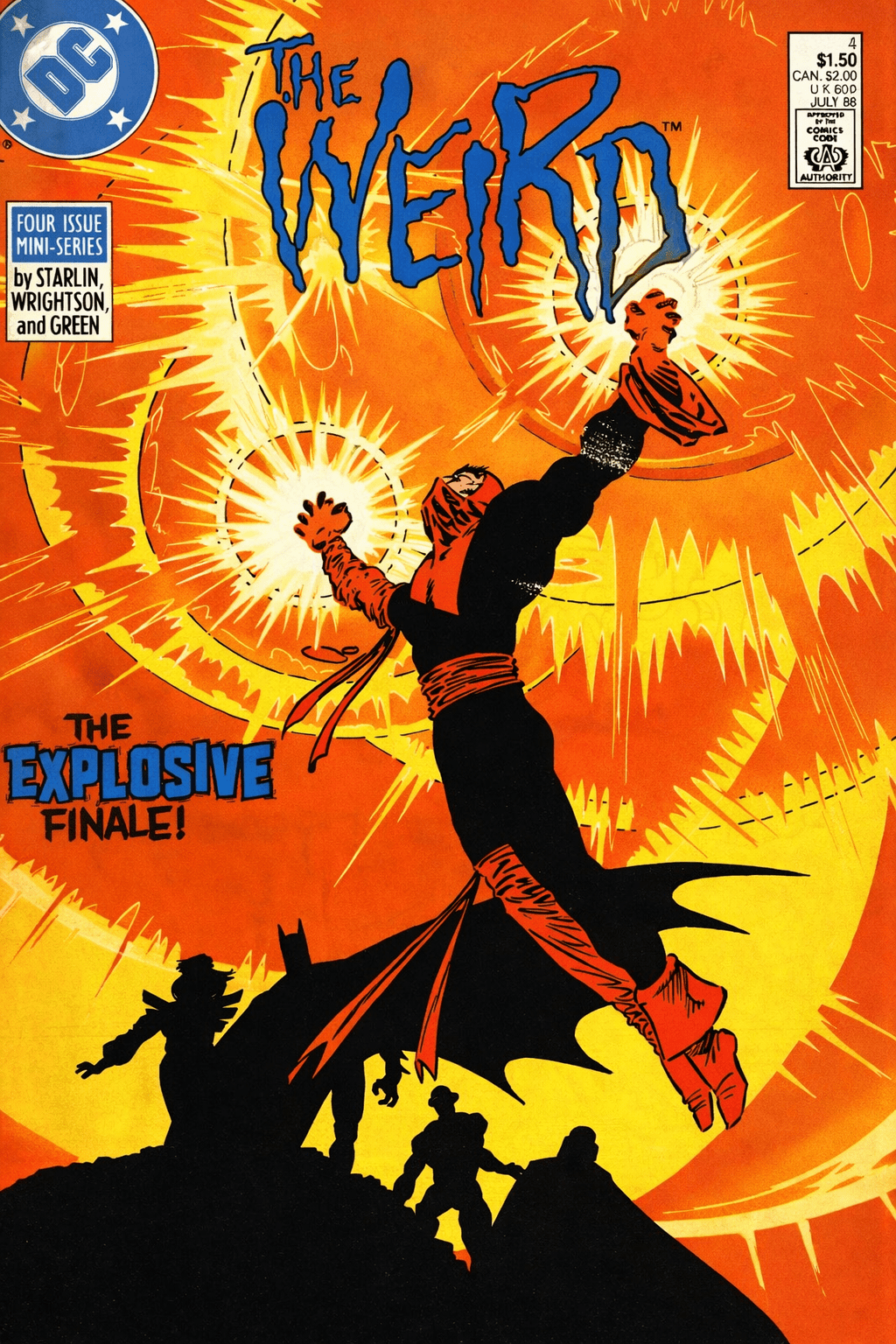
When we last left The Weird, the story had reached a breaking point.
Power had already revealed its limits.
It had created fear. It had created arrogance. It had created isolation.
And now, with the arrival of the Macrolatts, the question becomes unavoidable.
What happens when power isn’t enough?
The Illusion of Unlimited Power
Issue #4 wastes no time.
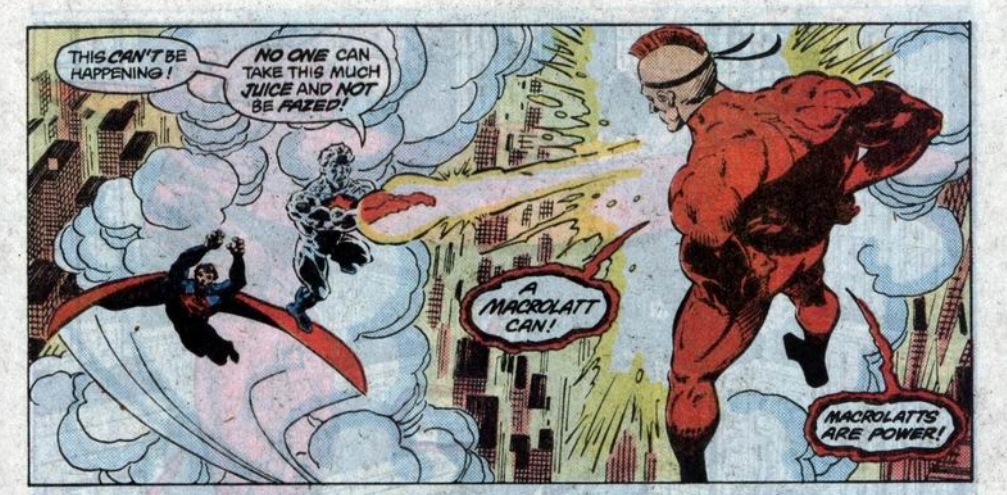
The Justice League is already under attack. Superman and Nuklon—two of Earth’s most powerful heroes—have become vessels for the Macrolatts, who revel in their newfound strength. The scale of destruction is immediate, overwhelming, and almost casual in the way it unfolds.
And in the middle of it, a strange juxtaposition. On one side, a battle between gods. On the other, a conversation between Batman and The Weird —measured, deliberate, almost calm. It’s as if the issue is telling you right away that the fight itself isn’t the point.
Because we’ve already seen what power can do.
This is about what it can’t.
Power Without Humanity
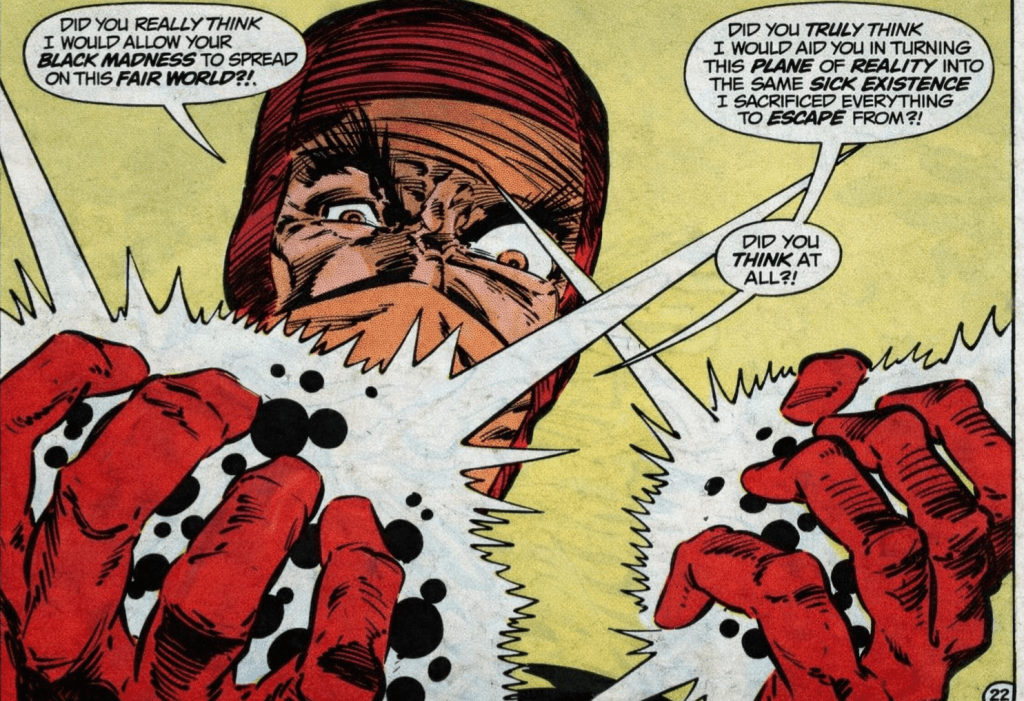
The Macrolatts represent the purest version of everything the series has been building toward.
They are power without restraint. Power without empathy. Power without end.
And even that isn’t enough.
In their own dimension, the Macrolatts survive by consuming the energy of the Zarolatts—draining them completely, often to the point of death.
Power, for them, isn’t something to be used or understood. It’s something to be taken. Absorbed. Exhausted.
That same instinct follows them here.
They take control of Superman. They take control of Nuklon. They wield strength on a scale most beings could never imagine—not as something to protect or preserve, but as something to burn through.
And like everything else they consume, it doesn’t satisfy them.
Because their existence is defined by consumption.
More power. More control. More.
There’s no end point. No resolution. No peace.
And that’s what ultimately makes them vulnerable.
Their belief in their own superiority—the same hubris that defined them from the beginning—blinds them. It allows the Weird to outthink them, to outmaneuver them, to exploit the one thing they never question:
That they are the ultimate power.
They aren’t.
Because the one thing they can’t account for—the one thing they’ve never understood—is exactly what allows the Weird to outmaneuver them.
His humanity.
Understanding, At Last
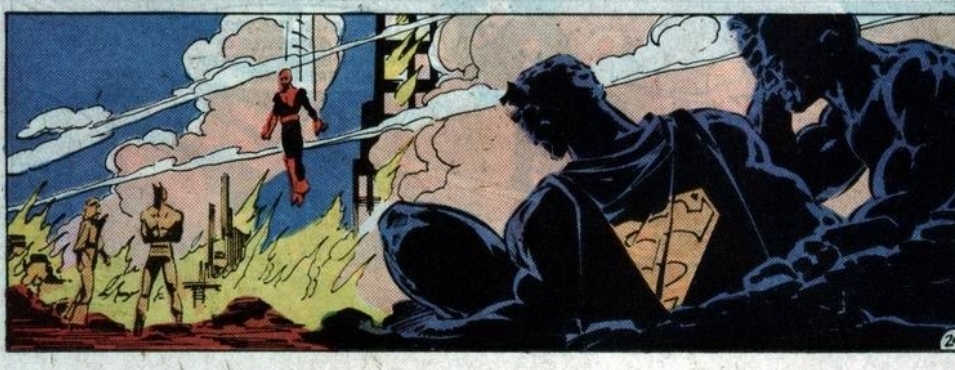
One of the quiet shifts in this issue is that, finally, the Justice League understands.
And with understanding comes a kind of acceptance.
They see that the Weird isn’t the threat they believed him to be. But they also recognize the inevitability of his instability—and what that means for how this ends.
It’s a small thing. But it matters.
Because for the first time since he arrived, the Weird isn’t completely alone in what he knows.
And yet, even with that understanding, the outcome doesn’t change.
The Limits of Power
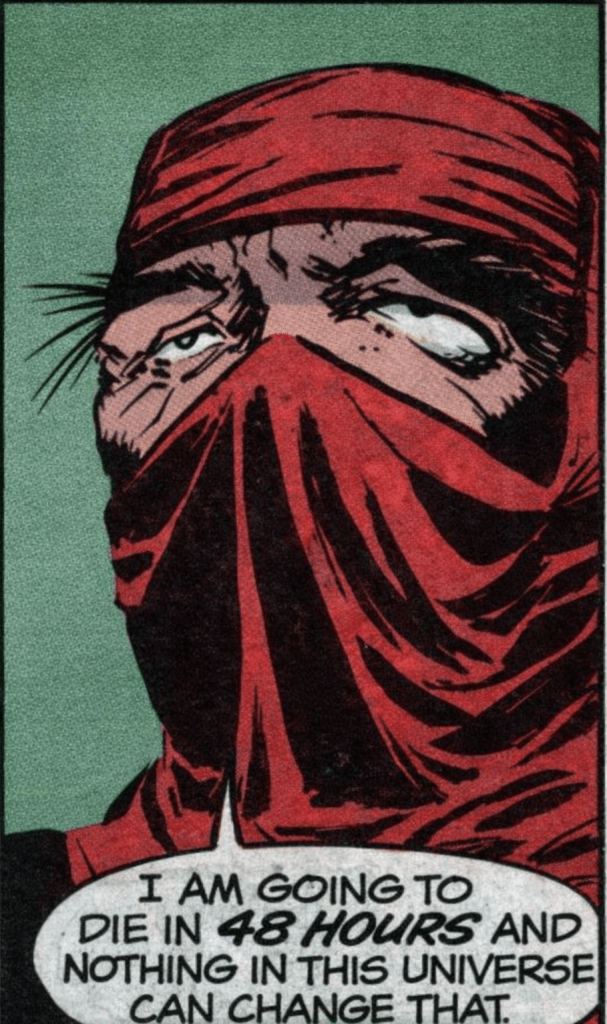
The truth at the center of this issue is simple.
No one can save him.
Not even the Weird himself.
For all the power in this story, for all the battles and abilities and impossible feats, there is one thing none of it can overcome.
His body is failing.
And there is nothing anyone can do to stop it.
So the story does something unusual.
It stops fighting.
Acceptance
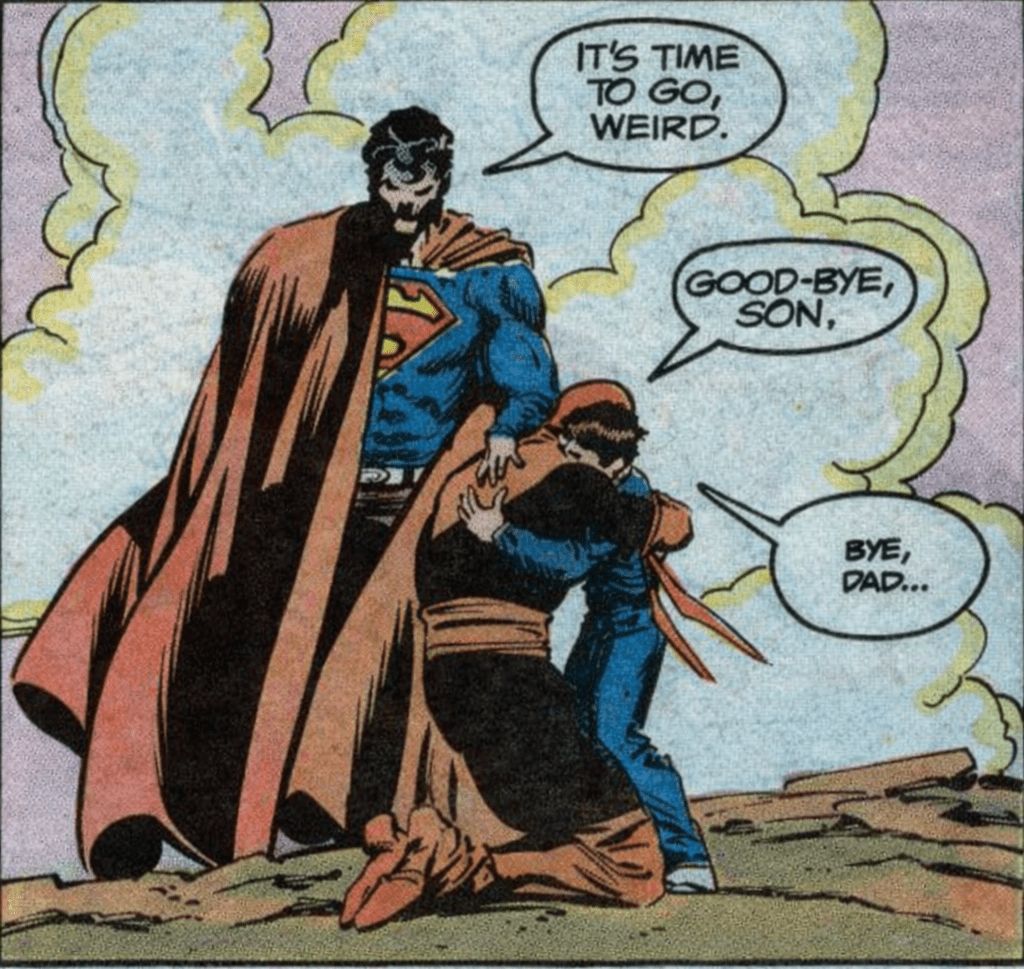
The Weird doesn’t rage against what’s happening or try to force a solution that isn’t there.
He accepts it.
He reflects on the life he’s lived—brief, unexpected, and incomplete. He acknowledges the unfairness of it, the abruptness, the things he didn’t get to experience.
But he also recognizes what he did have.
Freedom.
Connection.
A chance to understand what it means to be human.
And in that recognition, there’s a kind of peace.
Not because the outcome is good.
But because it’s real.
A Gift That Remains
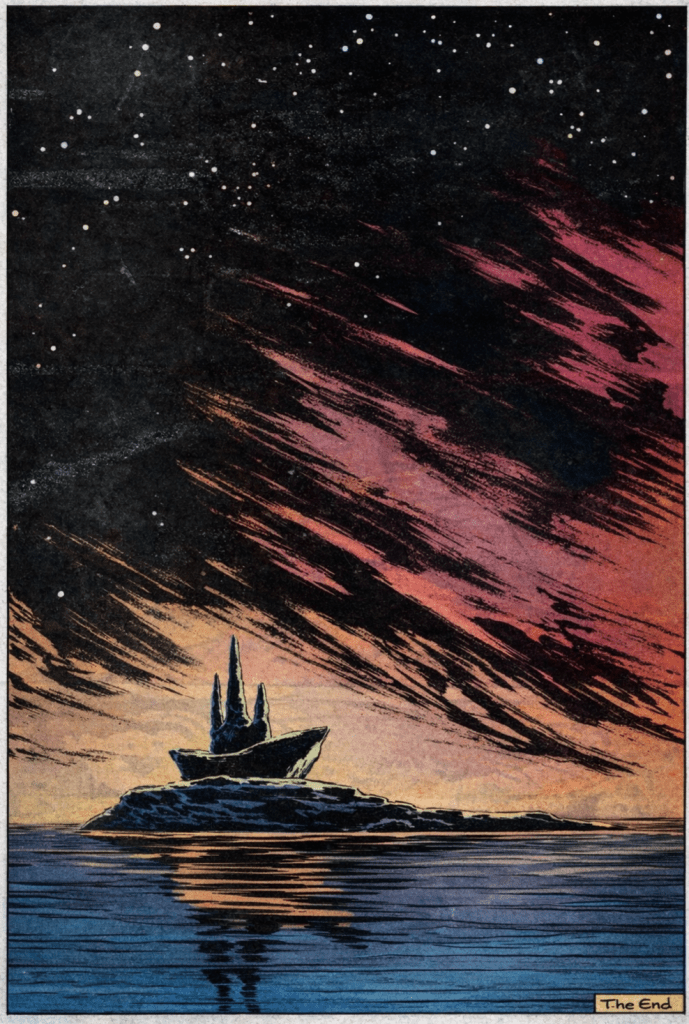
Before the end, the Weird does one last thing.
He leaves something behind for Billy.
A gesture that feels simple on the surface, but carries something much deeper.
It doesn’t fix anything. It doesn’t change what’s happened. But it remains.
And in that way, it becomes something else entirely.
A memory.
A connection.
A way to carry something forward after it’s gone.
What The Weird Means to Me Now
When I first read The Weird, I was thirteen.
At that age, this story felt strange, cosmic, and a little abstract. It was about power, about superheroes, about something big and hard to fully understand.
But reading it now, more than thirty-five years later, it lands very differently.
Because life has a way of filling in those gaps. Experience leads to perspective and understanding.
I’ve seen what it looks like when power isn’t enough.
I’ve seen people get sick who shouldn’t have gotten sick. I’ve seen strength, and love, and everything you think should matter run into something that doesn’t care about any of it.
And I’ve felt that moment—the one where you realize there’s nothing you can do to change what’s coming.
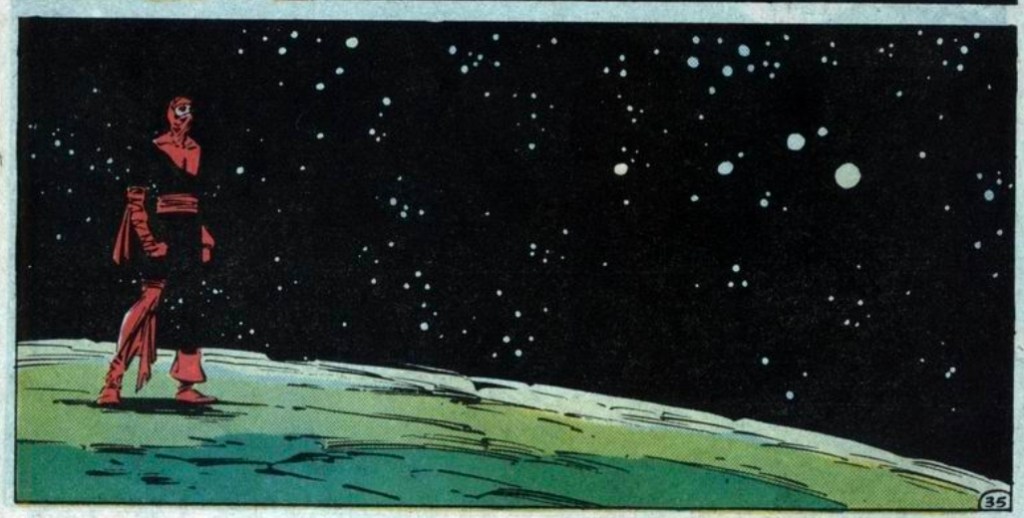
When I read those final panels, when the Weird talks about how short and unfair his life was, I didn’t just see the character anymore.
I thought about a child in our family that we lost to leukemia.
And suddenly, the whole story clicked into place.
The way the Weird looks. The fragility. The sense that his own body is something he can’t control. His costume had given me real flashbacks to witnessing someone going through chemotherapy.
The way everyone around him can only stand there and be present, but not fix it.
Maybe that’s not what Jim Starlin intended.
Maybe it is.
But this is what it means to me now.
There’s something in this story that feels like grief.
Like the stages you move through when something irreversible is happening. The anger, the bargaining, the quiet shift into acceptance.
And the understanding that comes with it.
That power isn’t always the answer.
That sometimes there isn’t an answer.
And that what matters, in the end, is what you carry forward.
This isn’t Starlin’s most celebrated work. It isn’t Bernie Wrightson’s either.
But for me, it’s as important as anything they’ve done.
Because it captures something I didn’t understand when I was younger.That there is a kind of grace you have to learn when grief threatens to overwhelm you.
And somehow, in its own strange way, this book understands that too.
Power in Acceptance

If Issue #1 showed how power creates fear, Issue #2 showed how it can create arrogance, and Issue #3 showed how it can isolate, then Issue #4 brings everything to its final conclusion.
Power has limits.
There are things it cannot fix.
Things it cannot stop.
Things it cannot change.
And when you reach that point, what matters isn’t how strong you are.
It’s how you face what can’t be changed.
The Weird’s story ends here.
But what it leaves behind isn’t a lesson about power.
It’s something quieter.
And something far more human.
The Weird – Entry #4
 Everything
Leave a comment