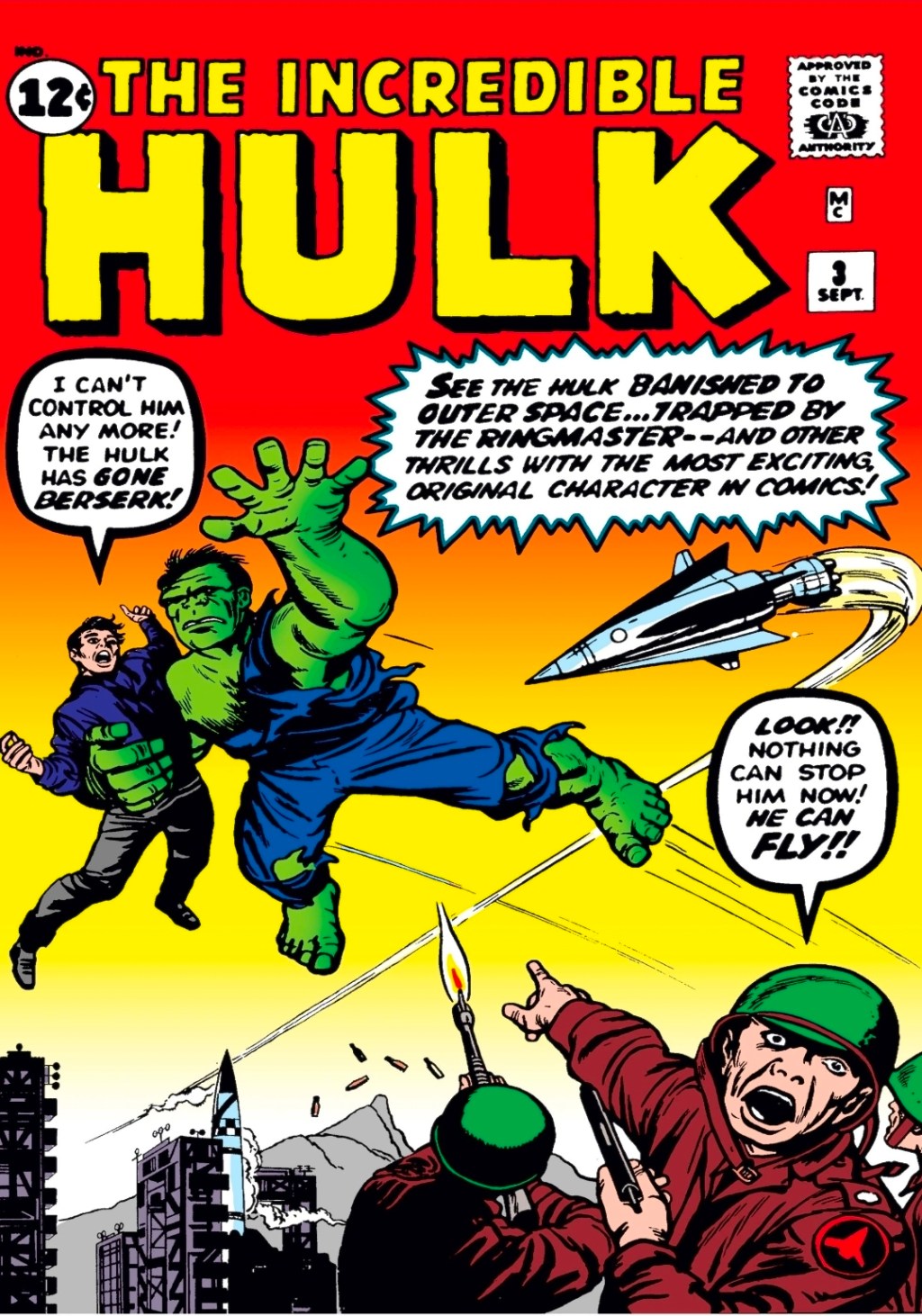
Written by Stan Lee – Art by Jack Kirby
Marvel keeps experimenting with the Hulk, searching for a way to turn a monster into a superhero.
By the third issue, Marvel is already reworking The Incredible Hulk as they try to figure out exactly what this character is supposed to be. The first two issues established the Hulk as a dangerous monster tied to Bruce Banner’s nightly transformations. This issue takes the story in a different direction and starts experimenting with a new idea: control.
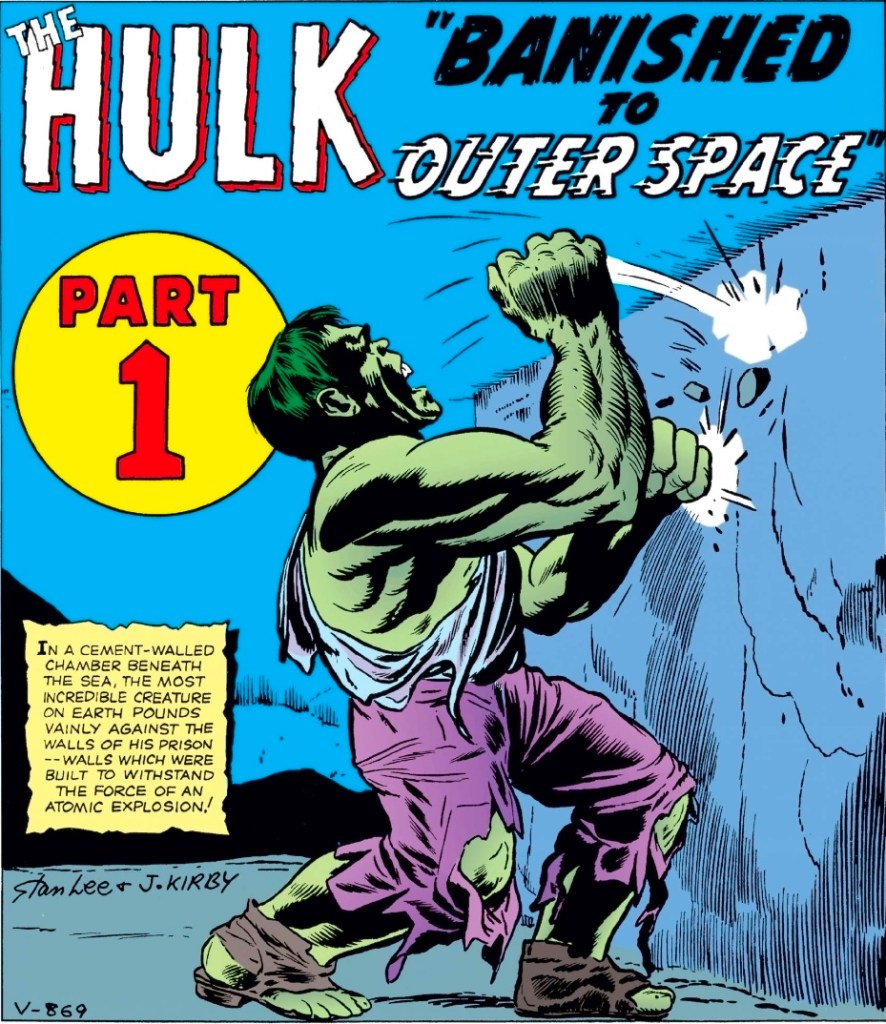
Banner begins the story by sealing himself behind feet of concrete and steel, literally burying the Hulk beneath the earth. It’s a striking image. Banner isn’t solving the problem so much as repressing it. Repression becomes another theme this book will return to for decades.
“Locking the monster away and hoping it stays contained is also wildly dangerous. If something goes wrong, Banner could suffocate, and the only person left to monitor the situation is Rick Jones —who, at this point, is still just a teenager.
Rick ends up becoming the central figure of the issue. Through a burst of gamma radiation in the upper atmosphere, the Hulk’s condition changes again. He doesn’t turn back into Banner during the day, and now Rick can summon and direct the Hulk, effectively controlling the creature.
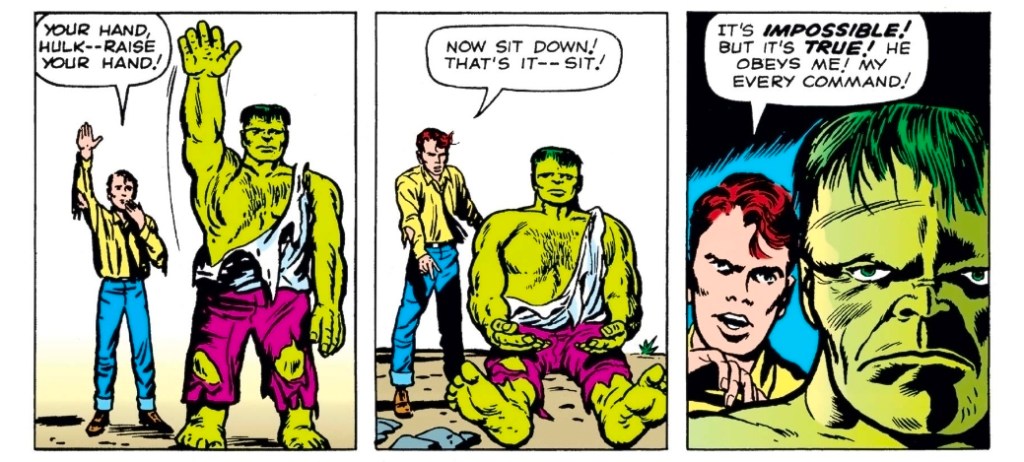
It doesn’t always make perfect sense, but it shifts the focus of the book away from Banner and toward Rick. For large portions of the story, this becomes Rick Jones’ burden to carry. If he falls asleep, the Hulk becomes uncontrollable again.
Suddenly, the teenager is responsible not only for protecting the world, but also for protecting Banner from the monster inside him.
And that lays the foundation for another long-standing theme with the Hulk.
Abuse.
Years from now, we will discover that Bruce Banner was the victim of domestic abuse. That context hangs over the dynamic between the Hulk and Rick Jones.
In this issue, we are witness to an abusive relationship between them.
The Hulk threatens.
Rick obeys.
It’s brief, but it’s there — lingering under the surface and laying the groundwork for what’s to come.
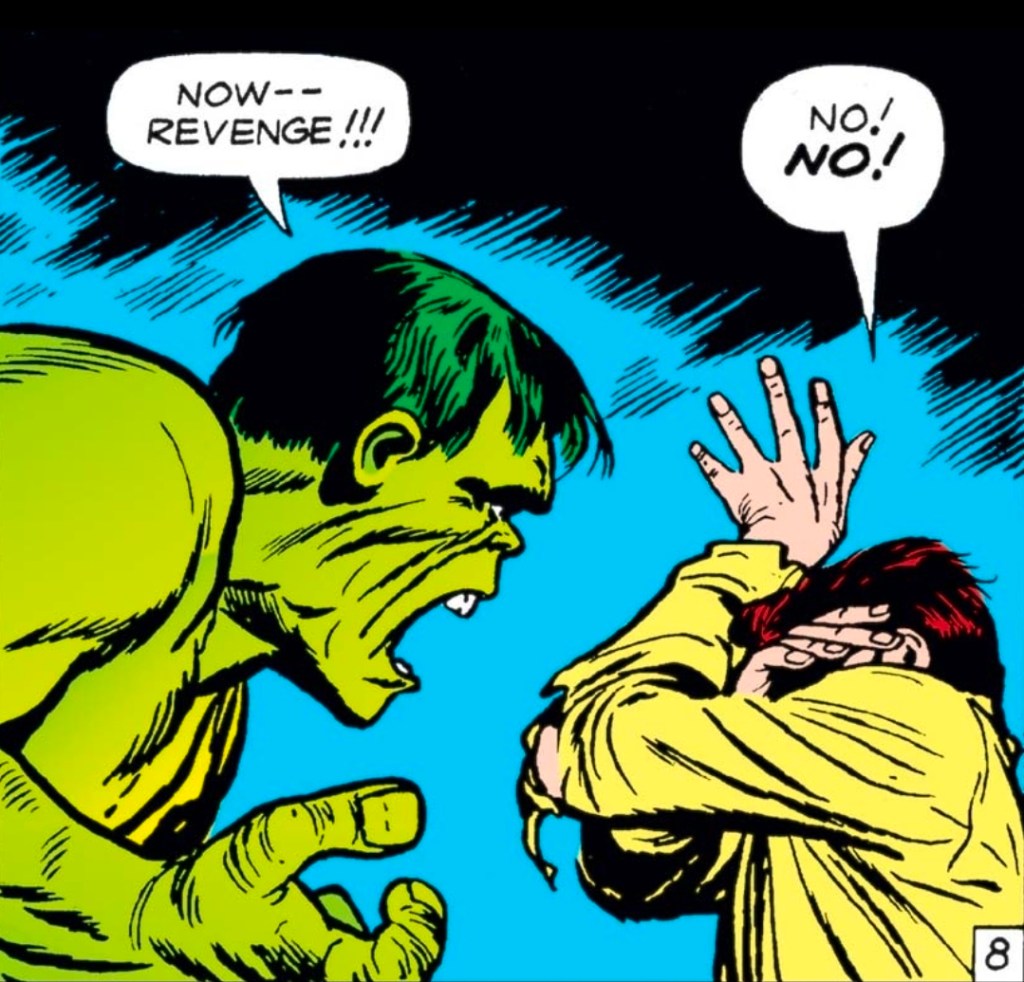
This leads us to an interesting theme that runs through the entire issue: everyone is trying to control something.
The Hulk tries to control Rick.
Rick tries to control the Hulk.
General Ross tries to control Rick, and through him, the Hulk.
And the second half of the story introduces The Ringmaster, whose entire gimmick is hypnotizing crowds so the Circus of Crime can rob them.
Control, manipulation, and responsibility become the thread tying everything together.
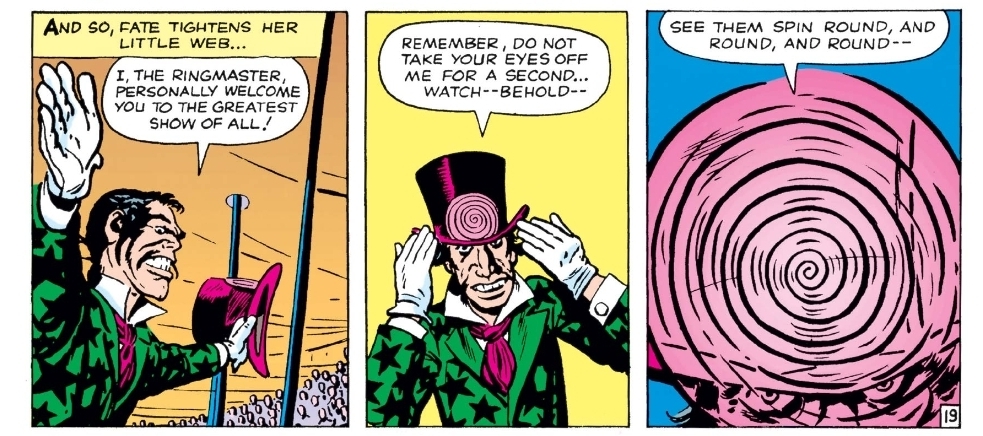
The final act shifts into more traditional superhero territory as the Hulk clashes with the Ringmaster and his gang. It’s fast, chaotic, and full of action, but it also highlights how much the series is still experimenting with its identity.
In just three issues, the Hulk has already changed dramatically. This story throws everything at the wall — monster story, science fiction experiment, and straight-up superhero fight.
It makes The Incredible Hulk #3 feel like a comic searching for direction.
In this issue, everyone is trying to control the monster.
Including Marvel itself.
Marvel in the 60s – Entry #13
 Everything
Leave a comment