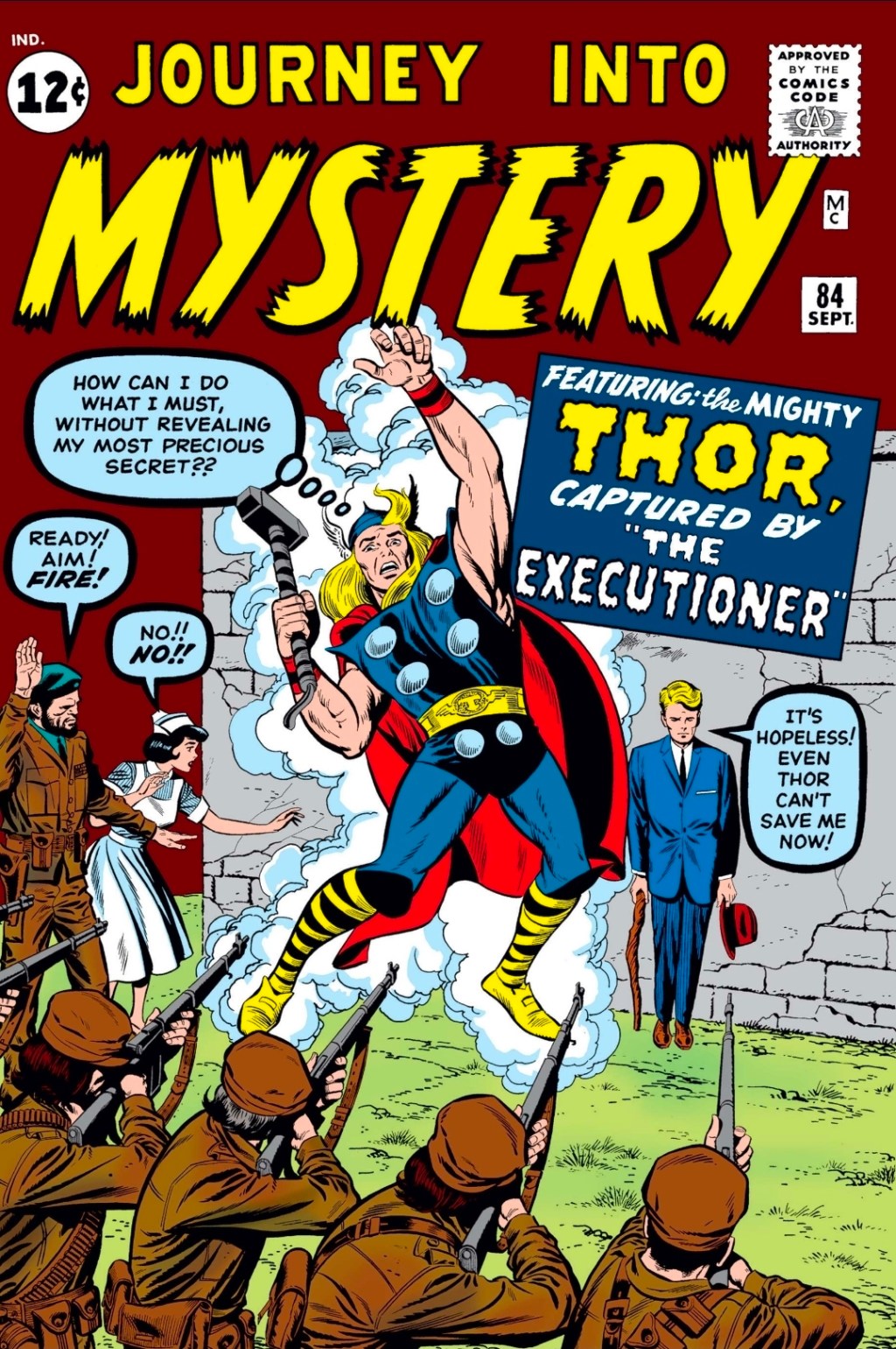
Written by Stan Lee & Larry Lieber – Penciled by Jack Kirby – Inked by Dick Ayers – Lettered by Art Simek
Marvel has a god, but it can’t quite escape its anthology roots.
While Fantastic Four has already leaned into being a full superhero book — bigger scale, bigger villains, a world that feels like it’s expanding — Marvel still doesn’t quite know what to do with characters like Thor. Or the Hulk.
So when in doubt, send him to South America to fight communists.
The book opens with a quick recap of the previous issue. Early Marvel really wants to make sure you’re caught up. Every issue feels like it might be someone’s first.
And that’s probably by design. There’s a bit of salesmanship to it — Stan Lee as ringmaster, making sure no one feels left out. Every comic is an entry point.
We also start to see Thor’s supporting cast take shape. Right now, that mostly means Jane Foster.
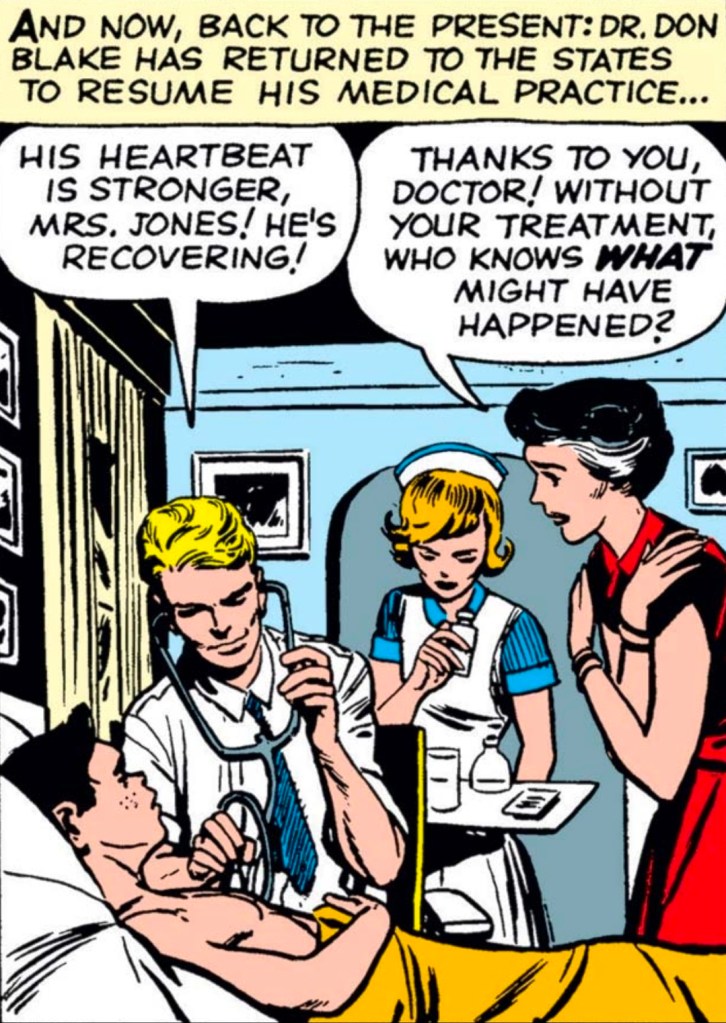
Marvel loves a romance subplot, and unrequited love seems to be the default setting. It’s a little clumsy here. Blake assumes Jane could never love a man who is lame. Jane waits for him to make the first move.
It’s not that far off from Bruce Banner and Betty Ross. And like Hulk, Thor still feels like a character Marvel hasn’t quite figured out yet.
This time, the fictional communist threat is The Executioner and a civil war in San Diablo — exactly the kind of story Thor already feels too big for.
Blake volunteers to join a medical mission, and the ship is immediately attacked.
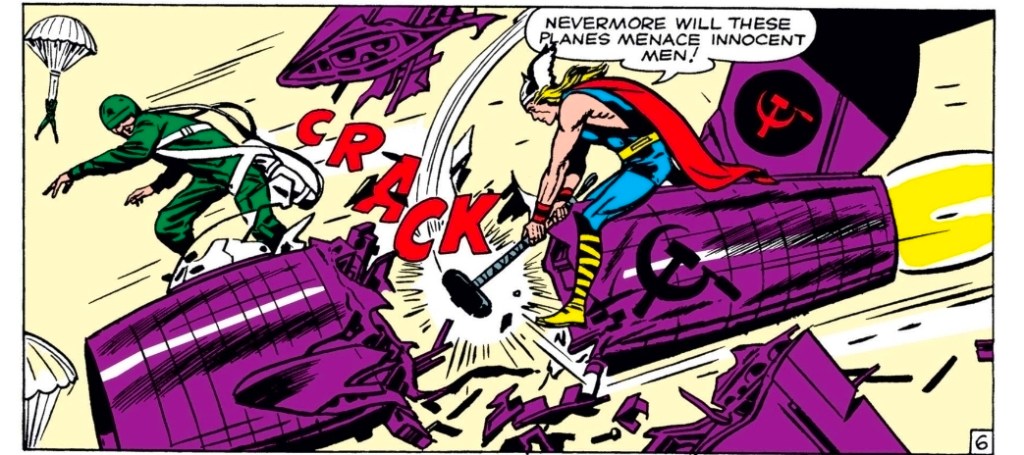
Thor battling jet fighters in the sky looks great — Kirby makes it feel fast and powerful — but the conflict itself feels small. Soldiers. Planes. A fictional revolution.
Thor feels bigger than all of it.
And you can start to see that in how he carries himself.
There is a slight shift in the Thor/Don Blake dynamic. They still share the same mind, but Thor speaks with more confidence, more presence. Blake pines for Jane and second-guesses himself. Thor makes declarations. He’s not fully the Shakespearean god he’ll become, but it’s starting to form.
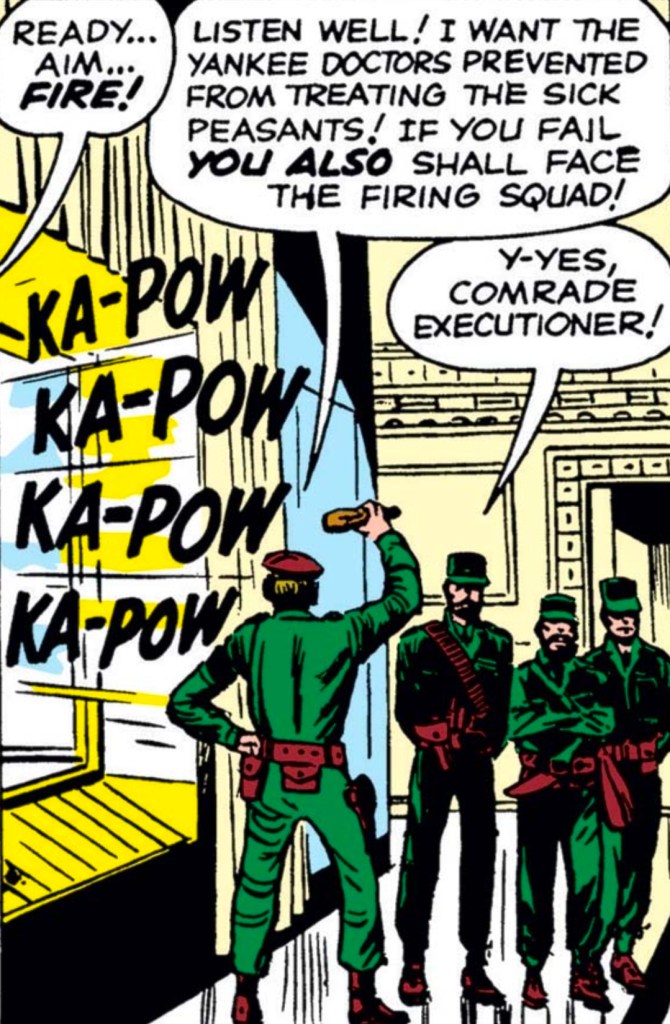
The book also gets surprisingly dark. Off panel, we hear a firing squad kill innocent people while The Executioner sits nearby eating a lavish meal. It’s one of the more brutal images in these early books, and it gives the villain a level of cruelty most others haven’t had yet. He’s brutal, but he feels too small for Thor — more like a placeholder than a lasting threat.
Then the story tips into something else entirely.
Blake is captured. The Executioner offers to spare his life if Jane agrees to marry him. As an opposing army closes in, he tries to escape with bags of money.
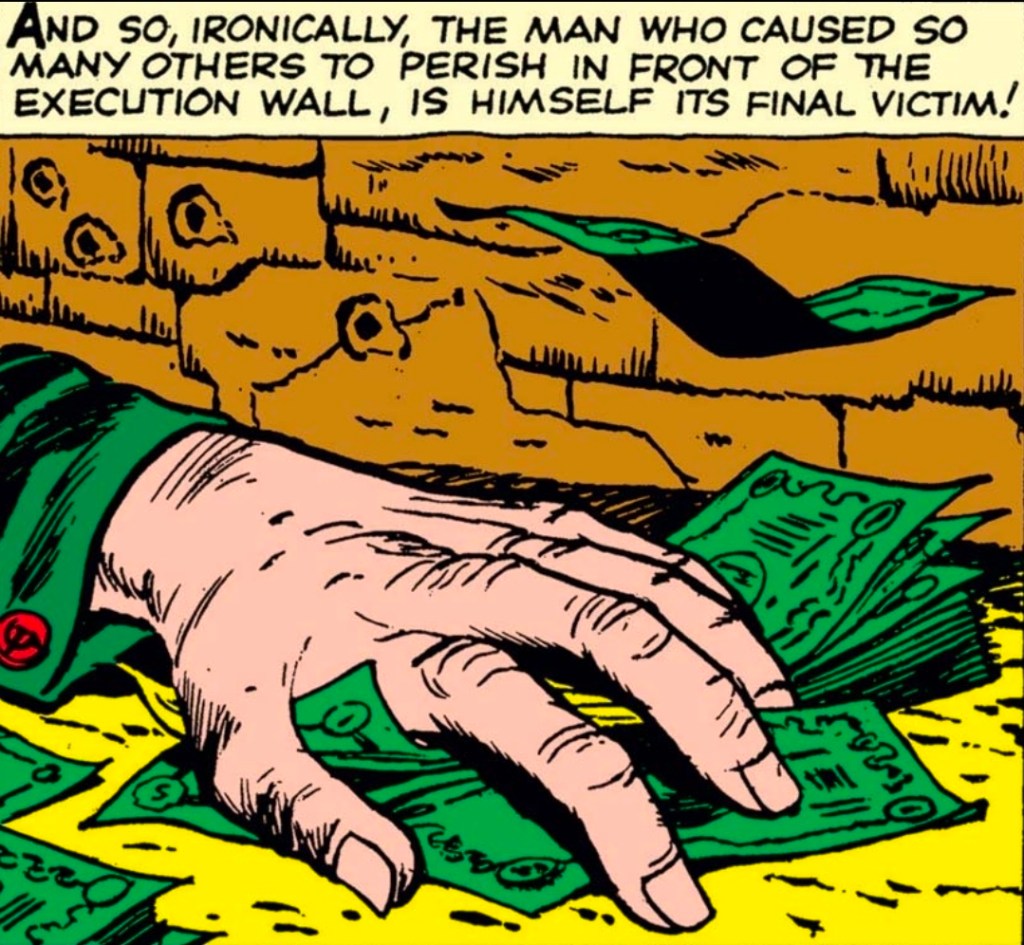
It’s almost campy — a South American communist warlord fleeing with sacks of money stamped with dollar signs, like he wandered in from a different comic.
But maybe there’s something the book is trying to say as he’s gunned down by his own men, money spilling around him. Or maybe it’s just another idea thrown into a story already doing too much.
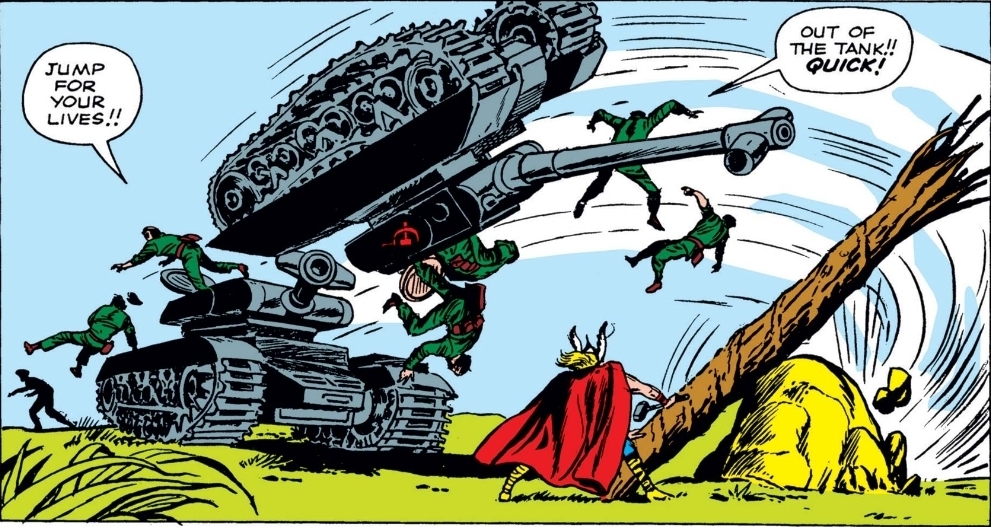
Thor returns in time for the final battle — smashing tanks, scattering soldiers, ending the conflict.
Some of the imagery is great. The scale is there. The power is there.
But the story around him still feels too small.
Marvel has a god.
Thor is built for myth.
Marvel just isn’t ready to tell those stories yet.
Marvel in the 60s – Entry #14
 Everything
Leave a comment