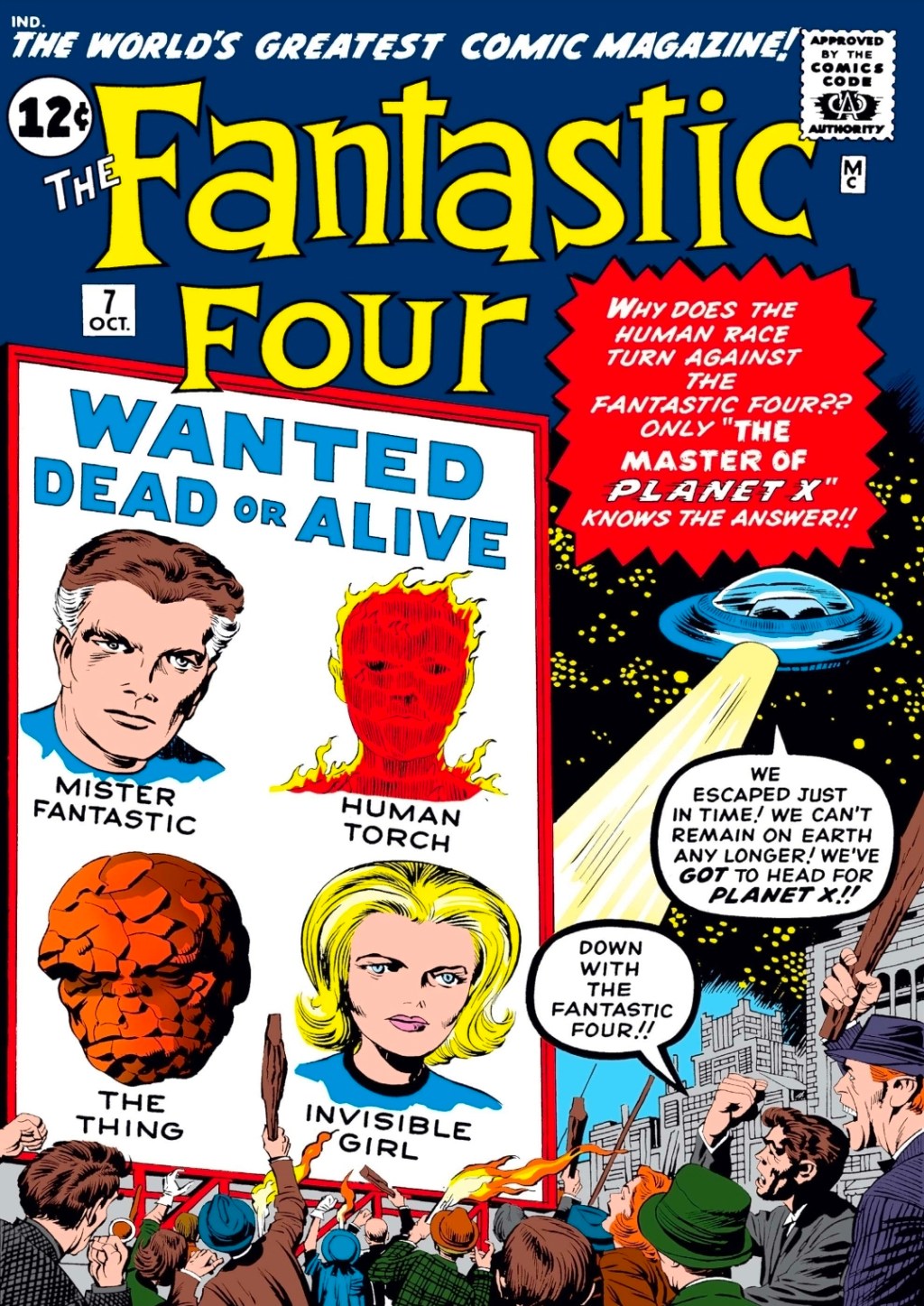
Written by Stan Lee – Penciled by Jack Kirby – Inked by Dick Ayers – Lettered by Art Simek
Two steps forward. One step back.
After the scale and ambition of the previous issue, Fantastic Four #7 feels like a step back.
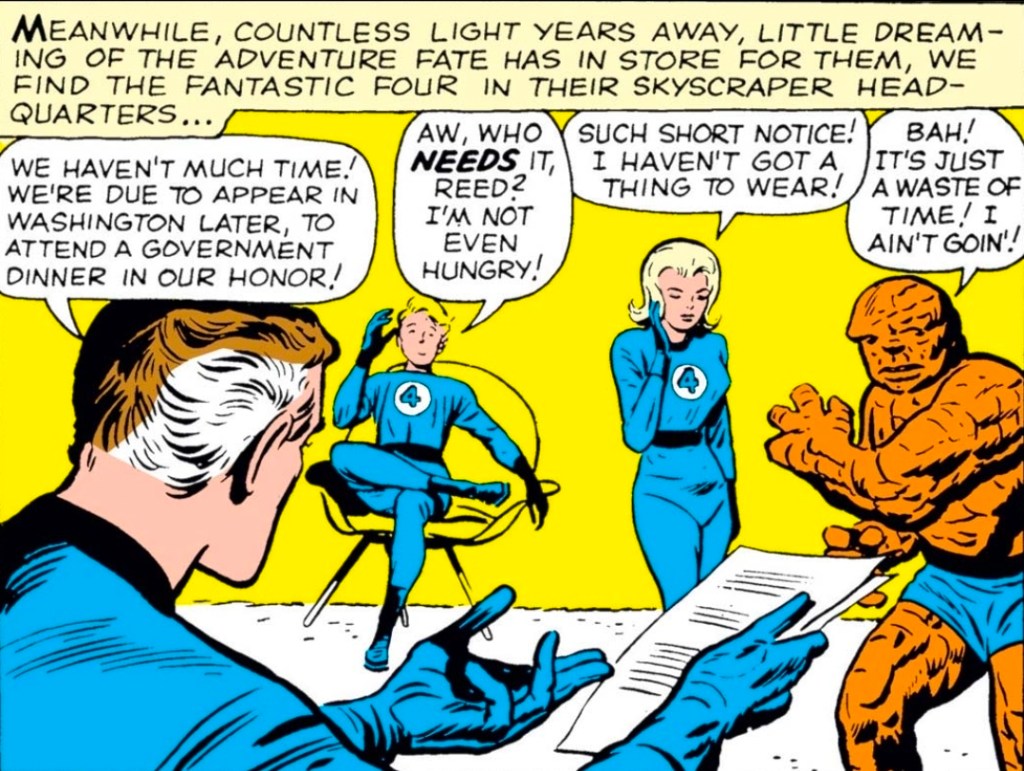
It almost reads like an earlier story that got shuffled into the lineup. Kirby’s designs feel closer to Fantastic Four #3 than #6. The scope shrinks. The structure slips back into something more familiar.
And the villain? Another alien.
Kurrgo from Planet X — complete with a hostility ray that causes chaos across the world. Strangers fight. Couples throw food at each other. The government turns on the Fantastic Four. It’s a ridiculous chain of events, even by early Marvel standards.
This is the anthology formula creeping back in.
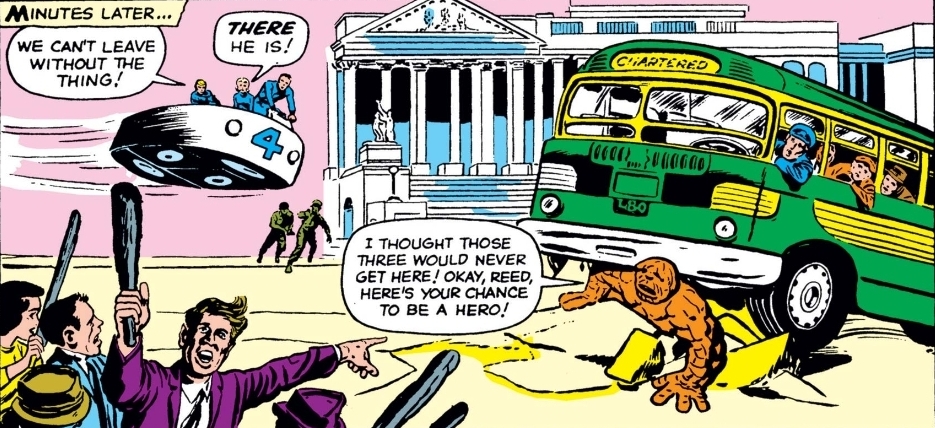
The opening leans into that tone too. The team worries about attending a dinner in Washington, D.C., and the whole sequence plays closer to slapstick than superhero drama. The edge that started to form in earlier issues softens again.
But even here, you can see what the book is becoming.
Kurrgo’s plan pulls the Fantastic Four off Earth and into space. For a moment, the book shifts. The team aren’t just heroes reacting to threats — they’re explorers.
That idea sticks.
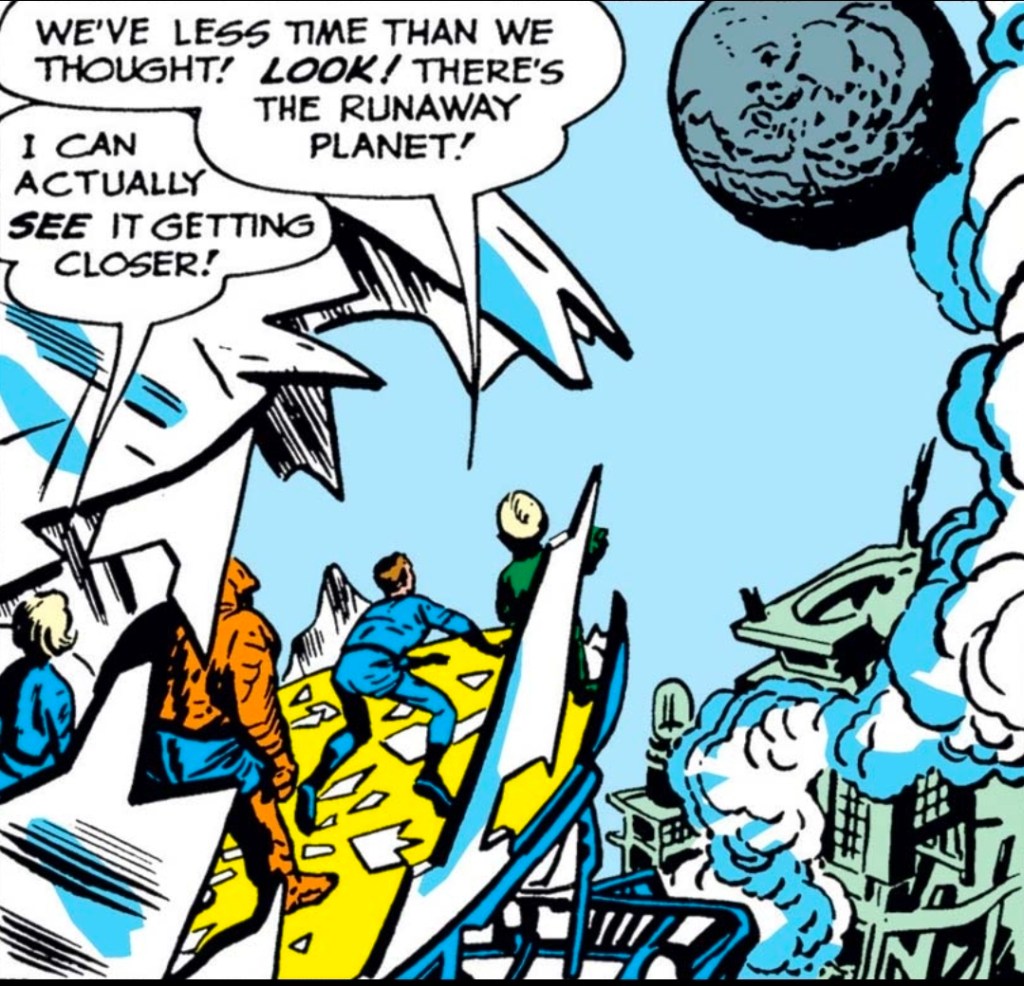
The second half leans into Reed as an inventor. This is where his real power starts to take shape — not the stretching, but the mind behind it. Back in the lab, he develops a reducing gas to save millions of aliens from planetary destruction. It’s classic Fantastic Four: science as the solution, the team working together, the problem solved through ingenuity rather than brute force.
You can see Marvel pulling from its anthology roots here — science, space, and problem-solving — and starting to fold those ideas into the Fantastic Four.
Kurrgo, meanwhile, meets a very Twilight Zone ending — tricked into thinking he’ll grow larger, only to be left behind as his people escape and his world collapses around him.
It’s a strong ending in an otherwise uneven issue.
The art, the structure — even the villain — all drift back toward Marvel’s anthology roots.
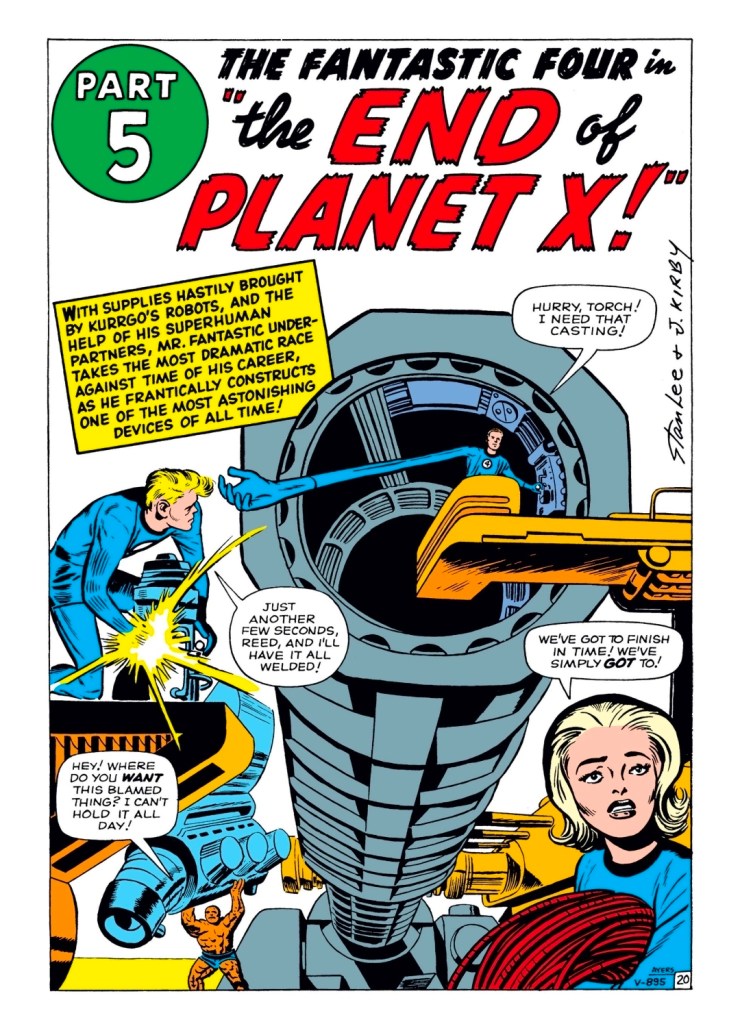
But the ideas are still moving forward — exploration, invention, the team in the lab solving the impossible.
Those pieces are starting to lock in. Just not all at once.
Marvel’s characters feel poised for the future, but the stories are still stuck in the past.
Marvel in the 60s – Entry #15
 Everything
Leave a comment