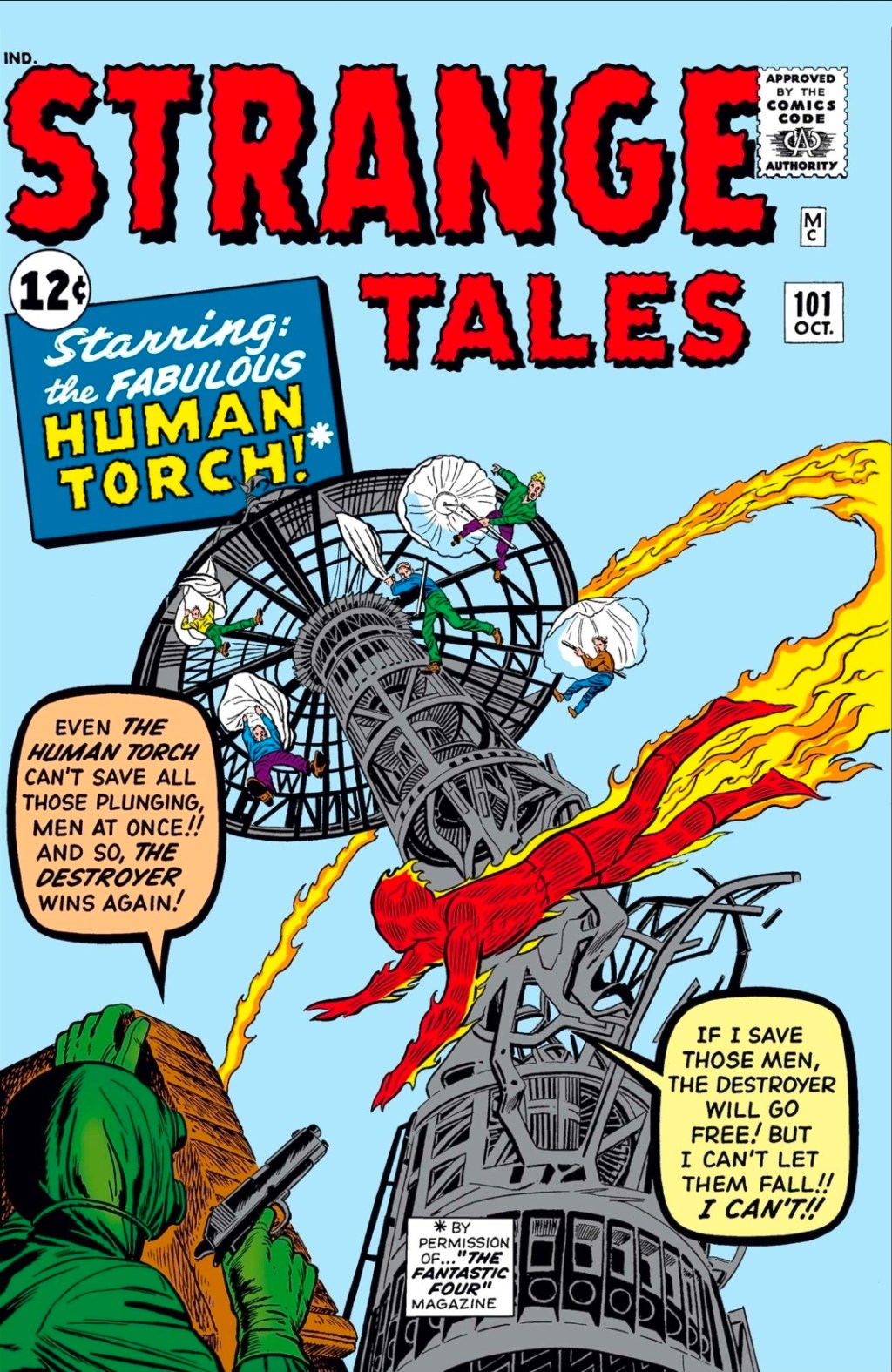
Written by Stan Lee & Larry Lieber – Penciled by Jack Kirby – Inked by Dick Ayers – Lettered by Art Simek
Marvel keeps expanding. The anthology books are starting to fill up with heroes.
They’ve added Thor to Journey Into Mystery. Ant-Man shows up in Tales to Astonish. Spider-Man debuts in the final issue of Amazing Fantasy. And now, the Human Torch gets a solo feature in Strange Tales.
Marvel is testing how many superheroes it can fit into its anthology books.
If Spider-Man really was the hit Stan Lee always said it was, then this makes sense. Try it again. Another teenage lead. Another chance to catch lightning twice.
This time, it’s Johnny Storm.
And it doesn’t quite work.
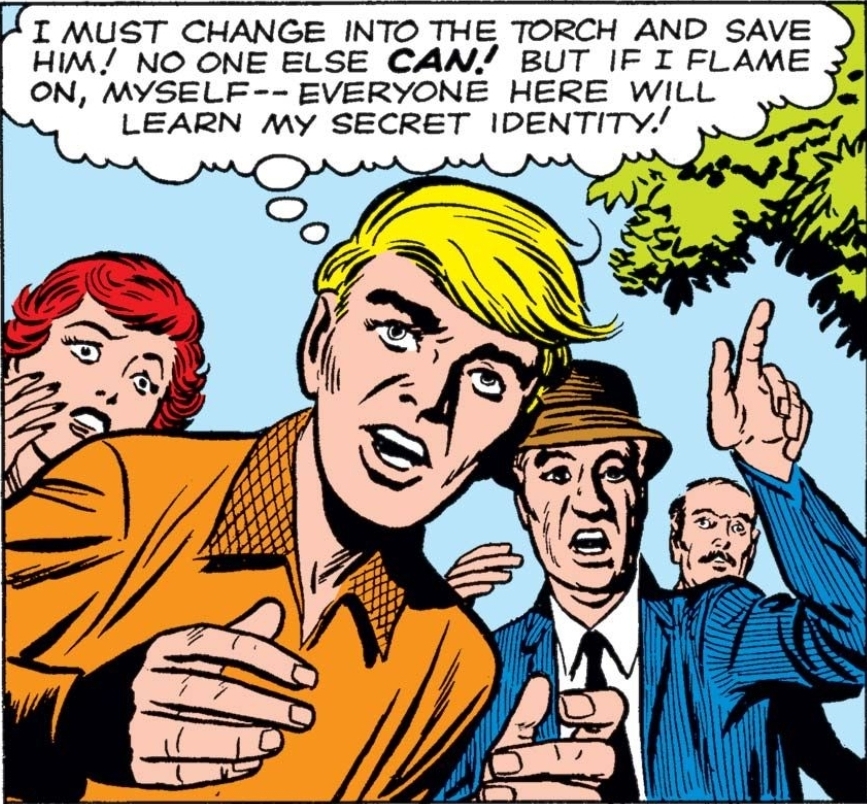
The premise alone is a stretch. The book suddenly wants Johnny to have a secret identity — something that doesn’t fit neatly with the Fantastic Four at all. They’re celebrities. Public figures. They get fan mail.
The book makes a point of explaining that everyone knows Sue Storm is the Invisible Girl. But somehow Johnny — living in the same house, going to high school on Long Island — can just… blend in.
His supporting cast even gets written out with an editor’s note.
It’s a bonkers retcon.
We get a detailed look at Johnny’s asbestos-lined home — which feels less like a superhero detail and more like something that should probably be investigated by the New York City Housing Authority.
We get yet another recap of the Fantastic Four’s origin. I believe this is the fourth time. Early Marvel still treating every issue as someone’s first.
Eventually, the story arrives.
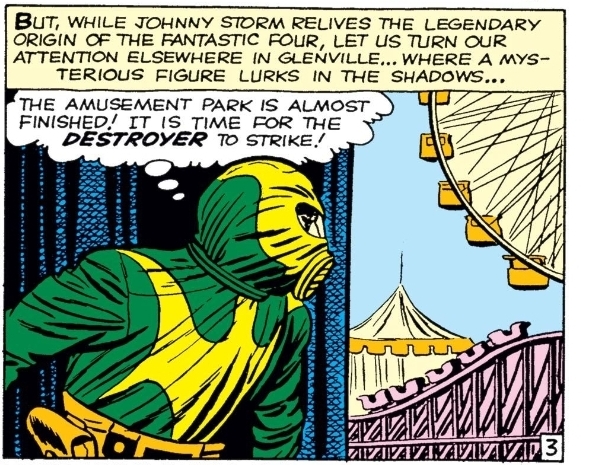
A disposable villain called The Destroyer threatens a local amusement park. Johnny goes to great lengths to protect his secret identity, even when it feels unnecessarily dangerous — filling rooms with smoke, throwing fireballs in crowded spaces, generally being far more reckless than the situation calls for.
The Thing shows up. Johnny refuses his help. The secret identity has to be maintained.
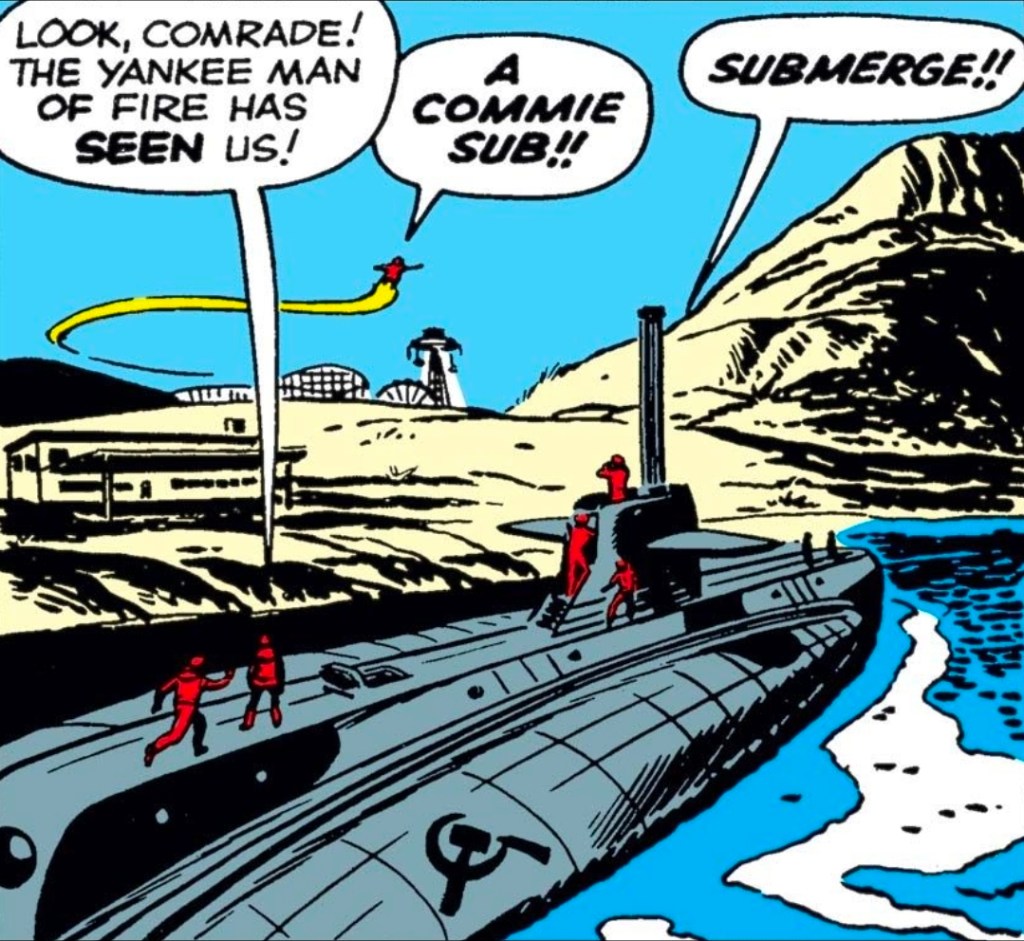
Then a communist submarine appears.
Of course it does.
The story wraps like an episode of Scooby-Doo.
The newspaper publisher who had been receiving The Destroyer’s threats turns out to be the villain all along — using the amusement park as a front to pass information to the Russians.
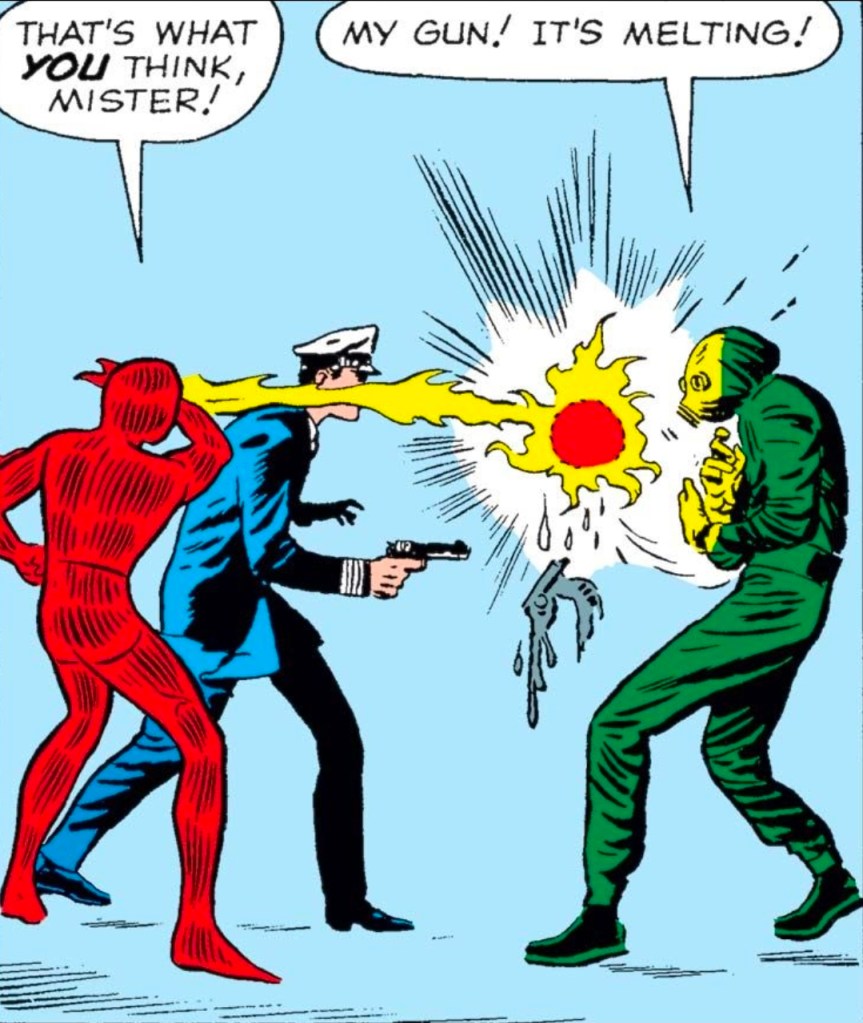
Marvel throws everything at this one. Secret identities, mysteries, communists. I’m surprised they didn’t find a way to shoehorn in an alien.
It’s weird. It’s messy. And to be honest, it’s not very good.
But it does make one thing clear.
Marvel is committed to the future.
The anthology is on notice.
The heroes are coming.
Marvel in the 60s – Entry #16
 Everything
Leave a comment