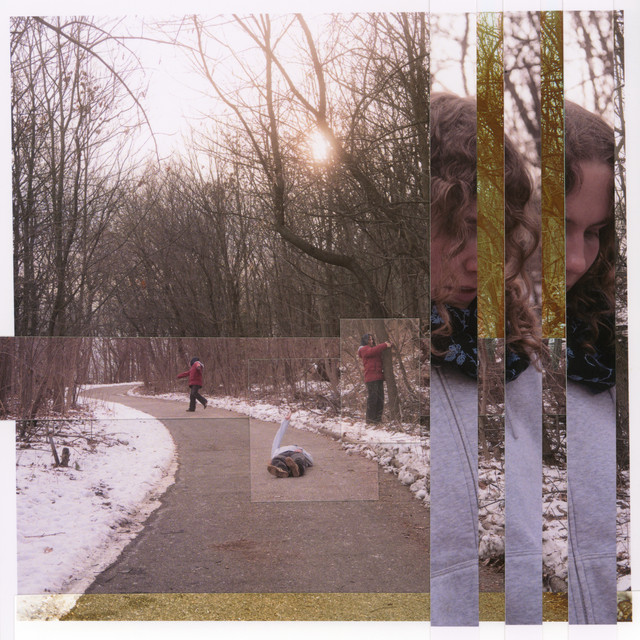
Album by Annabelle Dinda
There are albums I feel like I understand immediately. Where the influences come from. What they’re trying to say. How they make me feel. It all unpacks for me.
Then there are albums that make me feel like I could listen another ten times and still find something I missed. There’s always something new.
Some Things Never Leave is one of those albums I could spin on repeat and relearn over and over.
Annabelle Dinda creates a warm mixture of folk, rock, psychedelia, and echoes of ’60s pop. But it isn’t the music I think about when I come away from this record. Dinda’s songwriting is what keeps pulling me back.
Her songs feel grounded in ordinary life but have a way of examining human nature that feels bigger than I expected.
And Dinda’s voice is impossible for me to ignore. Whether she’s singing softly or pushing toward something bigger, there’s a presence to her delivery that commands my full attention.
The arrangements have that same quality, initially sounding like a really good folk band playing together in a room. But listen closer and you start hearing all the little flourishes—voices doubling, sounds appearing around the edges, unexpected touches that make the songs feel much more intricate than they initially seem.
“Big News Day” is a great way to start the album. The music has an upbeat momentum that immediately pulls you forward, while the lyrics reveal something far more unsettled underneath.
Dinda contrasts a supposedly permanent relationship falling apart with something casual unexpectedly becoming serious. Both are examples of expectations colliding with reality. We make promises and construct little rules to protect ourselves and control where things are going, only to discover that life has absolutely no obligation to follow them.
“Cosmic Microwave Background” takes that uncertainty somewhere much bigger. Psychedelic folk and Beatles-esque background harmonies give the song an almost otherworldly quality as Dinda seems to wonder whether there’s some cosmic connection tying everything together or whether we’re simply imposing reason on something fundamentally random.
I’m not entirely sure. Every time I think I’ve grabbed onto the song, something slips away. But that uncertainty feels appropriate for a song seemingly obsessed with whether reason and logic can explain anything in the first place.
“Doesn’t Matter” is probably the album’s most immediately accessible song and sounds like it could easily be a breakout single. What begins relatively restrained gradually builds into what I can only describe as an acoustic avalanche, growing until the anger and disillusionment underneath seem too large for the arrangement to contain.
“Satellites” has an Aimee Mann-like precision to the songwriting, along with the kind of lyrical wordplay I associate with Elvis Costello. Dinda captures that strange moment when someone who once occupied an enormous amount of space is suddenly revealed to be much smaller than they seemed. The person hasn’t disappeared. They’re still there. They’re just no longer at the center of everything.
Around this point, Some Things Never Leave seems to change direction. The opening songs look outward. Relationships collapse. Life refuses to follow our rules. The universe may or may not have any larger meaning.
For me, “Everyone Likes to Be Forgiven” is the centerpiece of the album. The song seems to recognize the things we do to sabotage our own happiness while acknowledging that some of those defenses once protected us. But do we need them forever?
If someone breaks your heart, closing yourself off might keep it from happening again. It can also prevent you from ever experiencing the thing you’re supposedly protecting.
The music carries those emotions beautifully before gradually stripping itself down near the end. I won’t lie, this one brought a tear to my eye.
“Gunpoint, Headlock” isn’t overtly political so much as an expression of the anxiety that comes from simply being alive at this moment in time.
Violent imagery sits beside mundane observations of modern life, creating this strange sense of fragility. The vocal harmonies sometimes make Dinda sound like a choir of one, and toward the end the arrangement becomes almost theatrical. I kept coming back to the same question: If tomorrow isn’t guaranteed, do you allow that knowledge to paralyze you or use it as permission to live louder?
“The Hand” has a great rhythmic pulse and pop sensibility underneath everything, but Dinda’s performance really grabbed me.
The song wrestles with the different ways men and women are received when they speak their minds. By the second half, any ambiguity disappears as Dinda becomes incredibly direct and powerful.
“To Reconcile” slows everything back down with piano and a sound that recalls classic ’60s folk-pop. Even here, Dinda never disappears into the arrangement. There’s strength in her quieter performances.
I’m less certain about the lyrics. I hear something about contradiction, the fluid nature of life, and perhaps our difficulty recognizing those same contradictions within ourselves. But I’m perfectly comfortable admitting the song may be a few steps ahead of me.
“The Body Remembers” connects trauma with physical memory—the idea that whatever we try to bury doesn’t simply disappear. The slow build feels almost like the experience itself. Something catches you unexpectedly. A memory returns. Then another. Before long, something you thought you’d buried has completely surrounded you again.
Some Things Never Leave ends with “London Plane Trees Grow in Philly.” After everything that came before it, the gentle acoustic folk arrangement feels almost tranquil. Not because everything has been resolved. Because maybe resolution was never the point.
The song feels resilient to me. After an entire album wrestling with changing relationships, uncertainty, fear, trauma, aging, and the uncontrollable nature of existence, Dinda arrives at something approaching acceptance.
One couplet stood out to me:
“ache of living fear of dying / they’re the same says fate while sighing”
That may be the thesis of the entire album.
The opening songs question whether this chaotic world has some kind of order we can understand. By the finale, I no longer felt like Dinda was trying to impose one.
Maybe there’s freedom in letting go of that need. Pain, joy, love, loss, fear, and those tiny beautiful moments in between are all part of the same life. You don’t defeat uncertainty. You learn how to withstand the weather.
Some Things Never Leave is a phenomenal album. Dinda’s voice can stop me in my tracks, and her songs are warm and melodic while leaving enough ambiguity for me to keep turning them over in my head.
She can take something completely ordinary, turn it slightly, and suddenly reveal an idea I hadn’t considered before.
I know I’ll return to this album. Partly because I loved it. And partly because I have the wonderful feeling that Some Things Never Leave is smarter than I am, and there are still ideas, connections, and little observations hiding inside these songs that I haven’t found yet.
One of the best albums I’ve heard from 2026.
Verdict: Masterpiece
Explore more from Annabelle Dinda

Leave a Reply