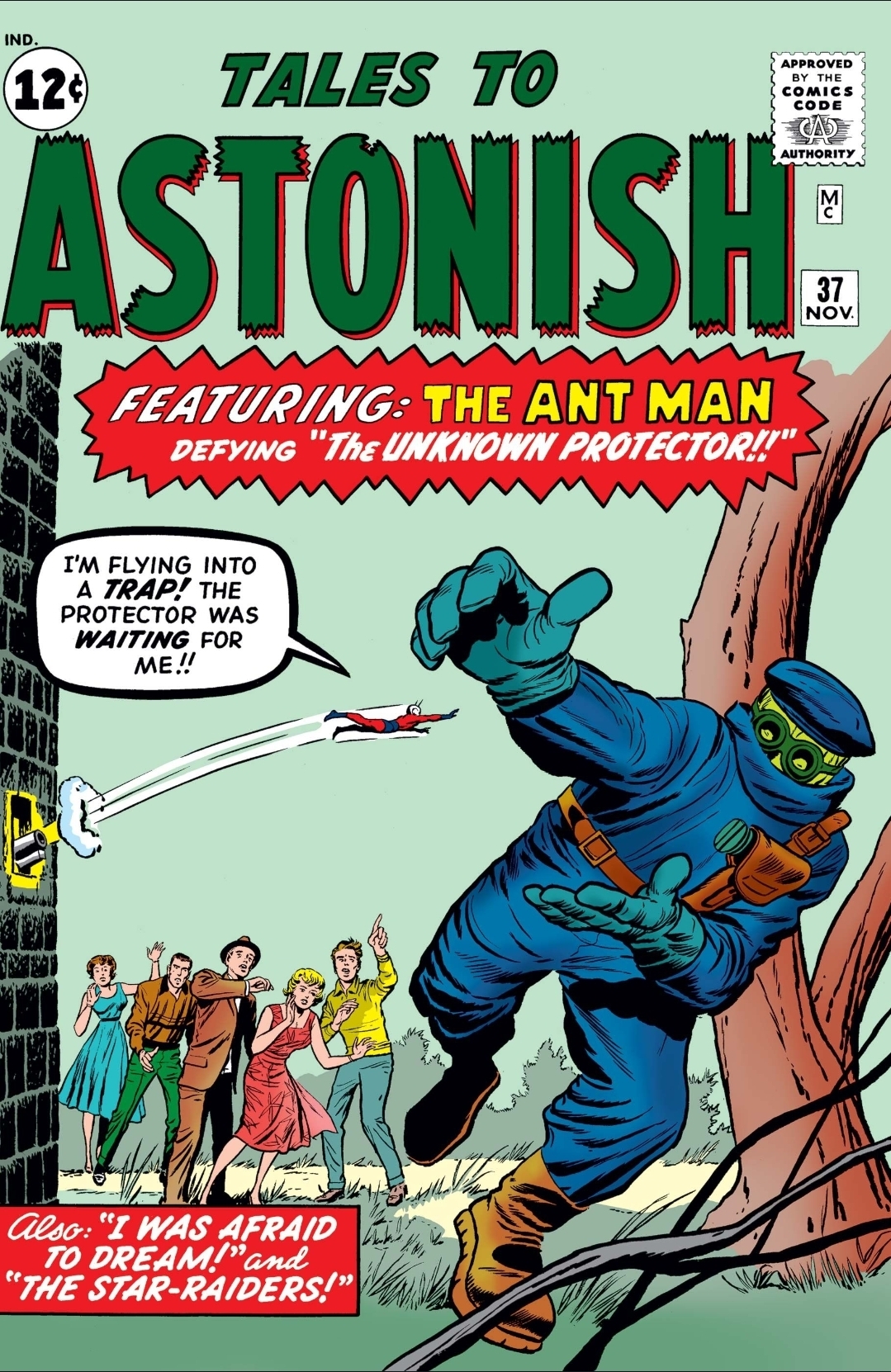
Written by Stan Lee – Penciled by Jack Kirby – Inked by Dick Ayers – Lettered by Art Simek
Marvel starts to realize its heroes can tell different kinds of stories.
In the previous issue, things finally clicked. So it makes sense that Tales to Astonish #37 doesn’t try to reinvent anything. It just repeats what worked and lets this character find a place in the Marvel world that fits.
Hank Pym is fully operating as a superhero now.

He has a secret identity. A lab that doubles as a headquarters. He monitors distress signals, listens to police radio, and heads out to investigate crimes. The structure is familiar, but now it feels intentional instead of an anthology retread. And more importantly, it fits.
What Ant-Man brings to Marvel is something none of the other characters quite do yet.
The Fantastic Four deal in spectacle. Thor brings myth. The Hulk taps into atomic-age horror. Ant-Man, though, is something else entirely. He’s street-level.
He deals with small crimes. Local threats. Problems that don’t require gods or monsters — just someone paying attention. This issue leans fully into that.

The villain, The Protector, is running a protection racket against local jewelry stores. It’s a simple setup, but it works. It turns the story into a cat-and-mouse game, with both Ant-Man and the villain actively tracking each other.
Pym even goes undercover, posing as a shop owner to follow the trail. And once again, he wins not through strength, but through strategy — figuring out the villain’s identity and turning the situation against him.
It’s another twist ending, very much in line with Marvel’s anthology roots. But like last issue, it fits the character.
And visually, this is where Ant-Man really shines.

Kirby gets to play with scale here in a way none of the other books quite allow. There’s a real sense of perspective — Ant-Man darting through oversized environments, villains looming over him, hands reaching in to grab something they can barely see.
It feels like Kirby pushing past what he was doing in the early Fantastic Four issues, stretching the form and seeing how far it can go. Like an artist experimenting in real time, finding new ways to make motion and space feel alive on the page.
It’s dynamic, inventive, and a glimpse of how Kirby starts to reshape what comic art can do.

This is still a disposable story. A disposable villain. One and done. But it solidifies something important.
Marvel characters don’t need bigger stakes.
They just need the right ones.
Marvel in the 60s – Entry #19


Leave a Reply