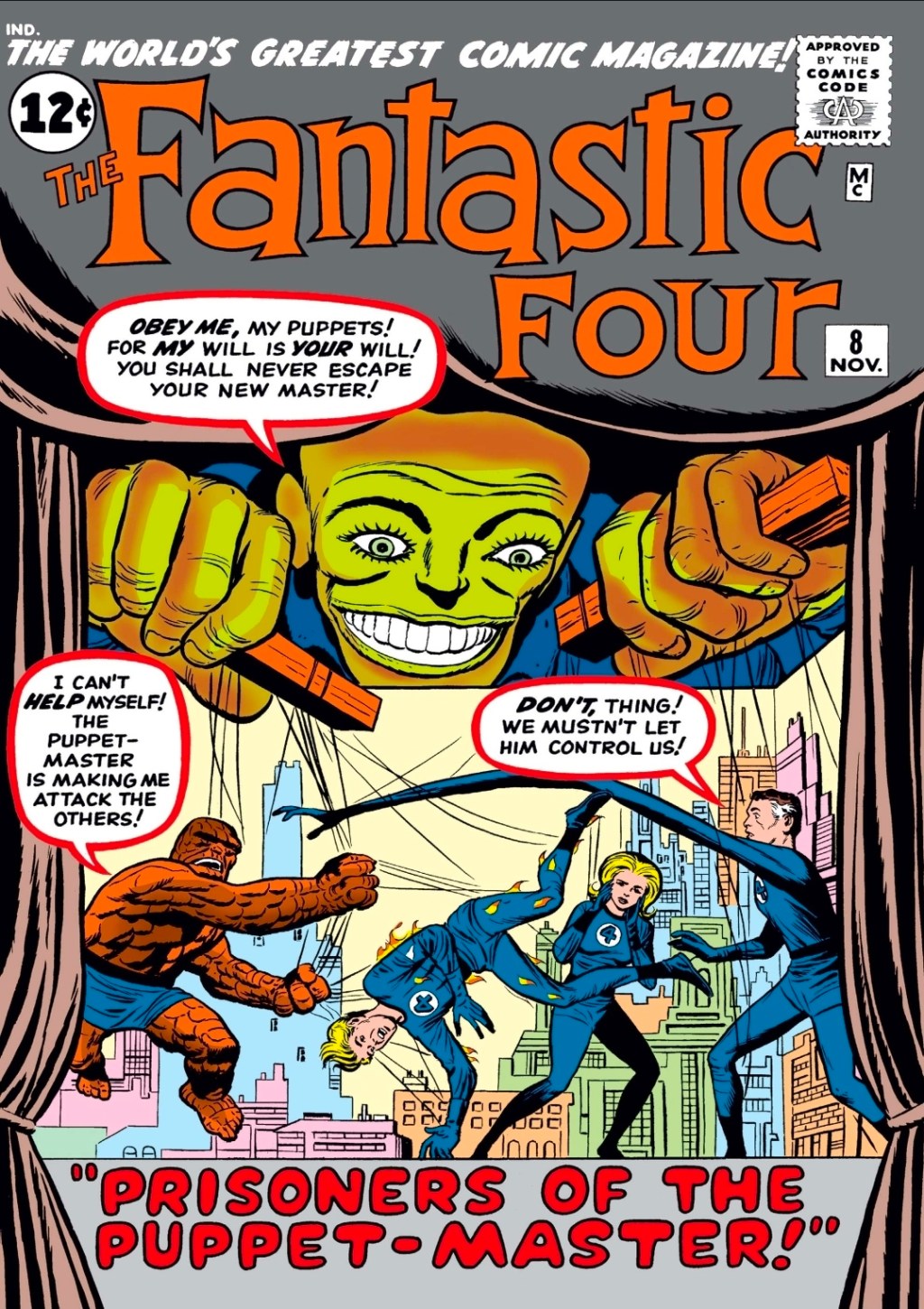
Written by Stan Lee – Penciled by Jack Kirby – Inked by Dick Ayers – Lettered by Art Simek
Marvel starts building a rogues gallery.
Like a lot of Fantastic Four issues that follow, this one opens with a fight.
Not with a villain.
With each other.
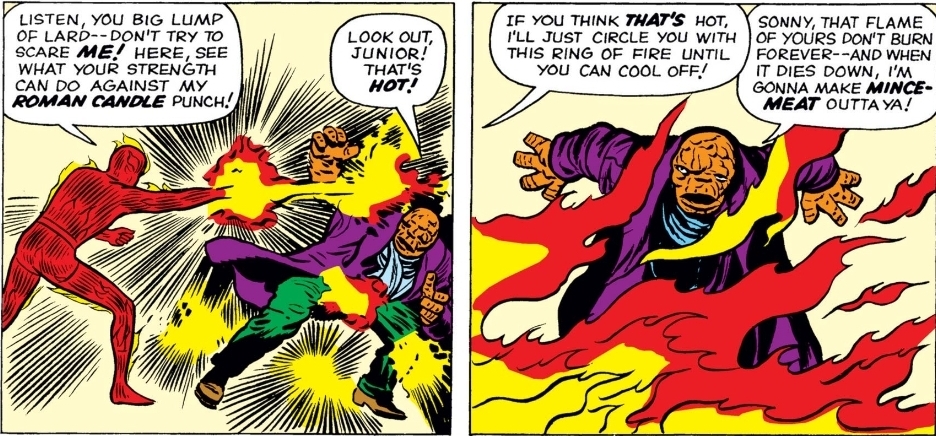
Johnny and Ben go at it again, but this isn’t quite the playful sibling rivalry it will become. Ben is still raw here. Angry. Defensive. A misanthrope with a short fuse. The tension feels real, and it spills over quickly, sending Ben storming off, with Sue chasing after him.
At first, it plays like filler — another argument, another blow-up. But this time, it all connects. If Ben doesn’t start that fight, Sue doesn’t chase him. They don’t cross paths with the Puppet Master. They don’t meet Alicia.For the first time, the opening isn’t just a scene. It’s the story.
this leads them straight to The Puppet Master.
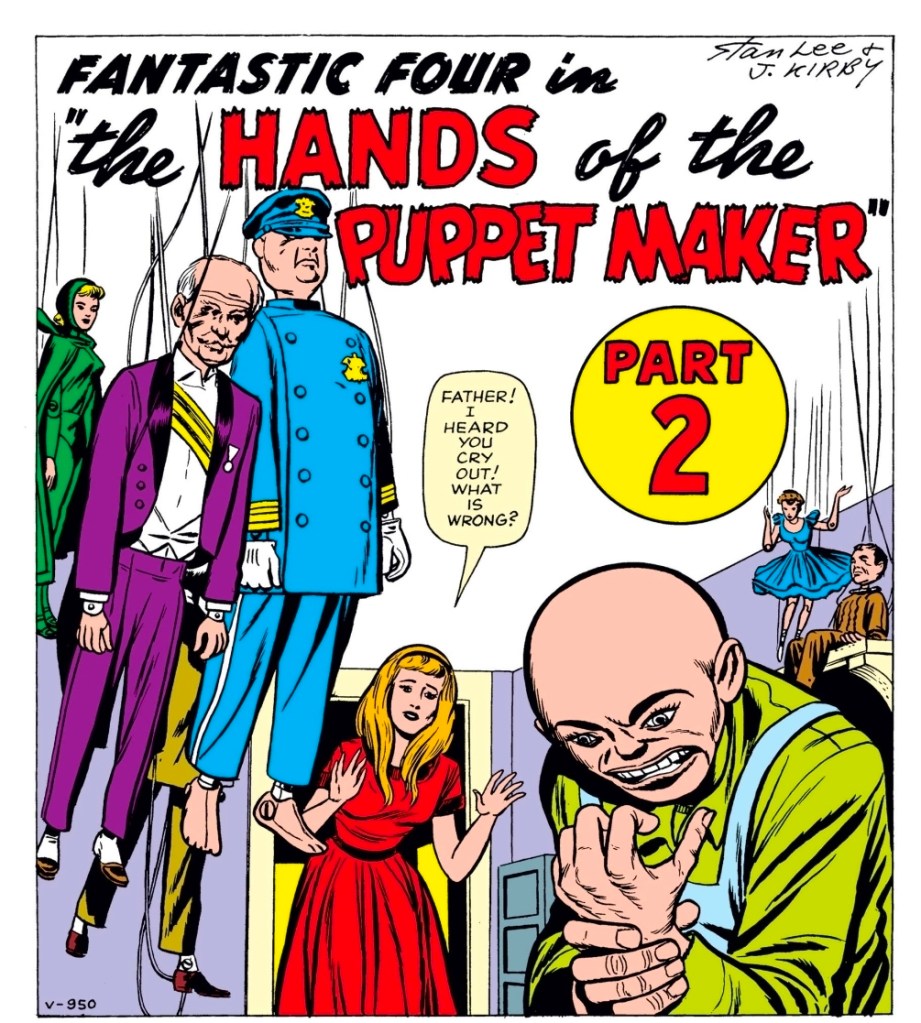
The Puppet Master is a different kind of villain. Small. Unassuming. Almost strange-looking, like a bald Peter Lorre with a little Marty Feldman. Not physically imposing like Namor or Doom, but closer to the Mole Man mold — someone overlooked, underestimated, and quietly dangerous.
His power is pure early Marvel: radioactive clay that allows him to control anyone he can sculpt.
Including Ben Grimm.
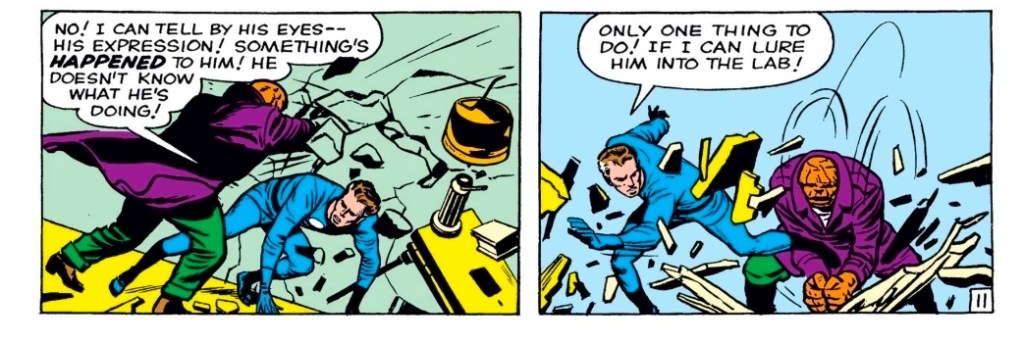
What follows is one of the better sequences in these early issues. The Thing, under someone else’s control, turned loose against the team. It becomes a clash of Ben’s raw strength versus Reed’s intellect — Reed dodging, stretching, thinking his way through chaos while Ben smashes everything in sight.
It’s dynamic, tense, and finally feels like the characters are being used in ways that highlight what makes them different.
But the real foundation being laid here isn’t the fight.
It’s Alicia.
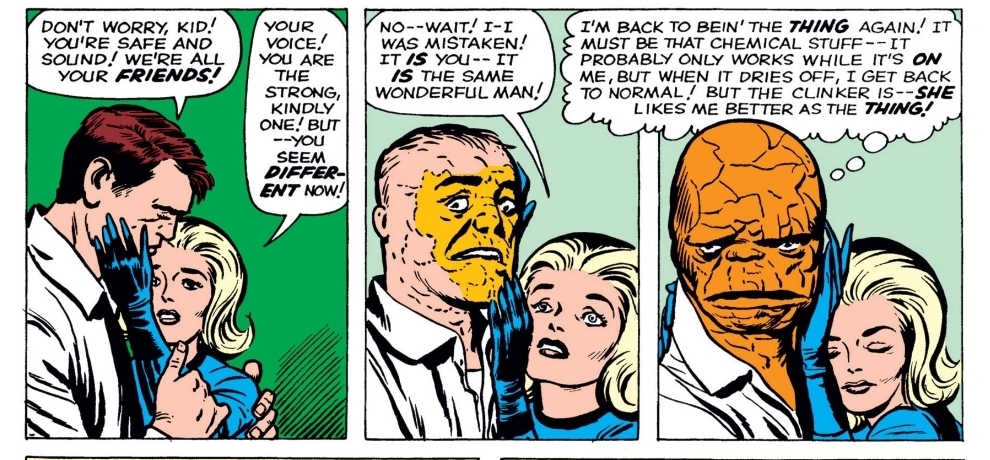
Alicia Masters is the Puppet Master’s blind stepdaughter — trapped in his world, but nothing like him. She’s gentle, kind, and genuinely cares about people. You can see it immediately in how she treats Ben.
This is the beginning of one of Marvel’s most important relationships. Ben’s anger and self-loathing meeting Alicia’s quiet empathy and artistic sensibility. She doesn’t see the monster — or maybe more importantly, she doesn’t treat him like one.
And that matters. Not only for this story, but for the evolution of Ben Grimm as a character.
Because Ben believes she prefers him as the Thing.
It’s a strange, complicated twist on Beauty and the Beast, and you can already see how it starts to soften him. Not fix him. Not cure him. But change the way he sees himself.
Early Marvel has played with transformation before, but this is the first time it really starts to explore what it means to live with it.
The final act swings back toward chaos.
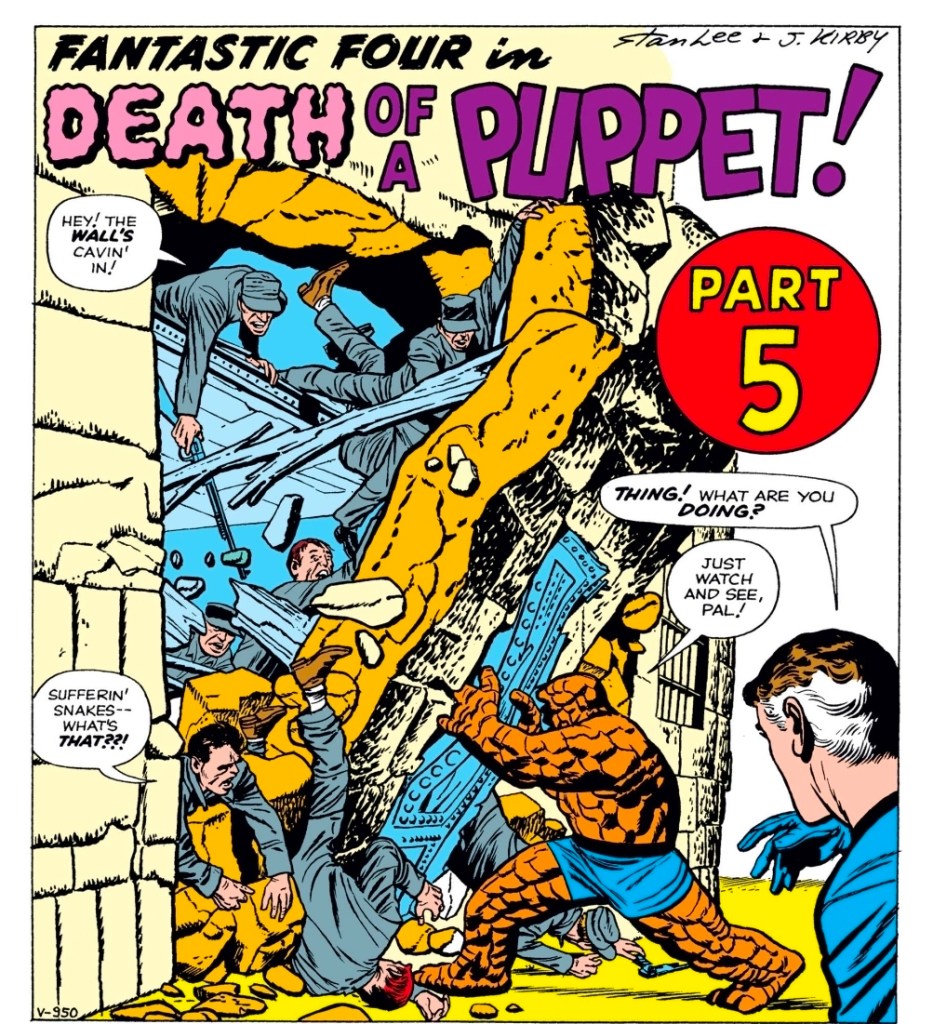
The Puppet Master triggers a prison riot. Giant puppets. Winged horses. Reed catching bullets. Ben tearing through walls. It’s big, messy, and very much in line with the book’s usual energy.
And then it ends in a way that still feels rooted in Marvel’s past.
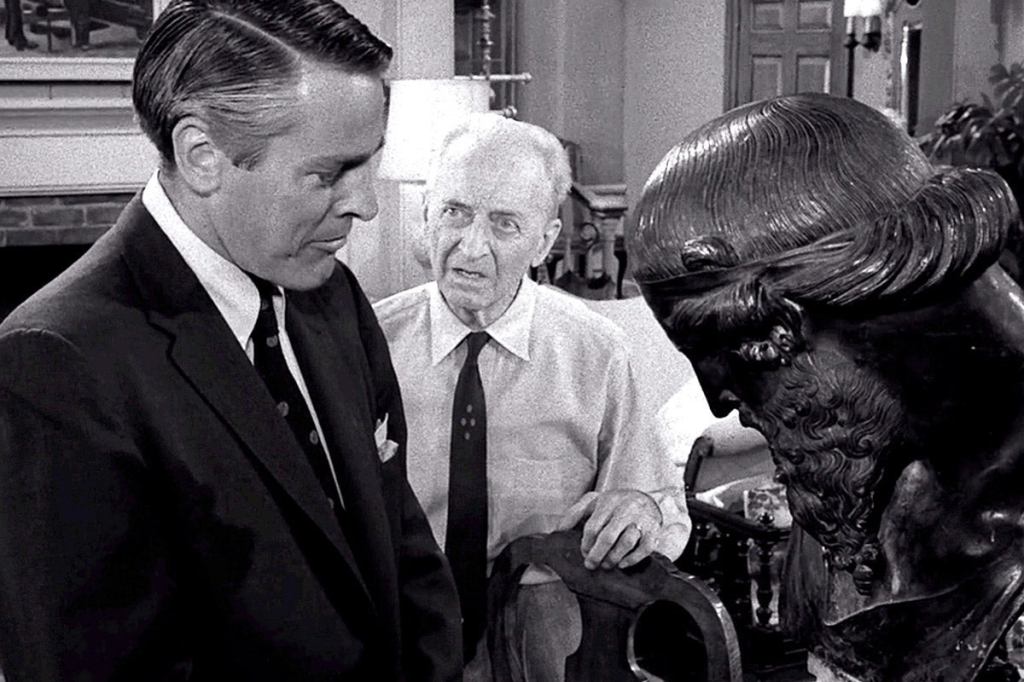
The Puppet Master falls to his death — a Twilight Zone kind of justice, the final panel lingering on a puppet lying on the ground.
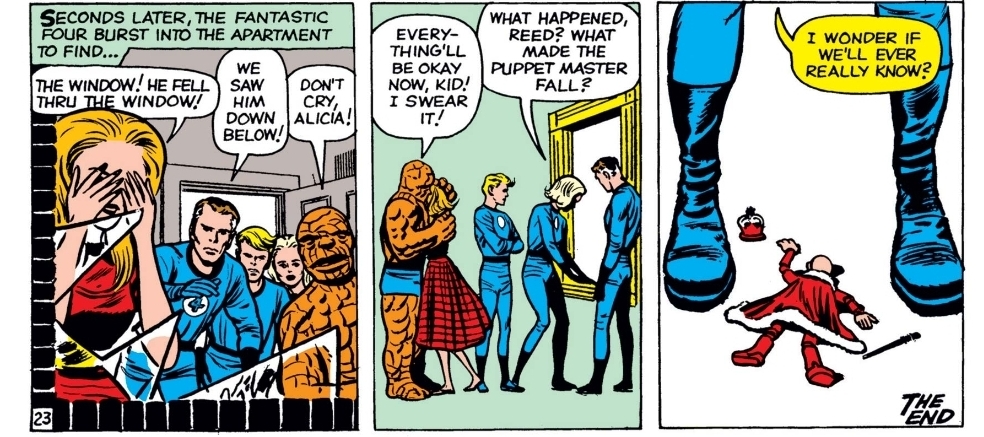
Quick. Clean. Seemingly final.
But even with those old habits still in place, something has changed.
The villain may still feel like he walked out of an anthology story. The structure may still lean on familiar tricks.
For the first time, Marvel uses every page, every moment, to move the plot forward.
No filler. Just story.
Marvel in the 60s – Entry #21

 Everything (not really)
Leave a comment