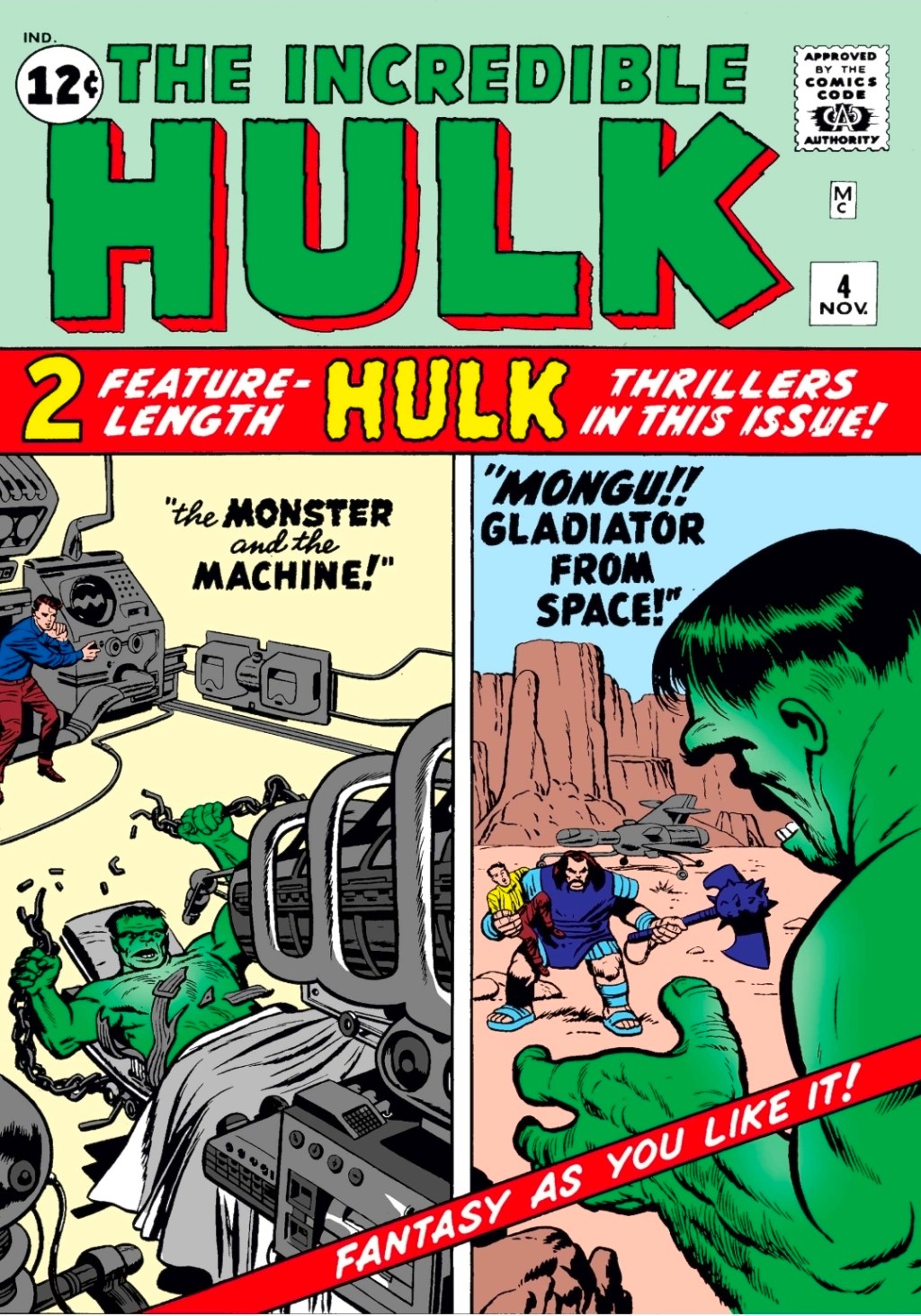
Written by Stan Lee – Penciled by Jack Kirby – Inked by Steve Ditko – Lettered by Art Simek
The Hulk’s lore and archetypes are starting to take shape — even if the book isn’t there yet.
This title feels like it’s floundering.
The cover advertises two stories — never a great sign — and the split highlights both where the Hulk is evolving and where the book is still stuck.
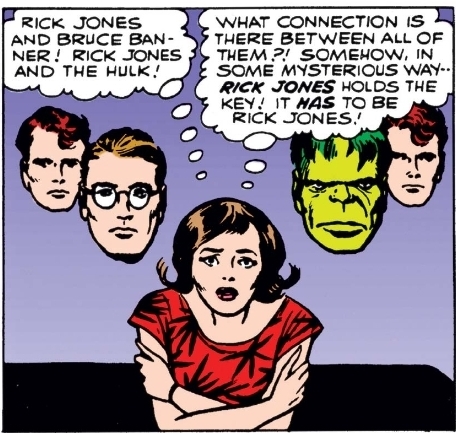
The first half opens with yet another retelling of the origin — which makes three times in four issues. Early Marvel really wants to make sure you’re caught up.
But inside that repetition, something starts to change.
Instead of atomic-age horror that echoes those old Universal monster movies, it focuses on the people around the Hulk — Betty, Ross, Rick, and Bruce.
For the first time, this feels like a Hulk story instead of something pulled from Marvel’s anthology playbook.
Betty gets more to do here, actively trying to piece together the connection between Banner, Rick, and the Hulk. General Ross’s obsession sharpens. Rick’s sense of responsibility comes to the forefront, and Banner’s desperation to control the Hulk intensifies.
The whole dynamic starts to take shape — less monster-of-the-week, more something closer to a tragedy.
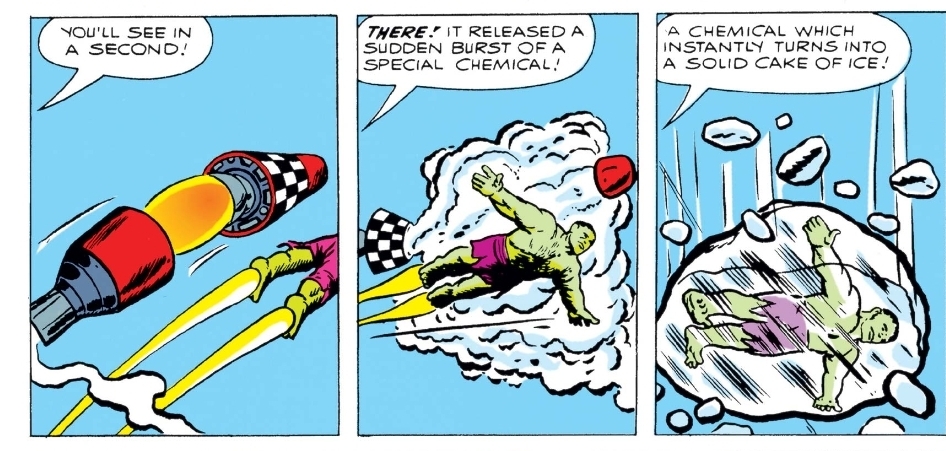
We also see more evolution from Kirby. His design for the Hulk shifts closer to its familiar form. He expands on his “Kirby tech” through the military weapons designed to stop the Hulk, and gets to flex his creativity in how those weapons function.
The Hulk himself is still in an odd place. He follows Rick’s commands, which makes for an awkward setup, but it does allow the story to explore something new: what happens when the Hulk is pointed at something resembling heroism.
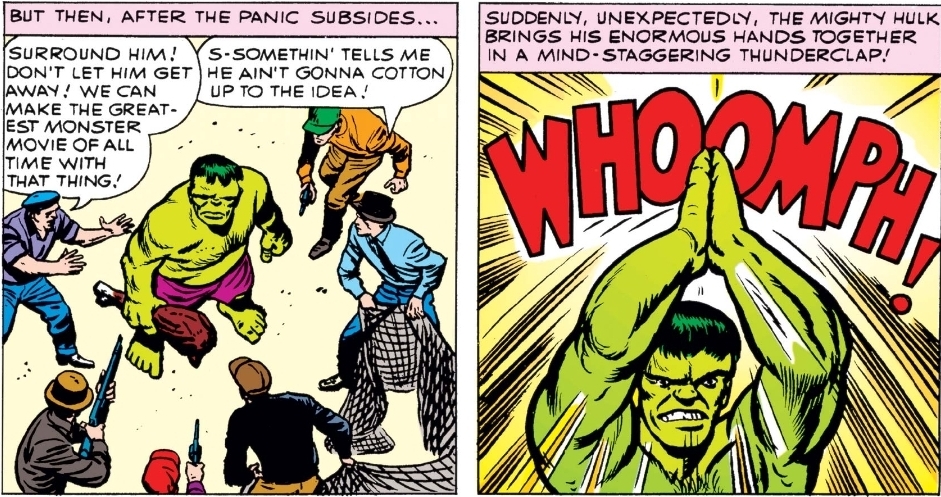
We get our first thunderclap — a move that will become one of the character’s defining traits — and a series of almost superhero moments, even if they feel a little unfocused.
Then the book makes a big swing.
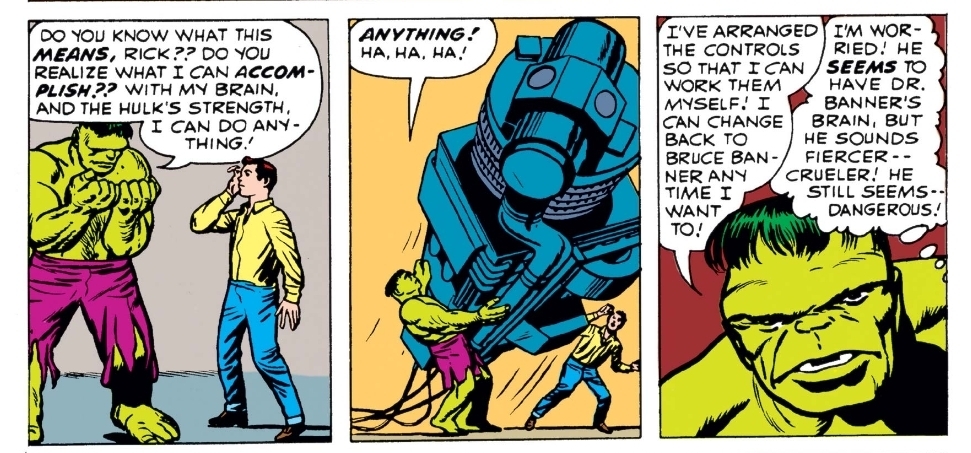
Banner is restored, then overexposed to gamma, and the lines blur. The Hulk returns, but this time something is different.
He has Banner’s mind.
But not his restraint.
This isn’t the meek scientist. This is something harsher. Colder. A version of the Hulk that feels like a rough early draft of what will later become the Grey Hulk — the monster and the man fused into something more dangerous than either one alone.
It’s one of the most interesting ideas the book has introduced so far.
And for a moment, it feels like the series might finally be finding itself.
Then the second story happens.
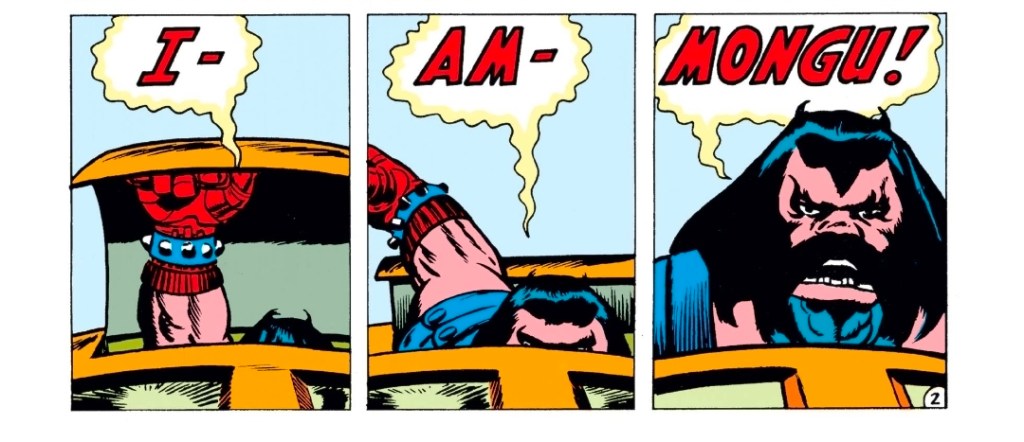
Mongu, a gladiator from outer space, arrives to challenge Earth’s mightiest warrior. The Hulk flies off — in a jet — to fight him. Which feels exactly like the kind of story this book should have already moved past.
Of course, there’s a twist. Mongu isn’t real, but a disguised Soviet agent trying to capture the Hulk.
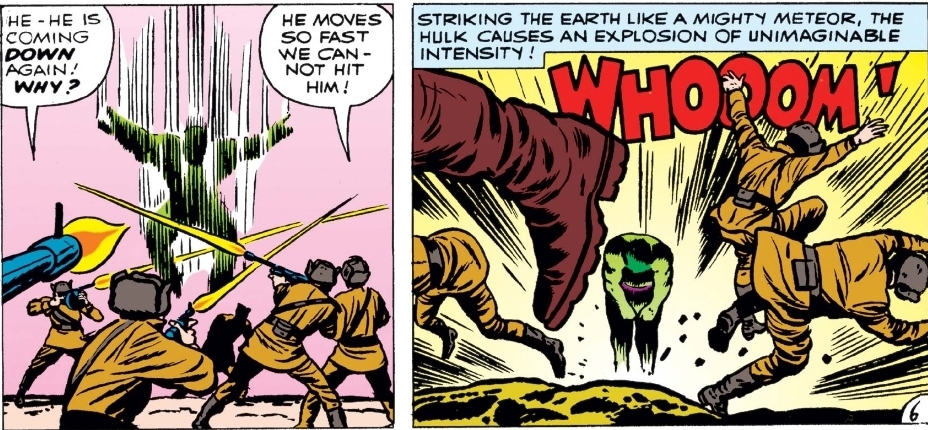
It’s thin. It’s familiar. Aliens and communists, right back on schedule.
But even here, Kirby is doing work.
The action is some of the best the book has had. The Hulk fighting soldiers, catching grenades, battling futuristic weapons — it’s dynamic, chaotic, and visually compelling. You can see the appeal, even if the story around it doesn’t quite hold.
And that’s the issue in a nutshell.
The Hulk is evolving.
The book is not.
There are real ideas here. Real character dynamics starting to form. A version of the Hulk that feels compelling.
But they’re buried under old habits.
The Hulk is getting there.
The stories just need to catch up.
Marvel in the 60s – Entry #22
 Everything (not really)
Leave a comment