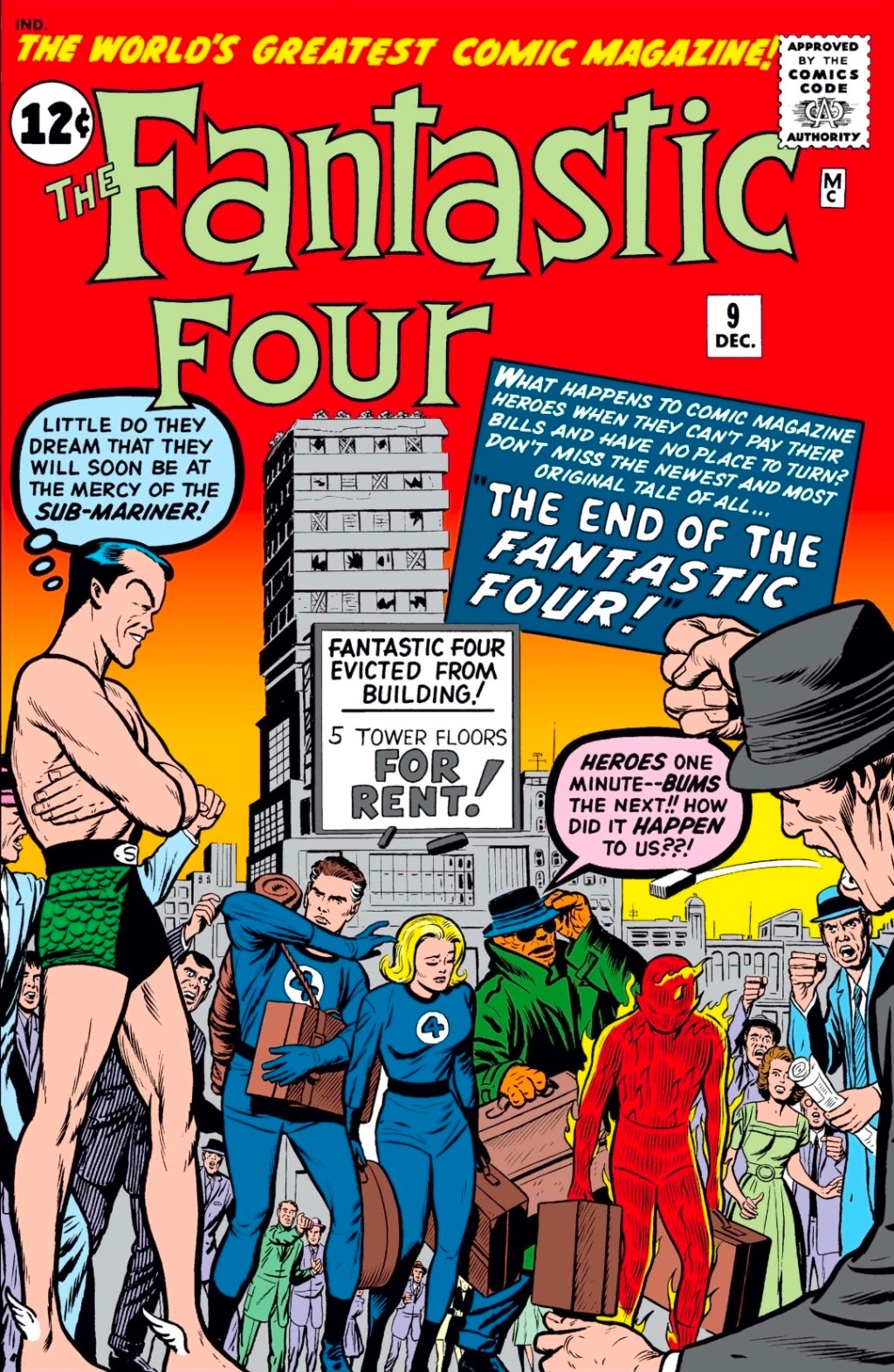
Written by Stan Lee – Penciled by Jack Kirby – Inked by Dick Ayers – Lettered by Art Simek
Marvel goes Hollywood. And things get silly.
This is a weird one.
It opens with Namor, in his underwater lair, watching the news and learning that the Fantastic Four are bankrupt. Apparently, all you need is a good set of rabbit ears — even at the bottom of the ocean, you can still get a signal.
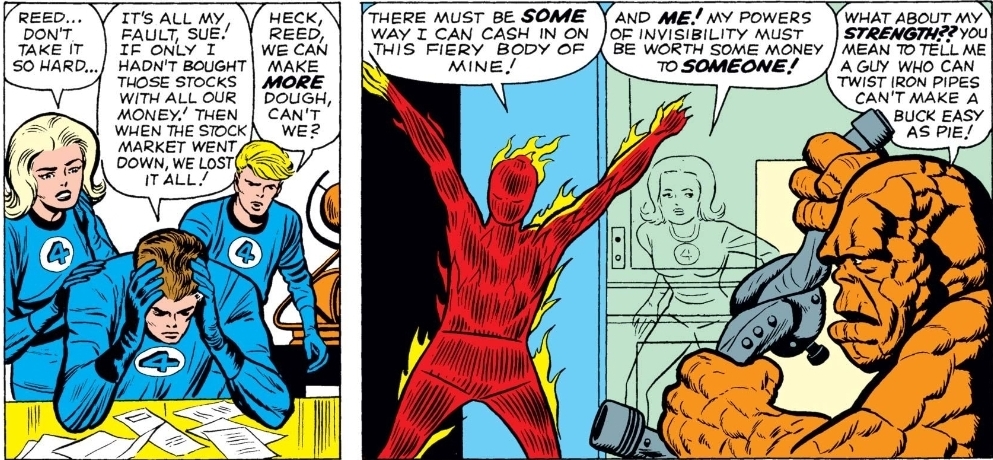
The team is broke. They have to sell everything. And that sitcom setup becomes the basis for Namor to lure them into a trap.
It doesn’t quite match the tone of the series.
But it does point to something new in Marvel’s arsenal.
Comedy.
There’s a streak of farce running through this issue.
In the future, the Fantastic Four will lean into humor — mostly through Ben and the Yancy Street Gang — and Marvel will eventually weave comedy into many of its books. But here, we’re seeing it for the first time.
And it makes sense. Thor, Ant-Man, and the Hulk don’t really lend themselves to this kind of levity.
The whole thing plays out like a Hollywood comedy.
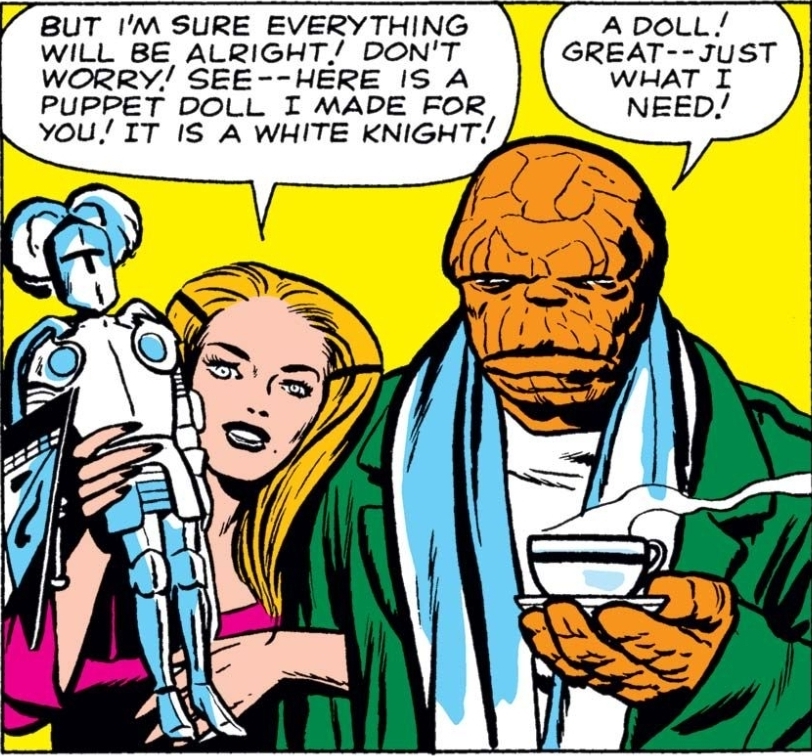
Ben gets refused a cab ride because the driver knows the FF is broke, and immediately wrecks the car. Later, we see him casually sitting in a robe, drinking tea with Alicia — a great visual that leans fully into the absurdity of the story.
Then the book leans even further into it.
The Fantastic Four get a movie deal.
Kirby fills the issue with celebrity caricatures — including a cameo from Jackie Gleason — and suddenly the book is dipping into Hollywood, pop culture, and media in a way Marvel hasn’t really done yet.
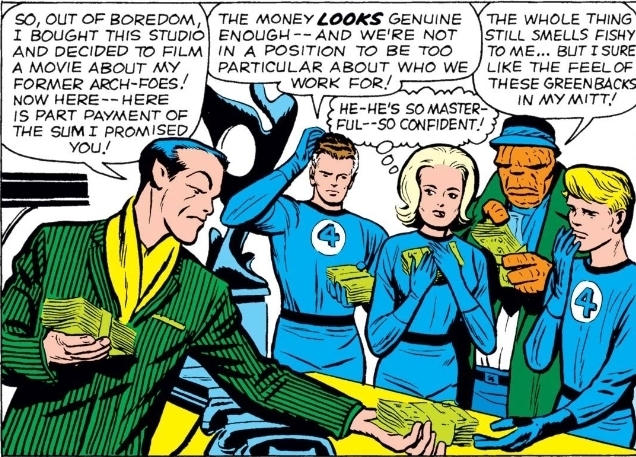
And then it gets even stranger.
Namor is secretly bankrolling the film as part of a plan to isolate and defeat each member of the team. Which leads to a series of increasingly ridiculous set pieces.
Reed is sent to fight a “prop” cyclops that turns out to be real.
Johnny is sent to an island to battle fire-resistant natives.
Ben is set up in a staged fight that quickly becomes real.
None of it really holds together.
The logic is thin. The setups are contrived. Some of the material — especially the island sequence — feels uncomfortable even for its time.
And yet…Kirby is having a blast.
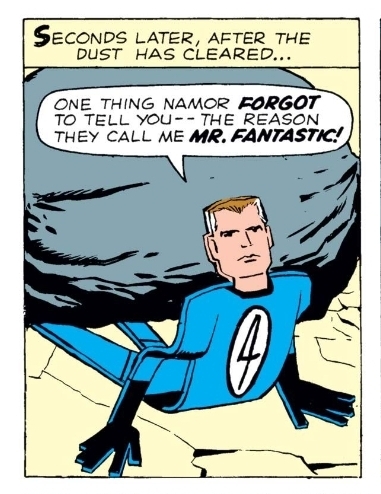
The action is inventive. Reed’s powers are pushed in new ways. The Torch gets striking visual moments. And the fight between Namor and Ben becomes a three-page epic. The scale, the motion, the energy — it’s all there.
And Namor himself continues to evolve.
He’s not just a villain with a revenge plot. He’s driven by something more personal. His entire plan — as absurd as it is — is built around winning Sue over and making her his bride.
Which, of course, doesn’t work.
The team reunites. Namor is defeated. But in a twist, Sue defends him — noting that his sense of honor will force him to yield and follow through on the film, pulling the Fantastic Four out of bankruptcy.
Namor, once again, is left alone — a quiet moment of pathos as he walks back into the ocean.
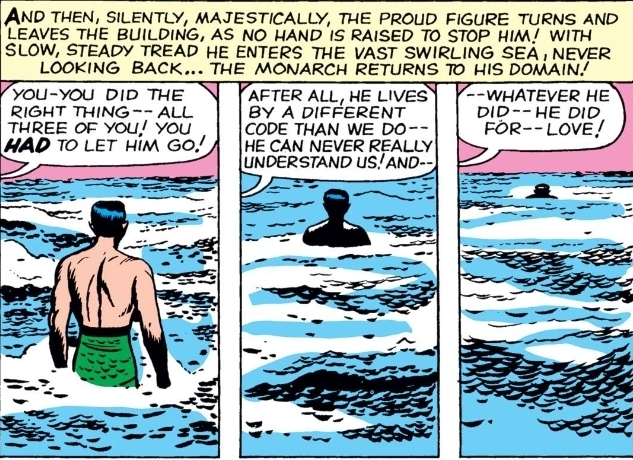
It’s a bizarre issue.
Structurally messy. Tonally all over the place. Often ridiculous.
But also revealing.
Marvel is experimenting again — this time with comedy, celebrity, and pop culture, seeing if superheroes can exist inside something closer to a Hollywood satire.
It doesn’t quite work. Yet.
But it shows just how far they’re willing to push what a superhero story can be.
Marvel in the 60s – Entry #24
 Everything
Leave a comment