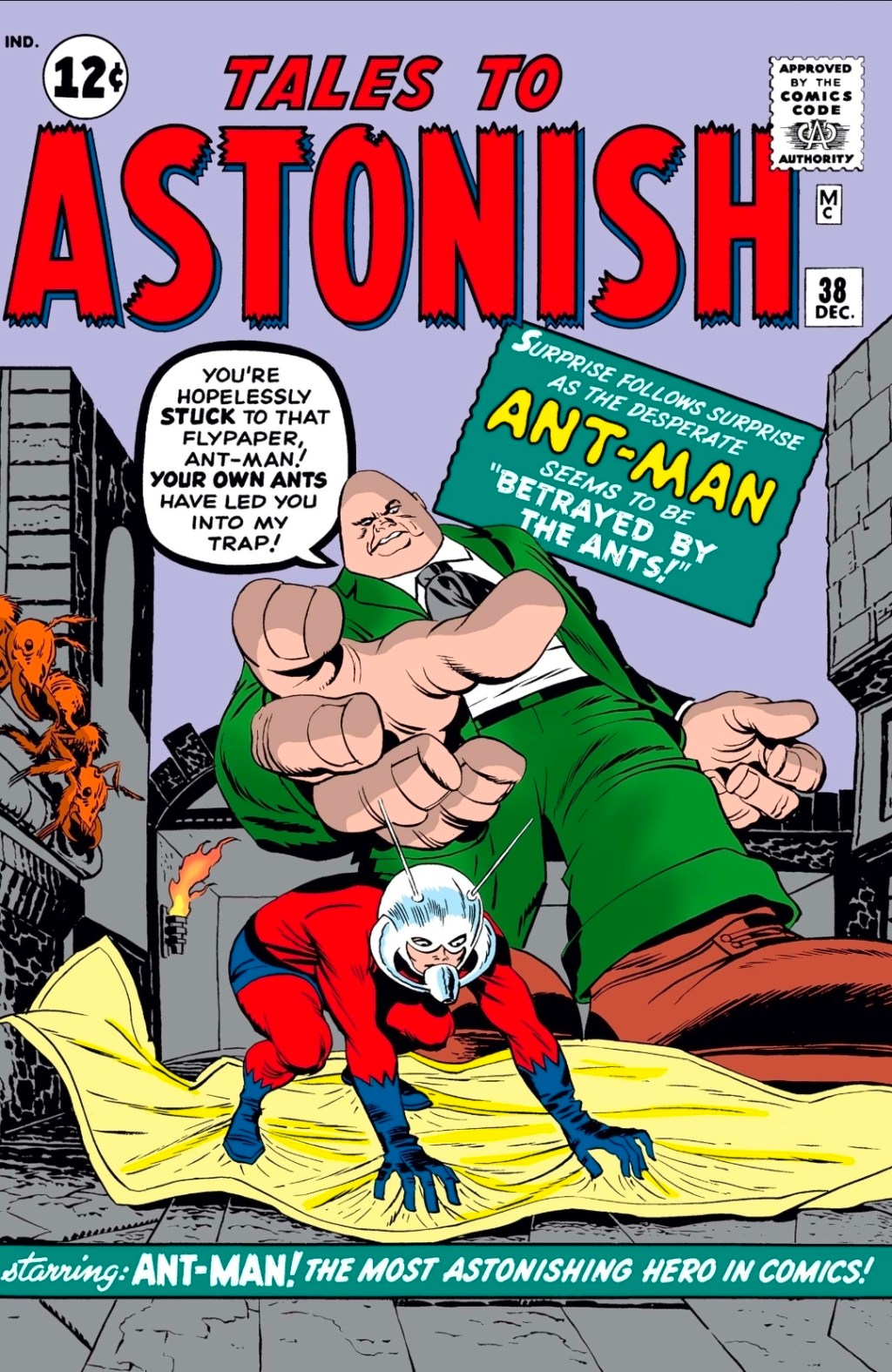
Plot by Stan Lee- Written by Larry Lieber – Penciled by Jack Kirby – Inked by Dick Ayers – Lettered by Jon D’Agostino
Ant-Man finally gets an archvillain.
With the introduction of Egghead, Marvel seems to realize Ant-Man needs something more than disposable crooks and mystery-of-the-month plots.
The Fantastic Four have Doctor Doom. Thor has Loki.
So now Hank Pym gets his opposite number.
And like those villains, Egghead reflects the hero in uncomfortable ways.
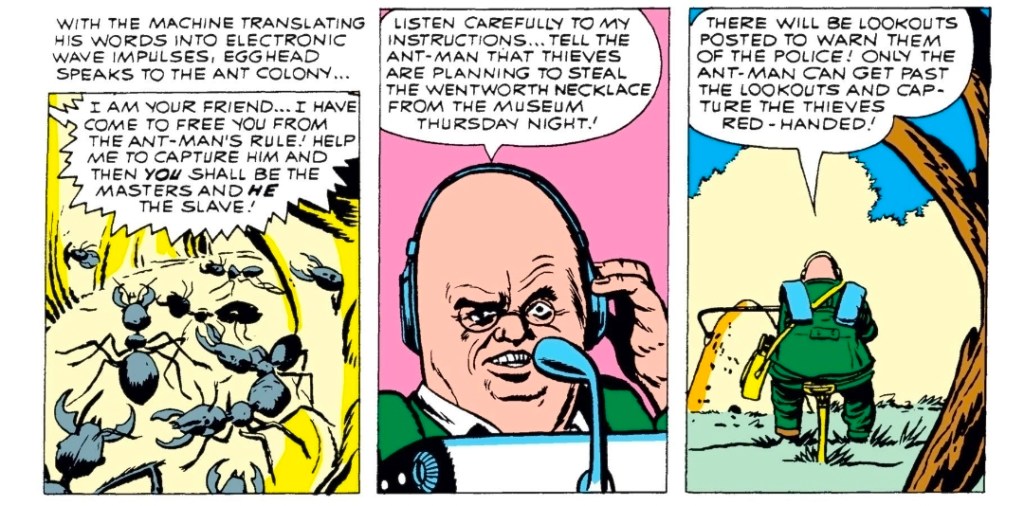
He’s a scientist. An inventor. A genius. He even learns to control ants as part of his scheme.
Egghead is essentially Hank Pym stripped of any sense of responsibility or morality — intelligence driven entirely by ego and self-interest.
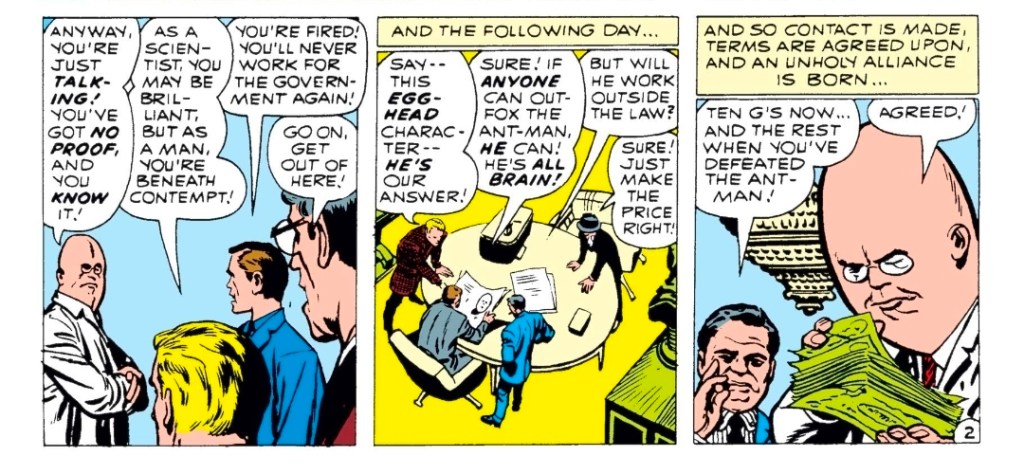
His origin is thin but effective. After being suspected of selling military secrets — and generally being impossible to work with — Egghead is blacklisted from government research.
instead of sent to prison.
Seems pretty lenient.
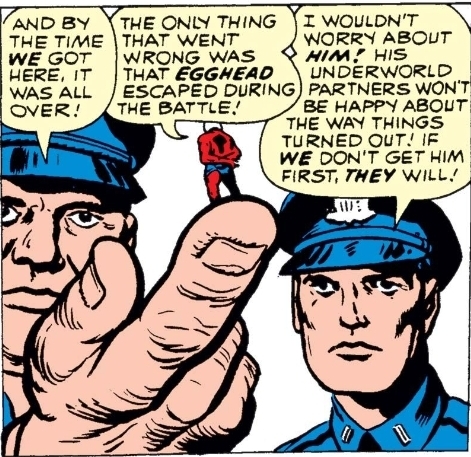
So naturally, local gangsters hire him to eliminate Ant-Man.
It creates a strange but very Marvel combination: 1950s crime bosses mixed with Cold War paranoia and pulp science fiction.
There’s something wonderfully silly about the whole thing.
Egghead sits surrounded by stacks of cash while reading a book called All About Ants. He constantly talks to himself like a melodramatic movie villain. At one point, he feels less like a supervillain and more like a rejected character actor from a gangster serial.
I swear I even see a mob boss that resembles Edward G. Robinson.
But structurally, the issue does something important.
Like Doctor Doom’s debut in the Fantastic Four, Ant-Man himself doesn’t appear for several pages.
The story belongs entirely to Egghead at first.
Marvel is learning that a strong villain can drive the narrative before the hero even enters it.
And once Hank finally appears, Egghead’s plan is already underway.
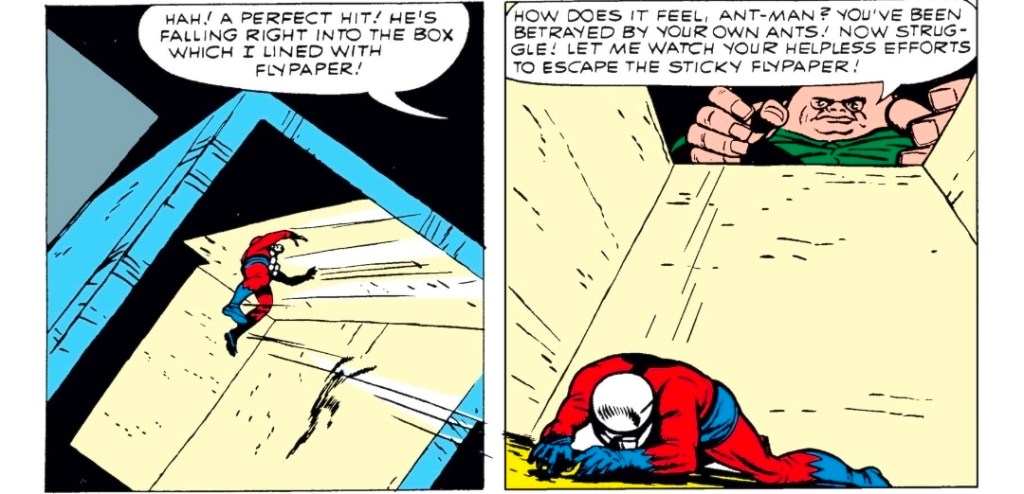
The ants are turned against him. Traps are in place. The conflict feels more deliberate than the random encounters of earlier issues.
Kirby continues evolving here too, though in a different way than in Thor or Fantastic Four. Ant-Man gives him the chance to experiment with perspective and scale. Tiny figures against enormous environments. Strange angles. Everyday objects transformed into obstacles.It’s less cosmic spectacle and more visual experimentation.
And then the issue folds back into anthology storytelling.
Egghead assumes he can dominate the ants through intellect alone, but Hank explains that he works with them rather than controlling them as slaves. The ants reject Egghead because they aren’t driven by human flaws like greed or vanity.
It’s pure sci-fi morality play.
It’s an odd ending for a superhero story, but a perfect ending for an anthology tale trying to say something about the cost of giving in to humanity’s darker impulses.
Still, even as Tales to Astonish continues refining its identity as Marvel’s strange little crime-mystery superhero book, this issue feels like a major step forward.
Egghead becomes one of Ant-Man’s first true recurring enemies.
And every good superhero needs an archvillain.
Even if they’re a little silly.
Marvel in the 60s – Entry #26
 Everything
Leave a comment