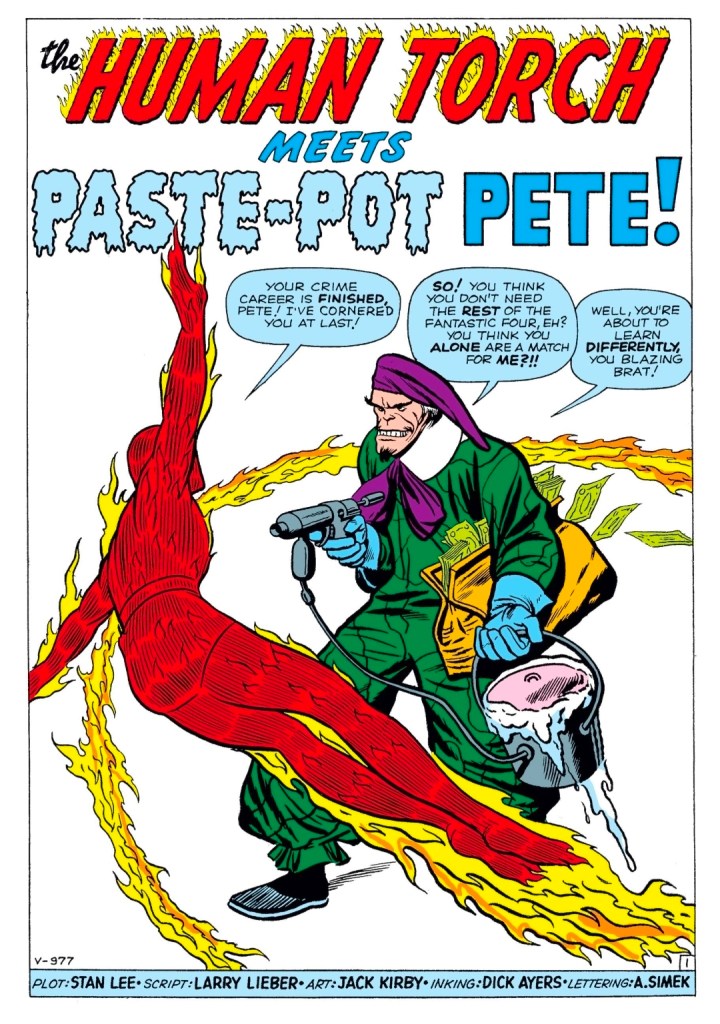
Plot by Stan Lee – Script by Larry Lieber – Penciled by Jack Kirby – Inked by Dick Ayers – Lettered by Art Simek
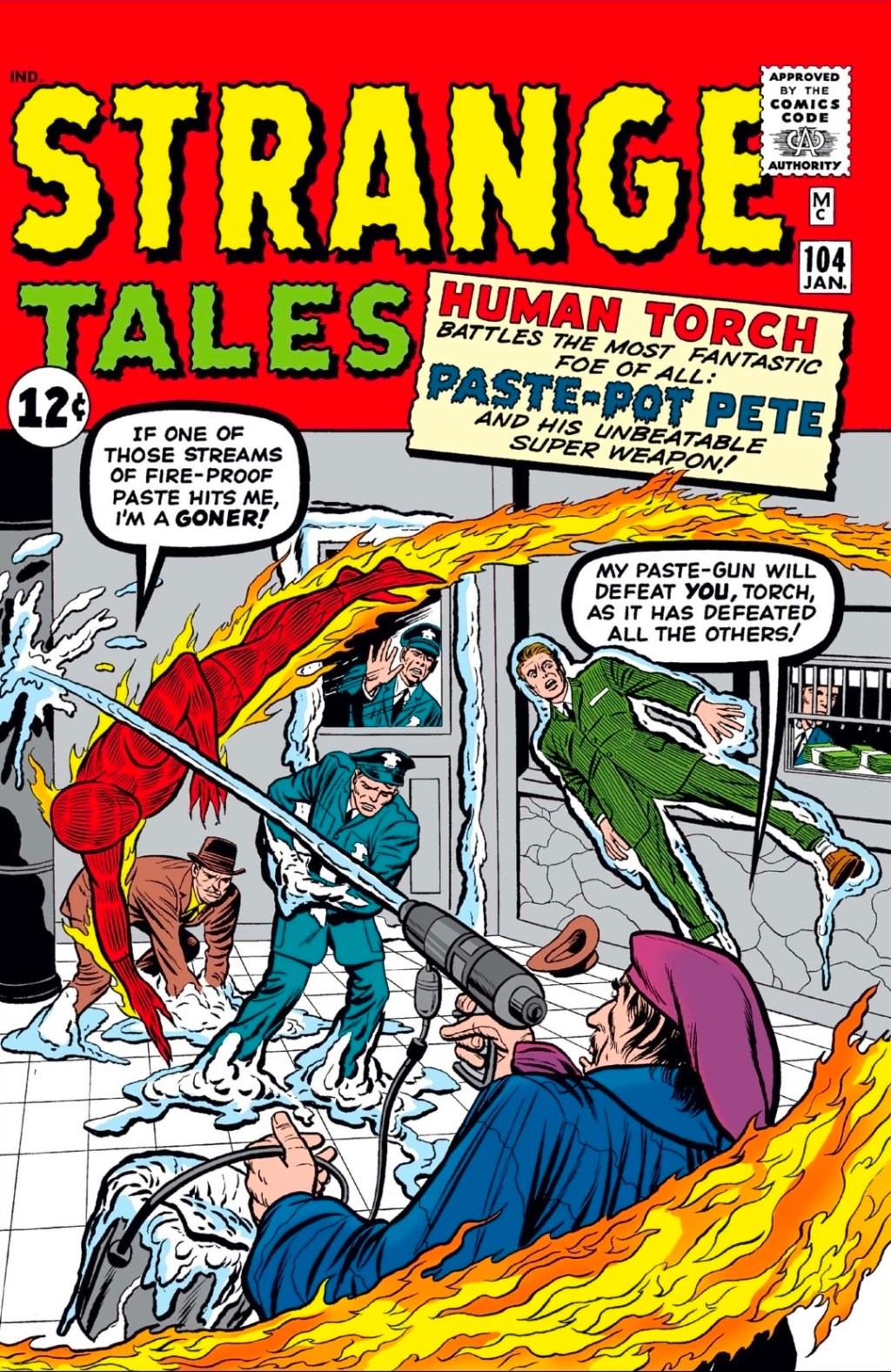
The Human Torch finally gets a real supervillain.
Well.
Sort of.
These solo Torch stories usually leave a little bit to be desired, but they also provide an interesting glimpse into what Marvel is trying to figure out in the early 1960s.
For one thing, Johnny Storm is currently Marvel’s only teenage superhero. Not only that, but he appears in two different books every month.
Marvel clearly understands the value of giving younger readers someone they can actually relate to.
There are still parts of this book that feel awkward and underdeveloped.
The secret identity subplot barely makes sense. But at least this issue tries to justify it. Johnny explains that he wants some level of anonymity and privacy instead of living entirely as a celebrity superhero — which feels slightly at odds with the more impulsive version of Johnny we usually see in Fantastic Four, but at least it’s something.
The bright side of these solo Torch adventures is that they give Marvel room to experiment with smaller stakes villains.
We already met the Wizard back in Strange Tales #102, and now we get Paste Pot Pete — a character so ridiculous he somehow loops back around into being memorable.
Somehow, both of these Strange Tales villains will stick around for decades to come.
Like the Wizard, Paste Pot Pete is not exactly a fully realized villain yet. He dresses like a caricature of a French artist while carrying around a bucket of industrial paste connected to a spray gun.
That’s the gimmick.
That’s the whole character.
And there’s something kind of wonderful about how committed the comic is to the bit.
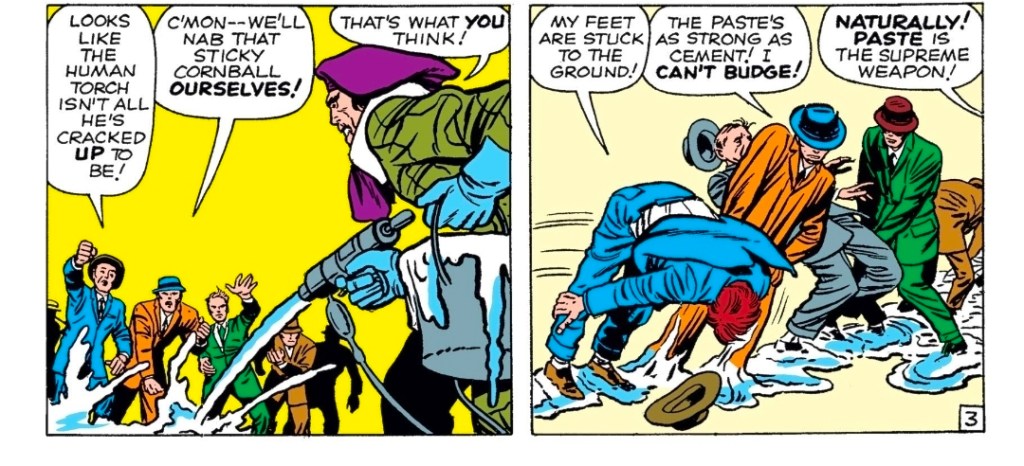
Pete robs a bank Johnny just happens to be visiting and immediately starts shouting things like:“Taste my paste!”
And perhaps even more incredibly: “Paste is the supreme weapon!”
I admire that level of confidence.
Pete doesn’t even seem especially interested in money. He’s more focused on becoming infamous by committing the crime of the century.
Eventually he lands on the idea of stealing state-of-the-art missiles from the U.S. Army and selling them to the highest bidder — giving the story just a small splash of Cold War flavor.
But for once, this feels like an actual superhero comic from start to finish.
Not an anthology premise awkwardly wrapped around a superhero.
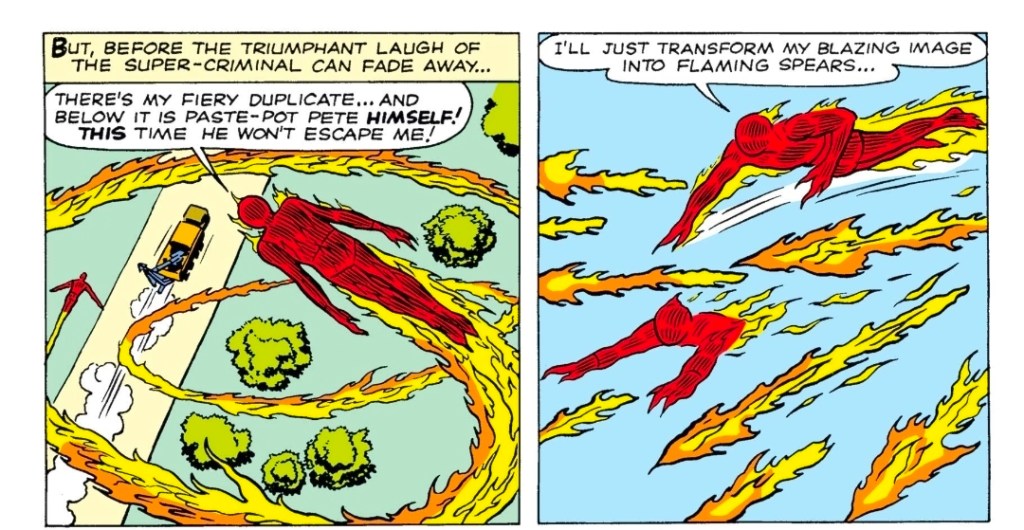
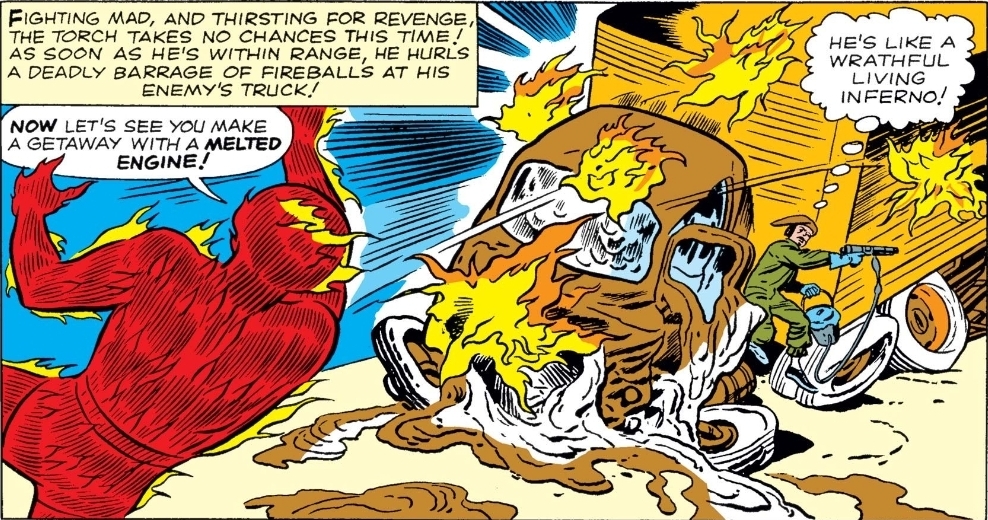
Kirby absolutely carries the book visually. The aerial combat is dynamic and energetic, and he turns the story into one extended chase sequence.
Paste Pot Pete’s paste somehow does everything imaginable. It catches missiles mid-launch. Builds instant bridges. Snags airplanes out of the sky.
Apparently paste truly is the supreme weapon.
Johnny eventually finds himself trapped on a missile with his flame burned out, leading to some genuinely striking Kirby fire effects once he finally reignites.
And for one of the first times in these Torch stories, the villain actually escapes.
Paste Pot Pete already has an exit strategy prepared, and the issue ends with Johnny wondering when he’ll see him again.
That the key component of this story.
Because it means Marvel is finally learning that recurring villains are part of what gives superhero comics their identity.
Regardless of how corny they are.
And because of that, this might be the best solo Torch story yet.
Marvel in the 60s – Entry #30
 Everything
Leave a comment