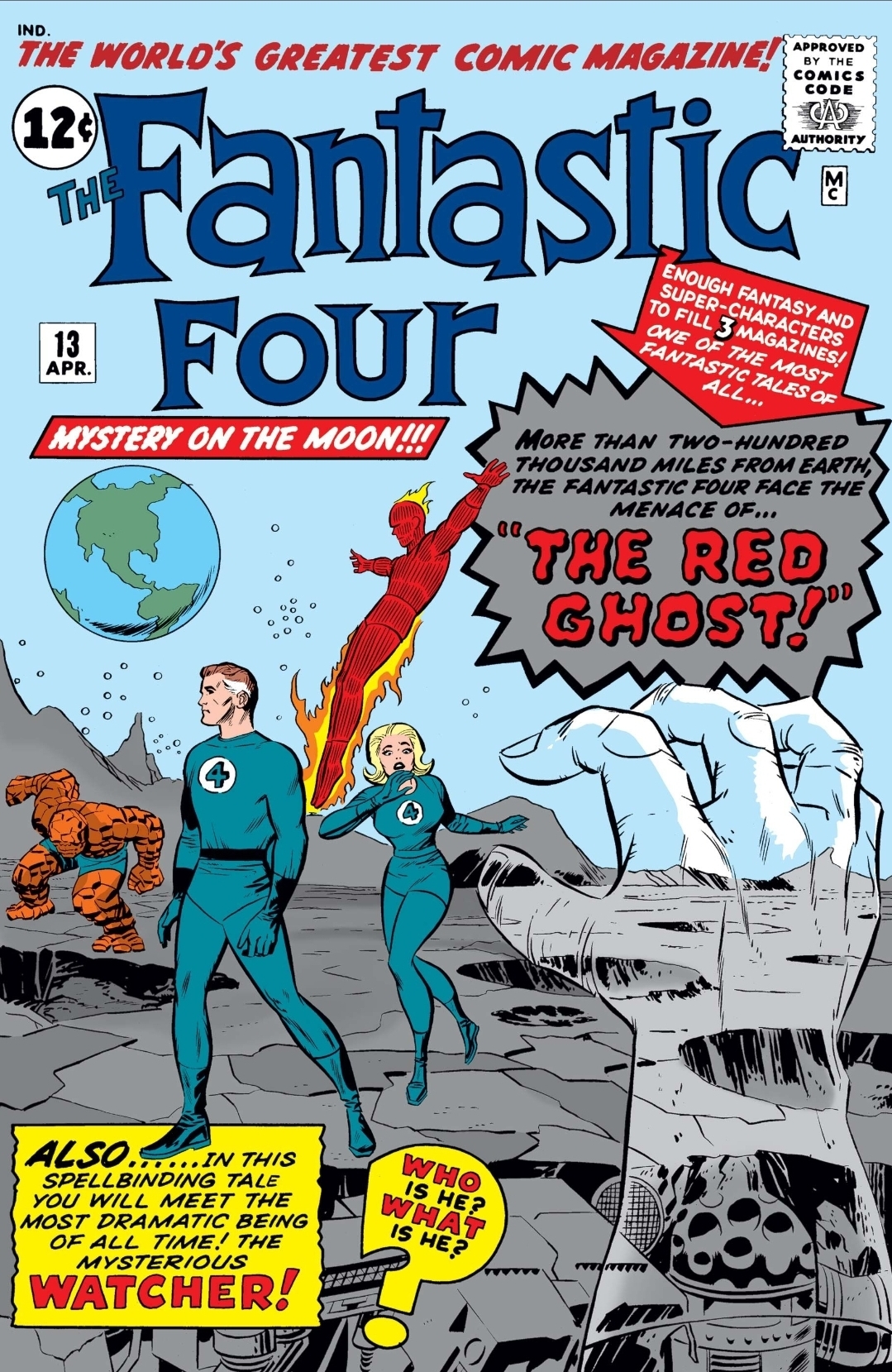
Written by Stan Lee – Art by Jack Kirby – Inks by Steve Ditko – Letters by Art Simek
If someone asked me what I imagine a classic 1960s Fantastic Four comic looks like, this is the first issue in the series so far that I’d hand them.
Not because it’s the best one so far.
But because it finally feels like all the pieces of the Lee and Kirby formula are here.

Reed Richards is in the laboratory.The Fantastic Four are bickering in the Baxter Building. A supervillain arrives with an absurd comic-book premise. The Space Race looms over everything. Cosmic adventure beckons. And Jack Kirby is given every excuse imaginable to unleash his imagination.
This is also one of the strangest artistic collaborations in early Marvel. Steve Ditko inks Jack Kirby. The result is fascinating.
Kirby’s pencils remain unmistakable, but Ditko’s shadows and textures create a very different atmosphere. The pages feel darker. Less clean. Almost slightly unsettling at times.
It’s an odd pairing.
But an interesting one.

The story itself begins with Reed attempting to win the Space Race.
Across the Iron Curtain, Soviet scientist Ivan Kragoff has the same idea. Only Kragoff intends to bring three trained apes with him and deliberately expose all of them to the same cosmic rays that gave the Fantastic Four their powers.
Marvel had spent much of its early superhero line borrowing from the Cold War fears of the 1950s. This feels more rooted in the actual 1960s.
The Space Race. American and Soviet competition. Scientific achievement becoming a form of geopolitical rivalry.
Of course, because this is Fantastic Four, Kragoff and his apes gain powers. The Fantastic Four gain enemies.
And Kirby gains an excuse to draw the Moon.

What follows is some of the most visually inventive work in the series so far. Ancient lunar cities. Impossible machinery. Strange architecture.
The Blue Area of the Moon feels less like a location and more like a playground for Kirby’s imagination.
The Red Ghost himself is a reasonably fun villain. His ability to become intangible creates a handful of clever action sequences, while his Super-Apes each develop powers that mirror and sometimes surpass members of the Fantastic Four.
But the Red Ghost isn’t the most important thing introduced here. Not even close.
That honor belongs to the Watcher.

The Fantastic Four had always flirted with science fiction. The Watcher pushes them fully into the cosmic.
Uatu arrives as one of the most significant additions to Marvel mythology so far. And the moment he appears, the scale of the book changes.
As Uatu explains his purpose, Kirby once again fills the pages with alien civilizations, futuristic technology, impossible landscapes, and distant worlds.
The comic suddenly feels bigger than Earth. Bigger than America. Bigger than the Cold War.
And with the introduction of a larger universe beyond our own, it’s impossible to miss the anti-war message running through the story.
Scientific advancement, Lee and Kirby suggest, can either unite humanity or destroy it.
That’s one of science fiction’s oldest ideas: using the impossible to examine the very real choices people make.
With the arrival of the Watcher, Marvel’s universe becomes larger, but its concerns remain deeply human.

The story eventually reveals that Kragoff’s true goal isn’t defeating the Fantastic Four. It’s stealing technology from the Watcher.
A decision that leads to one of the best sequences in the issue, as the Watcher effortlessly transports the Red Ghost across time and space, reminding him that in a universe this vast, even the most ambitious men are very small indeed.
The Fantastic Four ultimately prevail thanks not to strength but to Reed’s intelligence, as he improvises a device from the technology surrounding him and traps Kragoff before he can escape.
The resolution is almost beside the point. Because more than ever, this issue understands what makes the Fantastic Four unique.
They’re not simply superheroes. They’re adventurers. Scientists. Explorers. Problem solvers.
They’re mankind’s ambassadors to the larger cosmos, standing at the edge of the unknown and inviting the reader to come with them.
The Red Ghost is just this month’s obstacle. The real story is the sense of wonder that surrounds him.
More than any issue before it, Fantastic Four #13 feels like the moment the book finally becomes the Fantastic Four.
Marvel in the 60s – Entry #44


Leave a Reply