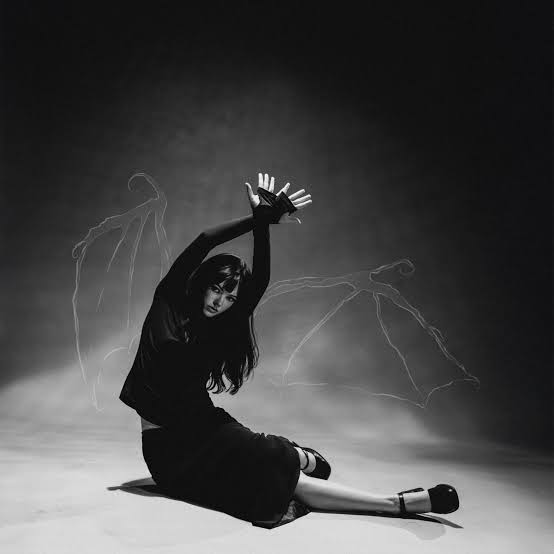
Album by Delaney Bailey
Concave is one of the more vulnerable albums I’ve heard this year.
The music is intimate and understated, built around dreamy indie pop, minimalist arrangements, layered vocals, and production that quietly expands around Bailey’s voice. Nothing here feels oversized or theatrical. Instead, every song feels like you’re being allowed into someone’s private thoughts.
While I found this album to be beautifully constructed musically, what stayed with me most was how honestly Bailey seems willing to write about the messy process of becoming someone new.
Again and again when listening to these songs I found myself returning to the same idea: Healing isn’t linear.
Some days you feel powerful. Other days you feel broken. Sometimes both in the same day.
“How To” immediately pulled me in. Musically it reminded me a little of Marika Hackman’s album Big Sigh, pairing minimalist songwriting with a surprisingly accessible pop structure. The lyrics, though, filled me with dread. Bailey lists routines almost like she’s reading instructions for survival. They feel less like answers than rituals performed in the hope they’ll keep something frightening at bay. The song quietly asks a question that echoes throughout the album: what if all the things we do to keep ourselves together still aren’t enough?
“Far Away” does something I almost always love. The music is bright, immediate, and infectious while the lyrics wrestle with uncertainty. The driving drums keep everything moving forward even as Bailey reflects on growing older and realizing certainty slowly disappears with age. It reminded me of a line from “Slow Emotion Replay” by The The: “The more I see, the less I know.”
Rather than treating that realization as defeat, “Far Away” suggests there may actually be freedom in letting go of the illusion that we ever had all the answers.
“Lion” changes the mood completely. The darker vocal delivery, dance-pop pulse, and heavier atmosphere show another side of Bailey as a performer. I found myself hearing the song as someone beginning to push back against expectations that no longer fit the person they’re becoming. Whether that’s family, community, religion, or something else entirely, I never felt certain. What mattered was the sense of someone discovering their own strength.
Then comes “Wounded.”
Placed immediately after “Lion,” it becomes one of the album’s most revealing moments. The confidence gives way to fragility. The ethereal harmonies, acoustic guitar, and mournful melody feel consumed by grief and fear. The sequencing itself became part of the storytelling for me. Recovery doesn’t move in a straight line. Strength one day doesn’t guarantee strength the next.
“Wither” may be the emotional centerpiece of the album. Echoes of Mazzy Star and Cowboy Junkies drift through its slowcore and dream-pop textures while a fuzzy guitar occasionally cuts through the haze like the scream Bailey’s restrained vocals never release. The song left me with the feeling of watching someone slowly disappear into depression—not dramatically, but almost imperceptibly. Rather than transformation, it feels like erosion.
“Retainer” slowly builds from quiet introspection into something approaching catharsis. I kept returning to the title itself. A retainer preserves the shape of something after it’s changed. Listening to the song, I found myself wondering whether Bailey was asking a larger question: when we grow older, how much of ourselves should we fight to preserve, and how much should we allow to change?
The album continues weaving together recurring images of predators, animals, vulnerability, and love. Songs like “Know” suggest that opening yourself to another person always carries the possibility of being hurt. The danger isn’t simply out in the world. Sometimes we willingly walk toward it because intimacy requires exactly that kind of vulnerability.
“Wake Up” became one of my favorite tracks. What begins as sparse piano, layered vocals, and disconnected fragments slowly gathers momentum until it nearly becomes something you could dance to. The transformation mirrors the emotional journey perfectly. Rather than allowing isolation to become another excuse for self-destruction, the song gradually pushes toward choosing life. It’s subtle, but incredibly moving.
“Nightshade” continues that thread. Its brisk indie-pop momentum frames what I interpreted as a reflection on surviving an earlier version of yourself rather than remaining trapped inside it. The music keeps moving forward even while acknowledging how close the darkness once felt.
One of the album’s most fascinating songs is “Baby Dream.” The gentle folk guitar contrasts beautifully with Bailey’s layered modern vocals. The song seemed to be describing the friction between resisting a forced societal role while simultaneously desiring the genuine human experience of motherhood. It never felt interested in offering easy answers. Instead, it simply sat inside that conflict, allowing both desires to exist at once.
The title track brings everything together beautifully. Beginning with one of Bailey’s finest vocal performances, the song gradually expands through guitars, drums, electronics, and gorgeous harmonies. The title itself stayed with me. A concave shape bends inward. It hollows itself out. I found myself hearing that image as a rejection of the idea that we’re supposed to appear whole all the time. Pretending to be okay can become more exhausting than admitting you aren’t.
The album began with “How To,” offering what sounded like a manual for holding yourself together.
It ends by quietly letting go of the idea that healing can ever be reduced to a checklist.
Instead, Concave suggests something far more compassionate.
Growth is messy.
Recovery isn’t linear.
Sometimes the healthiest thing we can do is stop performing wellness and allow ourselves to be unfinished.
Verdict: Great
Explore more from Delaney Bailey
Official Site | Spotify | Bandcamp
 Everything
Leave a comment