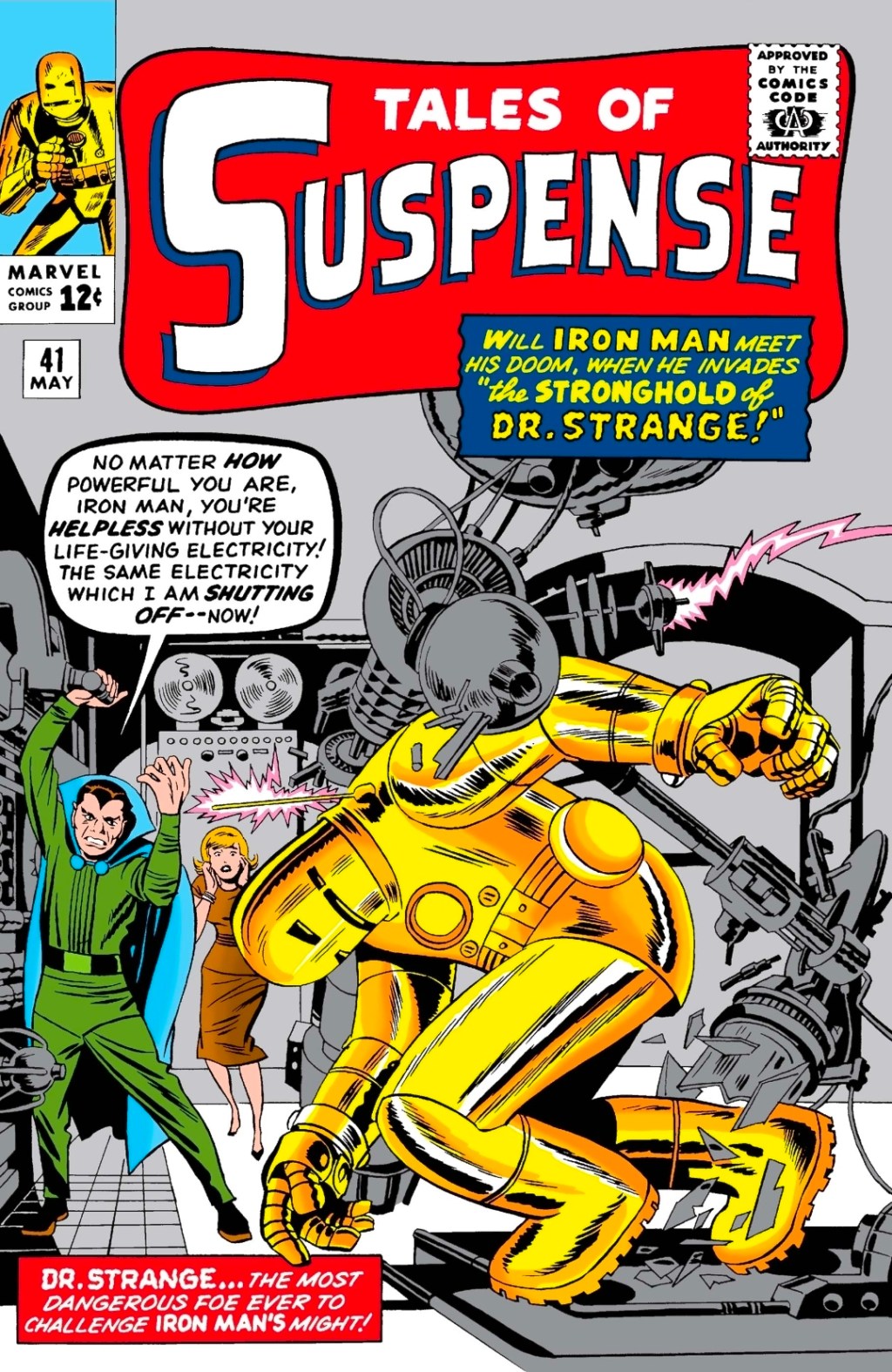
Written by Stan Lee – Script by R. Berns (Robert Bernstein) – Art by Jack Kirby – Inks by Dick Ayers – Letters by Marty Epp
Only three issues into Iron Man’s existence, Marvel is already treating him like an established superhero.
It’s an interesting contrast to Spider-Man. Peter Parker grows in front of us. Every new gadget, every mistake, every lesson becomes part of the story.
Tony Stark seems to have entire adventures between issues.The comic opens with an extended recap, but Marvel disguises it remarkably well. Rather than stopping the story for a lengthy narration, Lee uses a charity gala celebrating Stark’s donation to a new children’s hospital, followed by Iron Man’s appearance before the patients, to naturally reintroduce both identities.
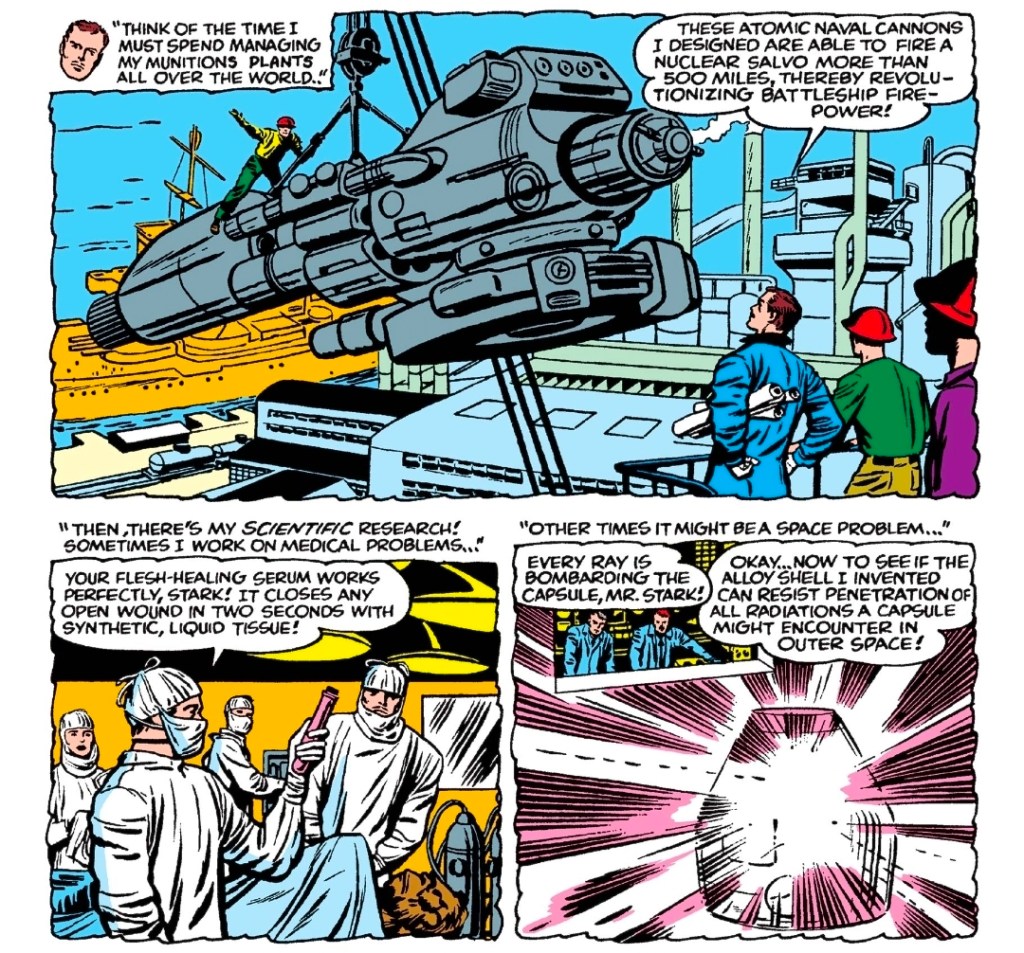
It’s another example of Marvel experimenting with ways to catch new readers up without grinding the story to a halt.
The montage shows readers that Tony Stark isn’t simply a weapons designer anymore. He’s an inventor. A medical researcher. A space-age engineer. An industrialist. And of course a playboy.
Iron Man receives an equally impressive résumé. Gangsters. Communist armies. Natural disasters. Even alien invasions. It almost feels as though Marvel is trying to squeeze two years’ worth of adventures into three issues, rapidly establishing Iron Man as one of the Marvel Universe’s premier heroes.
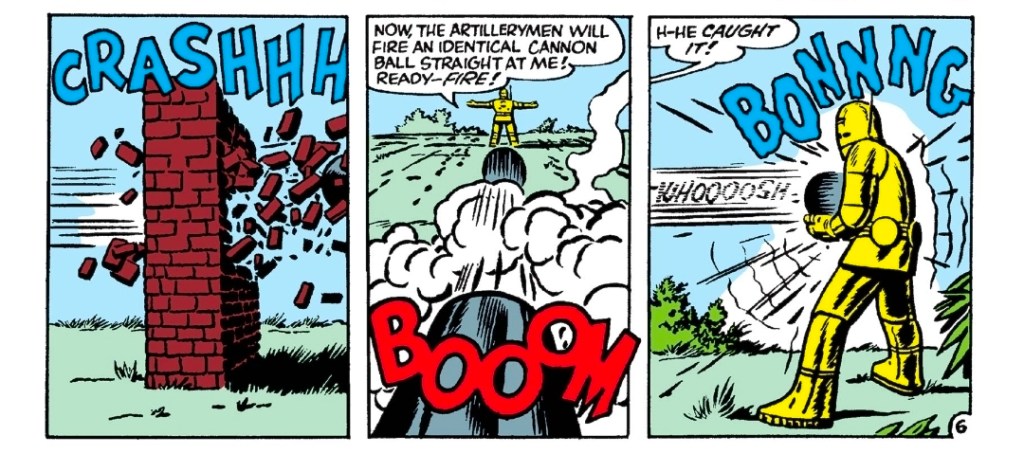
The armor evolves just as quickly. Many of the handheld gadgets from the first two issues have now been incorporated directly into the suit .Iron Man casually flies. Manipulates multiple automobiles with magnetism. Catches a cannonball in midair before crushing it in his hands. The hero is becoming more powerful almost monthly.
Then comes the promised new villain…Dr. Strange.
Not that Doctor Strange.
It’s an amusing bit of Marvel history, especially because the character’s flowing cape and theatrical appearance bear more than a passing resemblance to the Sorcerer Supreme who has yet to make his debut.
Whether coincidence or simply ideas floating around the Marvel offices, it’s hard not to notice.
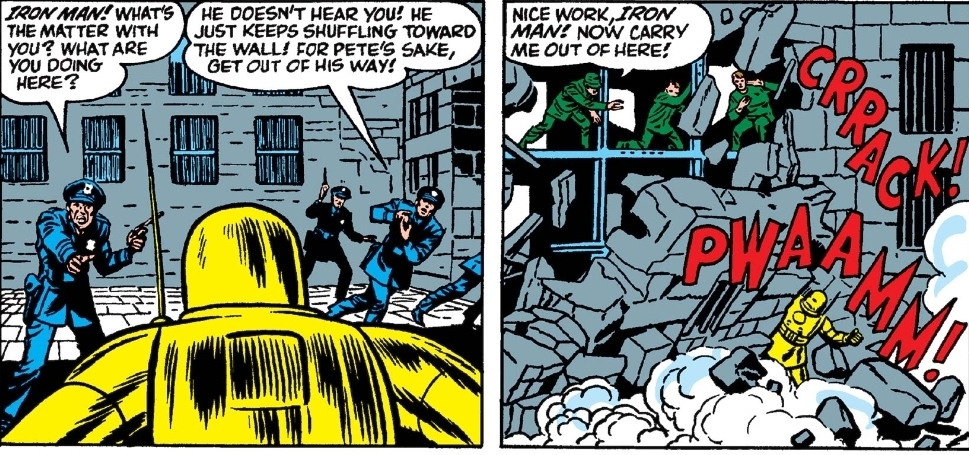
Dr. Strange himself isn’t particularly memorable. He’s another scientific genius who has devoted his talents to crime, ruling from a private island fortress with enough elaborate machinery to feel like an early cross between the Wizard and Doctor Doom.
His motivation is wonderfully Silver Age. After neglecting his daughter for years, he decides the best way to earn her love is…To conquer the Earth and give it to her.
Men will do anything to avoid therapy.
Fortunately, Jack Kirby has a great time drawing all of it. The island headquarters. The massive machinery. Iron Man burrowing beneath the ocean floor. Every page is packed with Kirby’s increasingly recognizable brand of technological imagination.
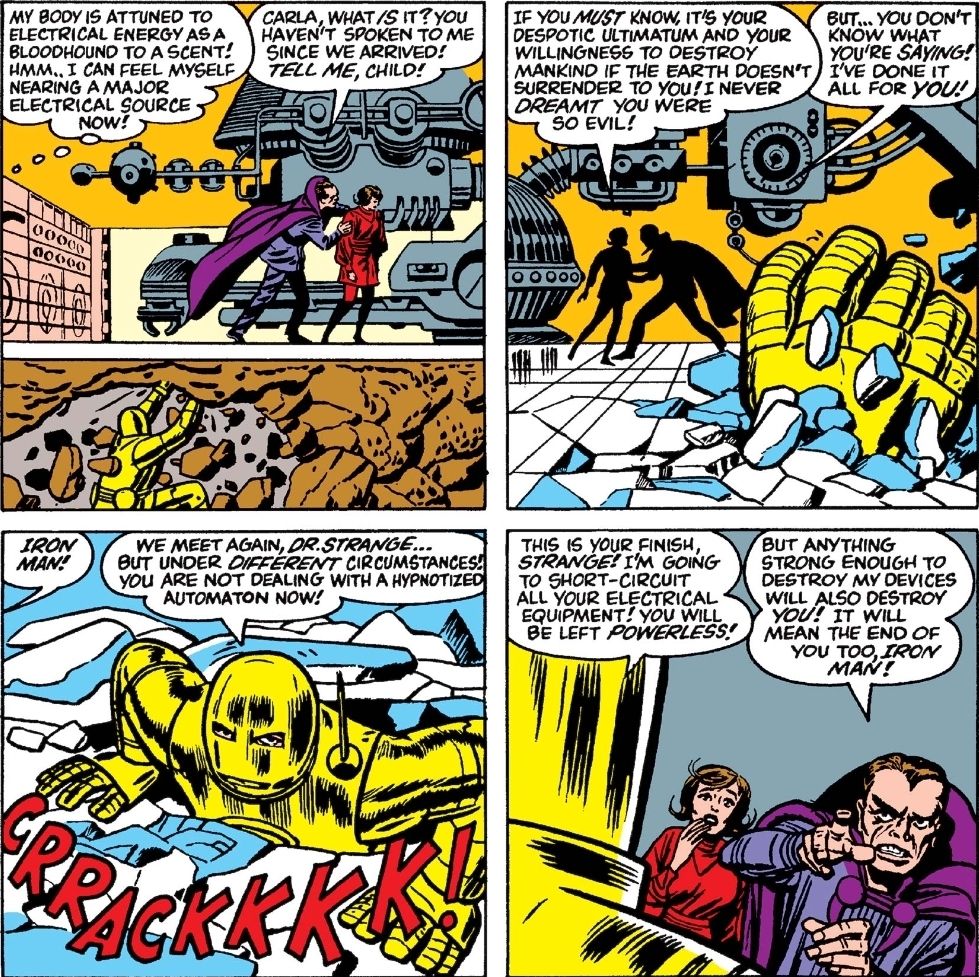
The final confrontation arrives quickly. Iron Man exhausts nearly all of his power reaching the island and destroying Strange’s doomsday device.
In one of the comic’s more charmingly absurd moments, Strange’s daughter hands him a flashlight so he can use its batteries to recharge his armor for one last attack.
The emotional ending actually works better than the villain. Unable to hate the daughter he genuinely loves, Strange surrenders, while she wonders why someone so brilliant chose to devote his life to destruction instead of helping humanity.
It’s a surprisingly sincere conclusion to an otherwise uneven story.
Like the previous issue, Dr. Strange himself feels largely disposable. The real purpose of Tales of Suspense #41 is something much bigger.
Marvel isn’t introducing Iron Man anymore.
It’s establishing him.
Each issue quietly expands his reputation, broadens his abilities, and suggests countless unseen adventures beyond the page.
By the time readers have spent only three months with Tony Stark, Marvel wants them to feel like they’ve known Iron Man for years.
Marvel in the 60s – Entry #53

 Everything (not really)
Leave a comment