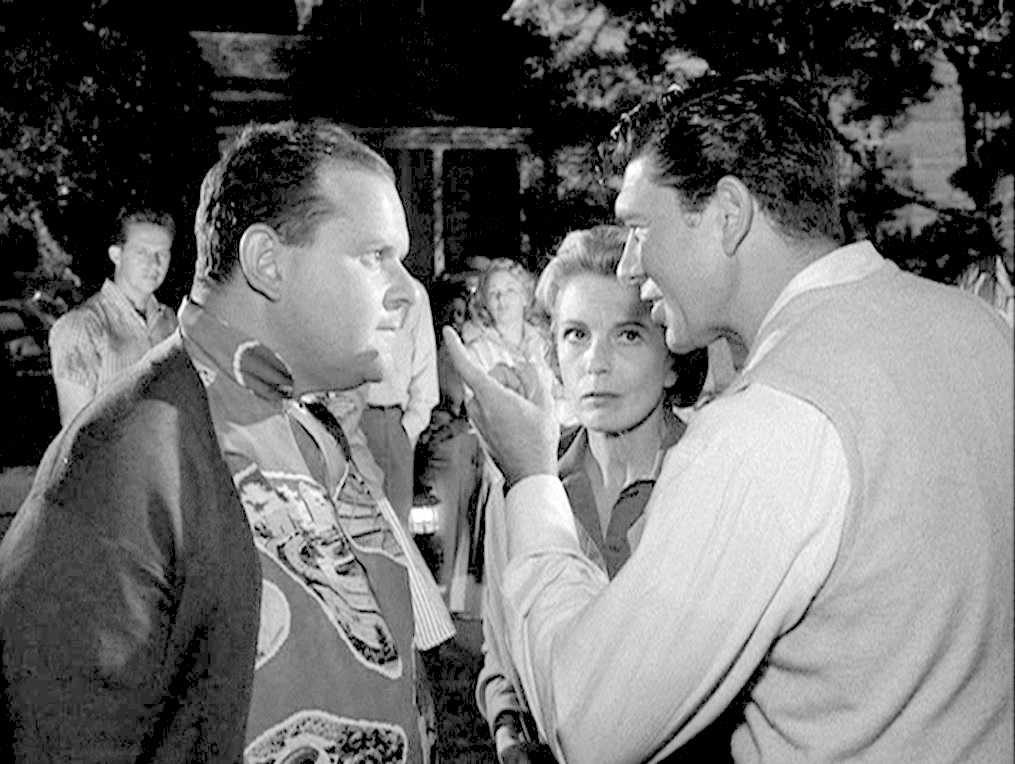
Season 1, Episode 22
Written by Rod Serling – Directed by Ron Winston – Starring Claude Akins, Barry Atwater, and Jack Weston
A peaceful suburban street descends into paranoia and violence after a series of unexplained events convinces the neighbors that one of them may not be human.
This episode is a masterpiece.
An ordinary neighborhood experiences a handful of strange events, and almost immediately suspicion begins to spread. The mystery itself is almost secondary. Instead, the episode watches fear gradually reshape a small microcosm of society.
One unexplained occurrence leads to another. A few innocent questions become accusations. Before long, every odd habit or harmless quirk is treated as evidence that someone doesn’t belong.
The neighborhood doesn’t collapse all at once. It happens gradually, each new incident adding another layer of suspicion until fear becomes impossible to contain.
The slide into irrational fear starts with a young boy who recalls a science fiction story about aliens secretly replacing ordinary people. At first, it’s treated like childish imagination, but once fear takes hold, speculation begins to harden into certainty.
While the story presents itself as science fiction, it’s clearly functioning as an allegory. When one character jokingly mentions the idea of a “fifth columnist”—someone secretly working from within to aid an enemy—it becomes clear that Serling’s concern isn’t really the visitors from the sky, but the suspicion growing between neighbors.
As day stretches into night, with no answers as to why these odd things happen, the conversation quietly shifts away from whatever may have arrived from the sky and toward the possibility that the real threat has been living among them all along.
Watching it today, it’s easy to understand why this episode has endured. Rod Serling was writing during the Cold War and the era of McCarthyism, but the story reaches far beyond that moment. Every generation seems to find its own version of Maple Street, where suspicion spreads faster than evidence and fear turns neighbors against one another.
What makes the episode remarkable is that the supernatural element is almost beside the point. The unexplained events merely open the door. Everything that follows comes from ordinary people giving in to panic, prejudice, and mob mentality. The greatest danger isn’t what arrives from outside the neighborhood—it’s what the neighbors become once they stop trusting each other.
It’s one of the sharpest pieces of social commentary the series has offered so far, and for me, still one of the finest episodes of The Twilight Zone.
Twilight Zone Verdict: Classic
 Everything (not really)
Leave a comment