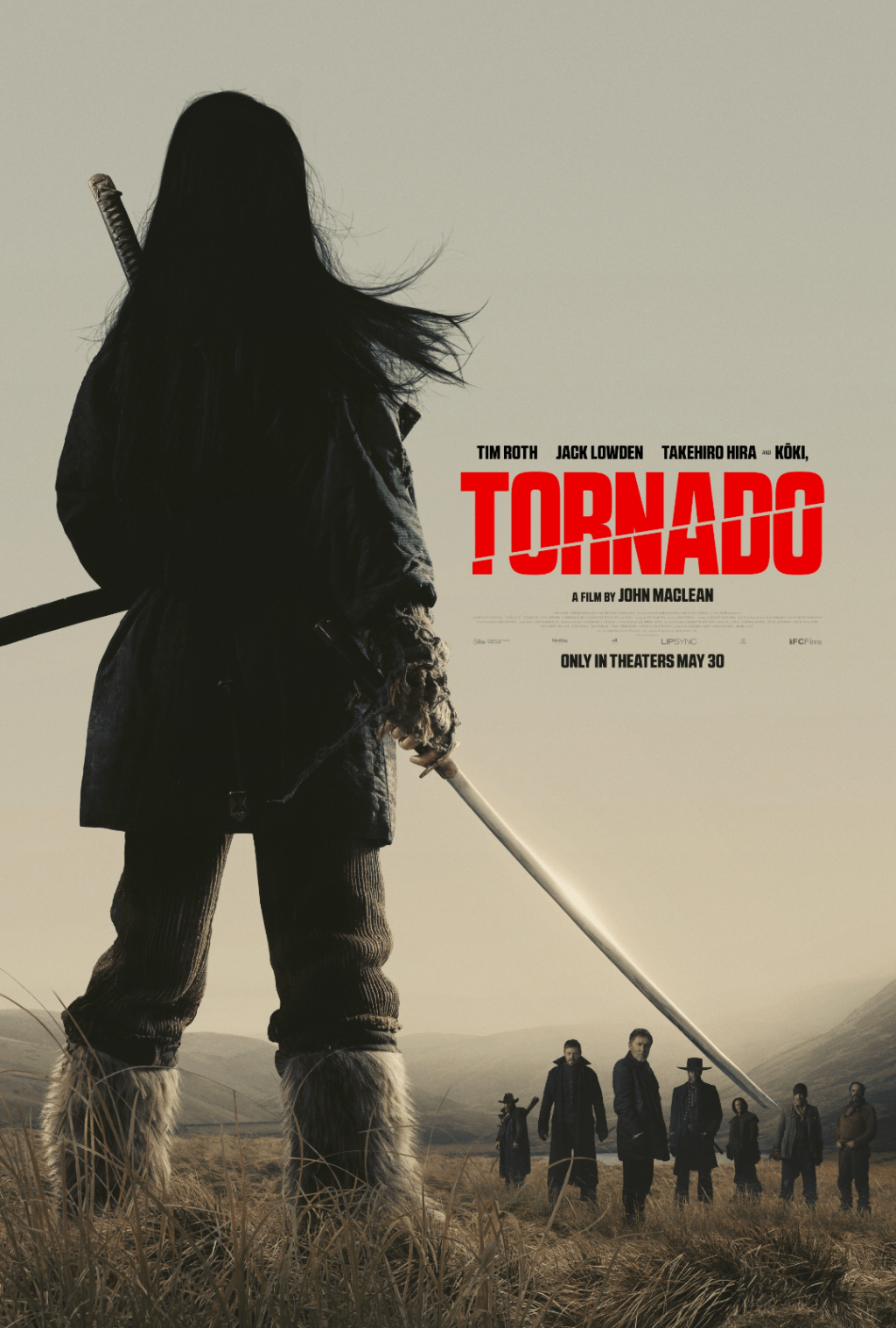
Directed by John Maclean – Starring Kōki, Jack Lowden, Tim Roth, and Takehiro Hira
A young woman finds herself pursued across the Scottish countryside by a violent gang, setting off a tense chase that blends samurai storytelling with western sensibilities.
Tornado wastes absolutely no time.
The film opens with Tornado running for her life, pursued by Sugarman and his gang, and for a while we have almost no idea why. The movie trusts the audience to sit in that uncertainty, and the sparse dialogue only adds to the tension. Instead of stopping to explain itself, it simply asks us to follow.
Eventually the details come into focus and we learn how everyone ended up here, but the plot almost feels secondary to the experience of watching it unfold.
What worked for me most was the atmosphere. This is a beautiful-looking film. The Scottish landscapes, the framing, and the deliberate pacing all create a sense of unease that hangs over the story. Even when very little is being said, the movie remains engaging because it’s constantly communicating through images, movement, and tension.
Kōki is compelling in the lead role, carrying much of the film through presence rather than dialogue. Tim Roth also brings exactly the kind of menace you’d want from a character like Sugarman.
The middle section slows things down considerably, and I could see that testing some viewers’ patience. But for me, the movie had built up enough goodwill by that point that I was happy to stay on its wavelength.
More than anything, Tornado feels confident. It knows exactly what kind of story it wants to tell and never feels the need to overexplain itself.
It’s tense, visually striking, and refreshingly minimalist.
Verdict: Good Time
 Everything (not really)
Leave a comment