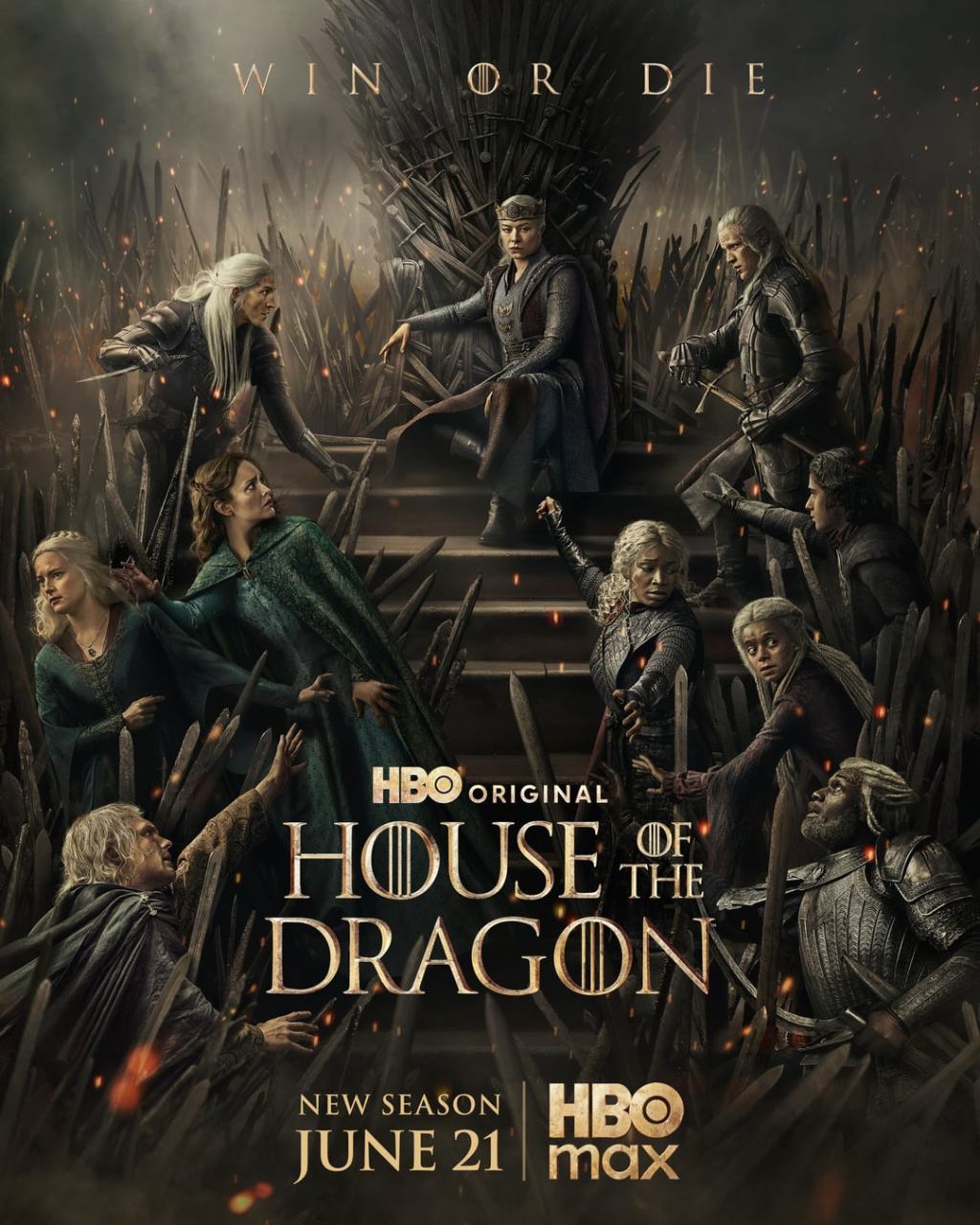
Created by: Ryan Condal and George R. R. Martin – Directed by: Loni Peristere – Starring: Emma D’Arcy, Olivia Cooke, Matt Smith, Ewan Mitchell, Steve Toussaint, and Abubakar Salim.
Set nearly 200 years before Game of Thrones, House of the Dragon chronicles a Targaryen civil war that threatens not only a ruling family, but an entire kingdom caught in the middle.
Basically, it’s a story about a family feud with catastrophic consequences.
Season one showed how those fractures formed. Season two explored how old grudges, revenge, and pride became prisons that trapped nearly everyone involved. By the end, there was no easy path back.
I’ll admit, the first season felt more like homework than appointment television for me. I watched because I loved Game of Thrones. Season two had its ups and downs, but it steadily won me over. By the end, I found myself genuinely looking forward to each new episode and becoming invested in where the story was heading.
What ultimately won me over was the confidence of the storytelling. The cast is excellent, the production remains among the best on television, and the action is consistently thrilling. More importantly, though, the series has created genuine uncertainty. Even though everything feels destined for tragedy, I still don’t know exactly how we’ll get there—or who will make it there at all. That’s what kept bringing me back.
Season three opens with a remarkable piece of visual storytelling. A dragon hunts helpless sheep, leaving charred bodies scattered across the countryside before its rider attempts to assert control, only to vanish into the fog. It’s an image that feels loaded with meaning.
Predators and prey.
The illusion of control.
The fog of war.
A reminder that this war has become something too large for anyone to truly command. Like the dragons themselves, the conflict can no longer be tamed.
The episode then brings that metaphor down to earth. In the aftermath of a battle, blood- and mud-soaked soldiers stumble through the carnage as the last survivors of the defeated army are methodically butchered. It’s a stark reminder that while kings and queens wage war, ordinary people pay its price.
If those opening moments are any indication, this season looks poised to be brutal, devastating, and wonderfully unpredictable.
The premiere also does an excellent job reminding us why this conflict is so compelling. Old grudges continue to fester. Pride clouds judgment. Characters mistake authority for control and bravado for strength. Even those who once seemed guided by honor are slowly reshaped by war, their ideals giving way to survival, ambition, and vengeance. The tragedy isn’t simply who wins or loses, but watching people become unrecognizable in pursuit of victory.
There are already several storylines I’m eager to follow, from the slow moral decay of those leading the war, to the shifting balance of power within the royal family, the uneasy relationship between rulers and their advisors, and the growing role ordinary people play as dragons increasingly shape their lives. Every storyline feels as though it’s building toward something significant.
And then there’s the climactic battle. It’s tense, cinematic, and spectacularly staged, delivering one of the strongest action sequences either Game of Thrones series has produced. The scale is impressive, but what makes it work is that the emotional stakes never get lost beneath the spectacle.
More importantly, it reinforces the feeling that no one is in control anymore and that this season intends to make good on every threat it’s been building toward.
House of the Dragon is never casual viewing for me. It’s dense, demanding, and asks you to keep track of an enormous cast and decades of history. It usually takes me a few weeks to settle back into its world.
This time, the show had its hooks in me before the opening fog had even cleared.
If the rest of season three delivers on the promise of this premiere, we’re in for something special.
Verdict: I’m All In
 Everything (not really)
Leave a comment