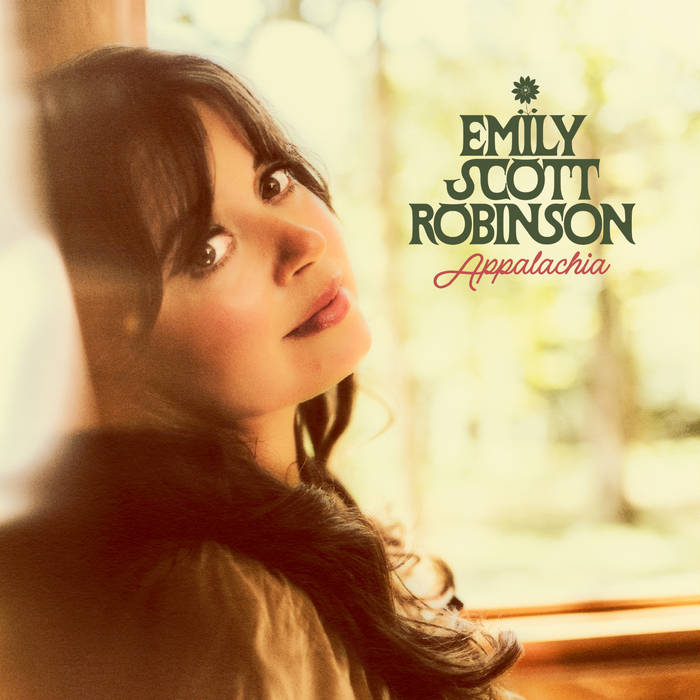
Album by Emily Scott Robinson
You can’t get through life without accumulating scars. Emily Scott Robinson’s Appalachia doesn’t treat those scars as things we need to get over. They’re part of us.
Robinson doesn’t need much around her. She could probably stand in an empty room with nothing but a guitar and command your attention. Much of the album is built around acoustic guitar and her gorgeous voice, occasionally joined by fiddle, harmonica, piano and other understated instrumentation. There’s Americana, country and traditional folk here, but also something darker and almost Appalachian Gothic.
At times the music has the clarity of Alison Krauss, Joan Baez or Joni Mitchell, while other moments feel like hymns drifting out of an old church or an ancient song for the spirits that roam among the dew and wildflowers.
A quiet organ gives “Hymn for the Unholy” an almost spiritual atmosphere. As the band gradually enters, the song begins to open up. It reminds me of standing outside early in the morning when everything is still covered in dew and mist. Slowly the mist dissipates, the sun comes up and another day begins.
That build matches lyrics that reckon with endings while looking toward new beginnings.
The title track moves considerably faster, with acoustic guitar driving “Appalachia” forward while Duncan Wickel’s fiddle dances around Robinson’s voice.
It’s a rousing expression of community and survival. But there’s defiance here too. When Robinson lets out a long vocal cry, it sounds almost primal, turning generations of survival into something fierce and immediate.
“Sea of Ghosts” is a gorgeous, haunting song that brings the album’s mystical side to the foreground. Rivers become boundaries between worlds. Songs become ways of calling to the dead with promises of reconnecting in the afterlife. Robinson sings from the tangible world while distant instrumentation and voices seem to hover somewhere behind her.
“Cast Iron Heart,” a duet with former Civil Wars singer John Paul White, looks at love between people who have accumulated some damage and made mistakes. And rather than asking one another to erase those histories, they make room for them.
There’s something beautiful about a love song that understands the scars aren’t imperfections preventing someone from being loved. They’re part of the person you’re choosing to love.
“Time Traveler” takes that compassion somewhere else entirely. Robinson sings about her grandmother’s dementia with little more than her voice and acoustic guitar. It reminds me of Elvis Costello’s “Veronica,” not simply because both songs were inspired by grandmothers experiencing dementia, but because neither allows the disease to become the person’s entire identity. The song is quiet and reflective, preserving the humanity of the person inside those memories.
The album briefly becomes much livelier with “Dirtbag Saloon,” a country waltz filled with fiddle and the atmosphere of an old local bar. Robinson uses the threatened disappearance of places like this to explore gentrification, economic pressure and the gradual loss of community.
But she doesn’t play it like a funeral. There’s defiance in the music. The saloon becomes a piece of the world worth remembering and fighting for even as the world around it changes.
“Bless It All” may come closest to gathering the album’s ideas into a single song. Once again, Robinson strips things back to guitar and voice as she looks across a life containing joy, struggle, family, fear and things passed between generations.
The song doesn’t suggest that every painful experience was secretly good for you. It simply looks at the whole life—the beautiful, frightening, mundane and difficult parts—and blesses all of it.
“The Time for Flowers” has an almost Joni Mitchell or Joan Baez quality, with Robinson’s quiet folk sound taking on something almost mythical. The older woman in the song begins to feel like the land itself, carrying the knowledge that seasons change, terrible times end and flowers return.
With “The Water Is Wide,” Robinson reaches back to a traditional folk song with roots stretching back centuries. Its presence here feels significant. Appalachia doesn’t just sing about inheritance. It participates in it. This is a song that survived because generations kept singing it, and now Robinson carries it forward again.
The album closes with “The Fairest View,” one of its fuller, more contemporary-sounding folk arrangements. Life and death, seasons and time seem to circle one another as Robinson once again finds the ways someone can remain with us even after they’re gone.
That’s ultimately what I hear throughout Appalachia. You don’t get through a life without accumulating scars, but Robinson isn’t interested in erasing them. The people we’ve loved, the things we’ve lost, the places we’ve called home and the generations that came before us all become part of who we are.
Communities carry their histories. Songs survive because somebody keeps singing them. Even the land carries its scars.
And still the flowers return. We plant new seeds. We dream new dreams. We keep going.
Robinson wraps all of that grief, loss, resistance and renewal in gorgeous folk and country textures, creating an album that can feel haunting, hopeful and beautiful.
Verdict: Great
Explore more from Emily Scott Robinson
Leave a Reply