
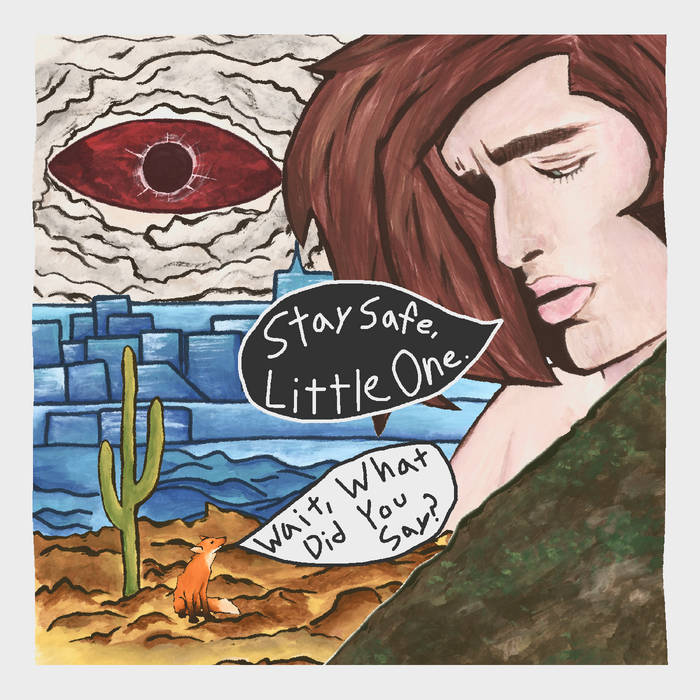
Album by Yumi Zouma
No Love Lost to Kindness is full of people who don’t seem to know when to walk away.
Sometimes they’re stuck on someone who’s bad for them. Sometimes they’ve already broken up but still move through the same circles. Other times they’re separated by distance, caught between two people, or realizing something is over before they’ve actually ended it. Even when love is going well, there’s usually some anxiety hanging around nearby.
Yumi Zouma wraps all of this in an album that moves through jangly alternative rock, dreamy pop, noise rock, and shoegaze. There are bright guitar parts that make me think of Johnny Marr, bursts of distortion, electronic flourishes, and some ridiculously catchy pop hooks. It’s a heavy album that frequently doesn’t sound heavy at all.
“Cross My Heart and Hope to Die” has an old-school late-80s/early-90s modern rock feel that immediately makes me think of groups like The Church or New Order. The interplay between Christie Simpson and Josh Burgess makes the song especially interesting. Rather than hearing one person tell you what they’re feeling, the back-and-forth vocals make it feel like you’re eavesdropping on a conversation at a small party.
The lyrics are more abstract, but references to politicians, profit, apathy, and selling your soul give me the sense of someone wrestling with compromise. Maybe creatively. Maybe politically. Either way, the song has so much momentum that it pulls me along even when I’m not entirely sure where it’s taking me.
“Bashville on the Sugar” is just a hit song in any era as far as I’m concerned. It has this incredible beat and bounce while the vocals manage to sound dreamy and urgent at the same time. The relationship sounds terrible. This person is a dog, the narrator seems to know it, and none of that changes the pull they still have.
“Drag” pulls things toward more subdued indie noise rock, somewhere between Sonic Youth and Garbage, before the chorus lights up with fuzzy distortion. The title kept sending me in different directions. A drag can be something tedious, extra weight holding you down, or the pull from a cigarette. With references to medication and not being able to sit still as a child, I hear someone struggling with their own brain and whatever they’re doing to manage it.
“Blister” is pure 90s alternative-rock anthem material. The distortion is fun, the chorus has a wild build, and there’s even a spoken-word section that gives me a little Luscious Jackson. Once again we’re inside a relationship that probably isn’t good for anyone, except this time there’s more conflict about whether to finally walk away. Another track that sounds like a hit.
“Phoebe’s Song” has a very 90s alternative-pop sound with jangly guitar, a steady drumbeat, and little eruptions of guitar along the way. It’s also a love song without needing to make some enormous romantic declaration. The connection comes through the mundane stuff. Watching TV. Having a drink. Taking a cab together. Sometimes that’s when you feel closest to somebody.
“Cowboy Without a Clue” leaves some of the heavier alternative rock behind for dreamy pop. Light guitars glow around a steady beat while little electronic sounds drift through the arrangement. Simpson’s multitracked vocals don’t quite line up, creating this beautiful echo around her voice. The song makes a long-distance relationship feel like it’s been stretched all the way into outer space.
“Chicago 2AM” is breezier and lighter, with a great melody and this chit-chit-chit beat underneath it. The romantic situation is considerably messier. I hear someone catching feelings for a person whose heart is already somewhere else, with neither side coming out of the situation completely clean.
“Judgement Day” is an opus. It feels like someone who held a little of themselves back before finally deciding to commit to another person, only now they may have waited too long. Or maybe they haven’t. There’s still some hope here, and the music rises along with it. Simpson’s vocals get higher and louder until the whole song becomes an emotional release.
“Did You See Her?” strips things down to acoustic guitar and echoing vocals that make me think a little of Beth Gibbons from Portishead. It starts almost stark and slowly burns from there. These sound like two people who aren’t together anymore but can’t actually escape each other because they still move through the same social circles. It seethes and breaks your heart.
“Every False Embrace” stays in the aftermath of a breakup. Your ex is with someone new, you know that person too, and apparently you’re still going to have to exist around all of this. There’s real melancholy in the song, but the music is light and dreamlike, with even a slight country tinge I wasn’t expecting. It’s gorgeous.
“96” is restrained post-punk mixed with soft indie pop, and the back-and-forth vocals return. Everything sounds emptied out after a rush. There’s also something about it that makes me picture a band exhausted on the road after all the adrenaline has worn off. The music sounds sleepy, like the crash after a high.
“Waiting for the Cards to Fall” may be the album’s most experimental moment. It’s sparse and melancholy, with synths and electronic sounds gradually accumulating around what is essentially a sad ballad. It feels like that awful period when you already know a relationship is over but haven’t actually ended it yet. Eventually the sound starts to wail around Simpson’s voice and those Portishead vibes return.
For all the bright guitars and huge pop hooks, No Love Lost to Kindness is a heavy album. Even when love is going well, there’s usually something threatening to pull it apart.
The first half moves through jangly alternative rock, noise rock, and huge pop hooks before the second half deliberately slows down. The songs become dreamier, sadder, and more exhausted. By the end, it almost feels like the album has been through these relationships too.
One of my favorite things about the album is how Simpson and Burgess use their voices together. They can sound less like traditional lead and backing vocals and more like two people occupying the same song. Simpson’s multitracked vocals are just as effective. Her voice can trail behind itself like an echo, adding to the haze that hangs over so much of the record.
This is a really great album that gets me dancing along while also feeling completely devastated.
That’s a pretty neat trick.
Verdict: Great


Leave a Reply