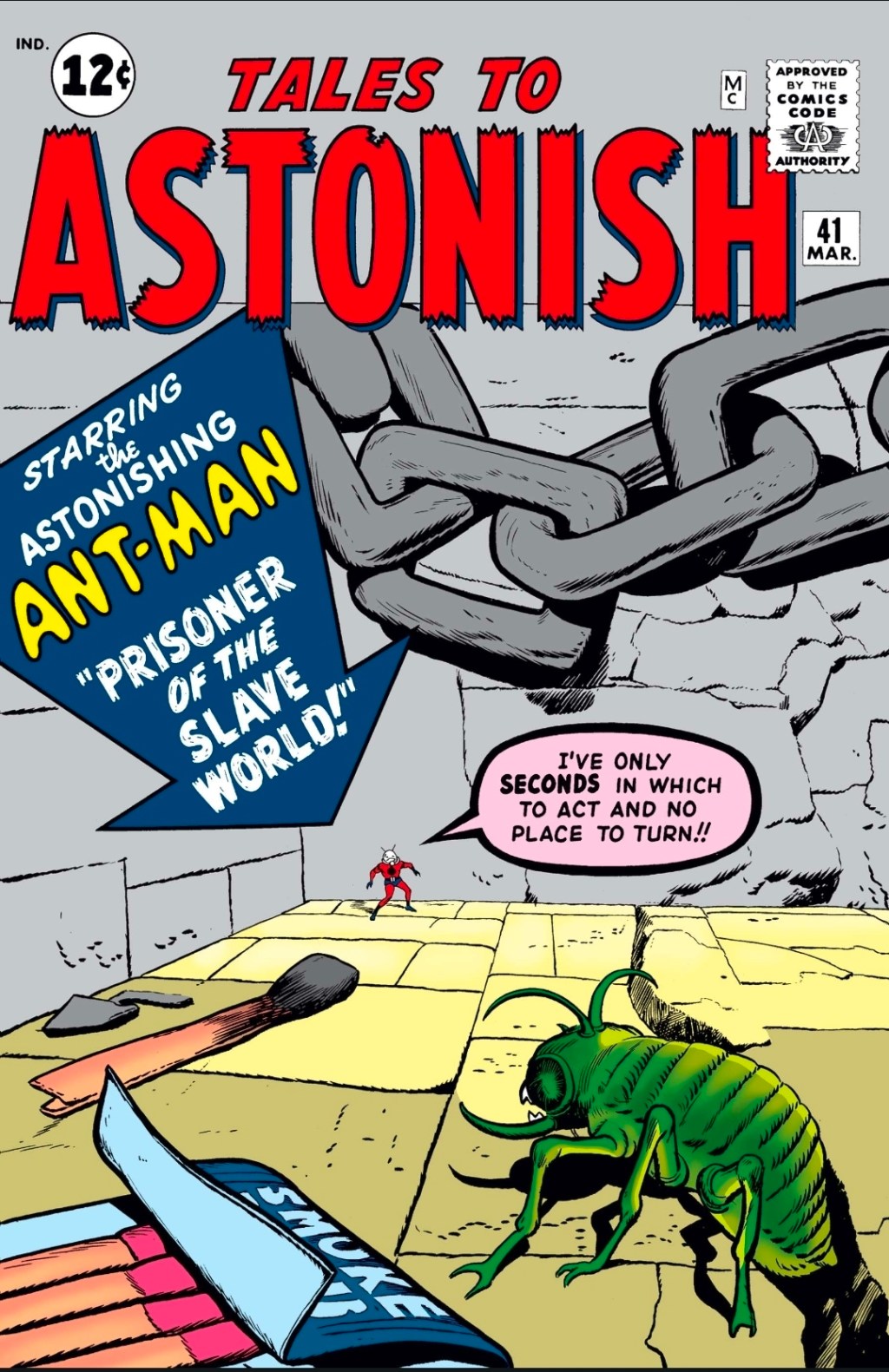
Plot by Stan Lee – Script by Larry Lieber – Art by Don Heck – Letters by Art Simek
The biggest story in Tales to Astonish #41 isn’t the interdimensional alien warlord.
It’s Don Heck.
This marks Don Heck’s first appearance in Marvel’s growing superhero line, and the visual shift is immediately noticeable.
Heck had spent years drawing romance, western, suspense, and monster comics for Marvel, and his strengths stand out right away. Where Kirby’s characters often feel rough-hewn and explosive, Heck’s figures are cleaner, more polished, and traditionally heroic.
Hank Pym suddenly looks different.
More confident. More athletic. More handsome.
Less like a reclusive scientist who became a superhero and more like a superhero who happens to be a scientist.
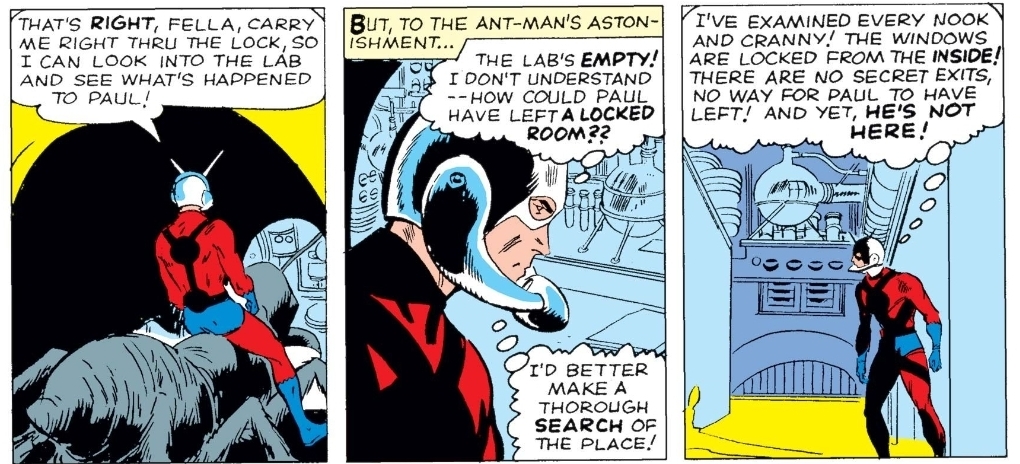
The comic itself reflects that shift.
Pym now carries his costume with him. His unstable molecule clothing allows him to shrink without the awkward costume changes of earlier issues. He moves through the story with confidence and purpose.
For perhaps the first time, Ant-Man feels fully committed to being a superhero.
Which is good.
Because the plot is completely ridiculous.
Pym discovers that a fellow scientist has disappeared. Then he learns other scientists have gone missing as well and immediately suspects foul play.
Reasonable enough.
Then we discover that the mighty warlord Kulla, an interdimensional conqueror, has been kidnapping scientists from Earth so they can build him a death ray.
Okay.
Sure.
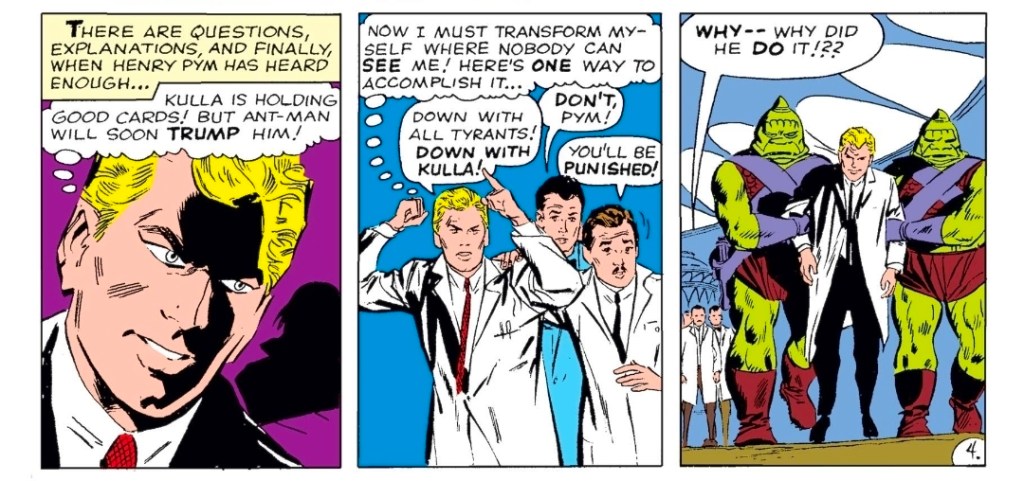
At this point I’d almost rather have it be communist spies.
Pym is captured and whisked away to another dimension where he eventually manages to get himself thrown into solitary confinement, escapes, befriends a race of alien insects, and starts a revolution.
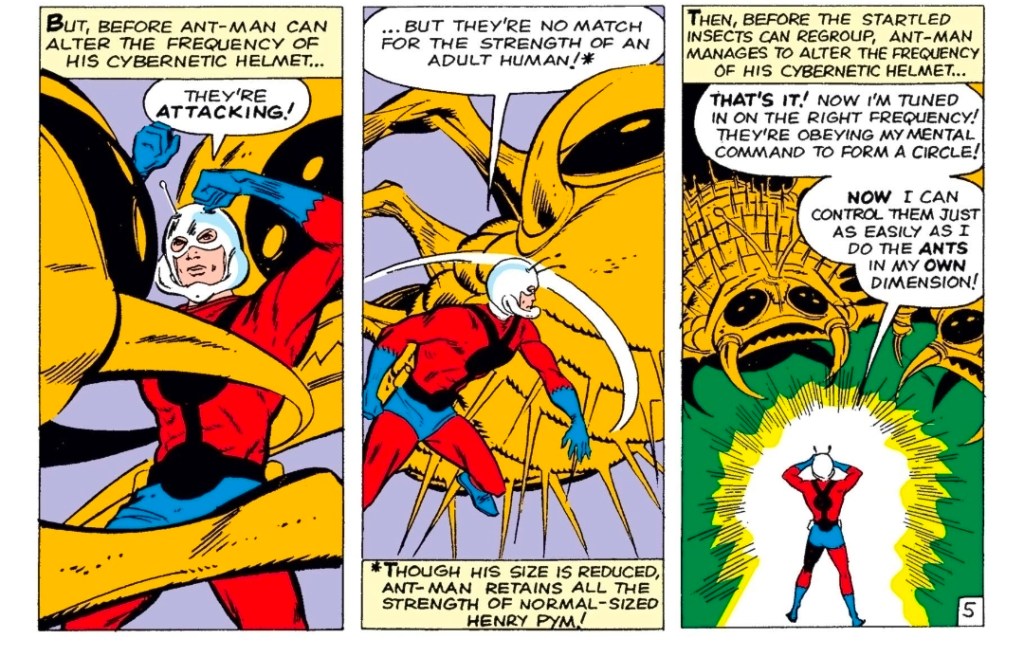
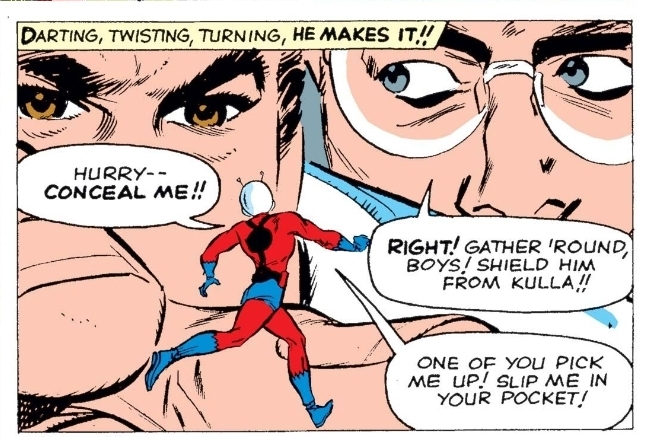
The story is completely bonkers, but it does give Heck several opportunities to showcase one of the visual strengths of the Ant-Man concept. Scale.
Ant-Man hides beneath the ridges of a boot. Slides down a button. Walks across the palm of someone’s hand.
The perspective work remains one of the most consistently enjoyable aspects of the series regardless of who is drawing it.
The climax is equally absurd.
Kulla immobilizes Ant-Man with a paralysis weapon and prepares to crush him with a hammer.
Before he can, Ant-Man’s newly recruited alien insect allies fire the death ray and kill him.
Watching Ant-Man lead an insect revolution that ends with an alien dictator being vaporized feels like a notable escalation for the series.
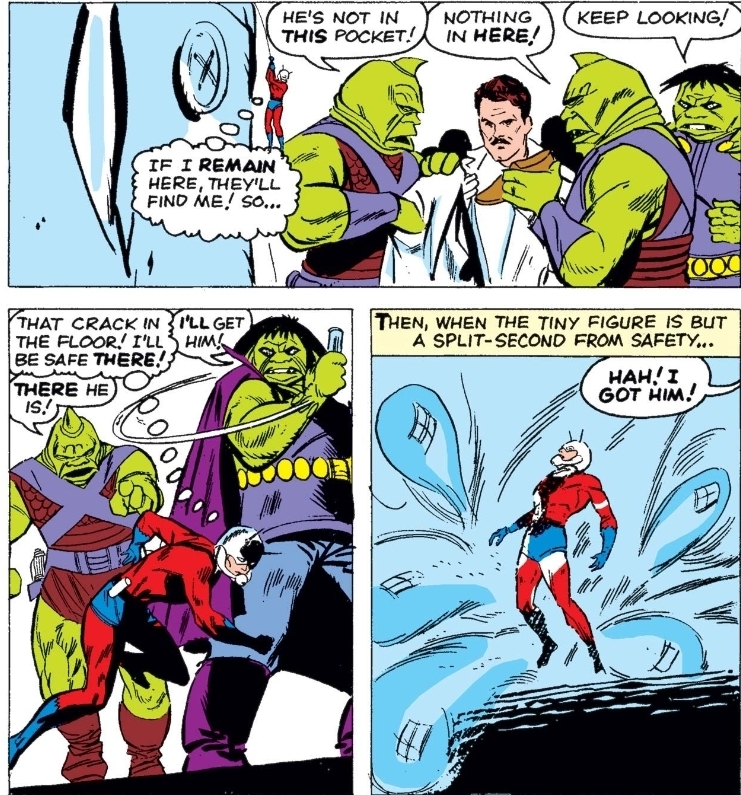
With Kulla defeated, the civilization is freed and the kidnapped scientists are returned home.
The issue itself doesn’t really fit the established identity of the Ant-Man series. It’s closer to an old Marvel science-fiction anthology story than a crime mystery.
But the interesting thing is that Ant-Man himself feels different. Even when the story drifts back toward anthology concepts, Hank Pym no longer feels like a scientist wandering into strange situations.
He feels like a superhero.
And that’s an important step forward.
Marvel in the 60s – Entry #37
 Everything (not really)
Leave a comment