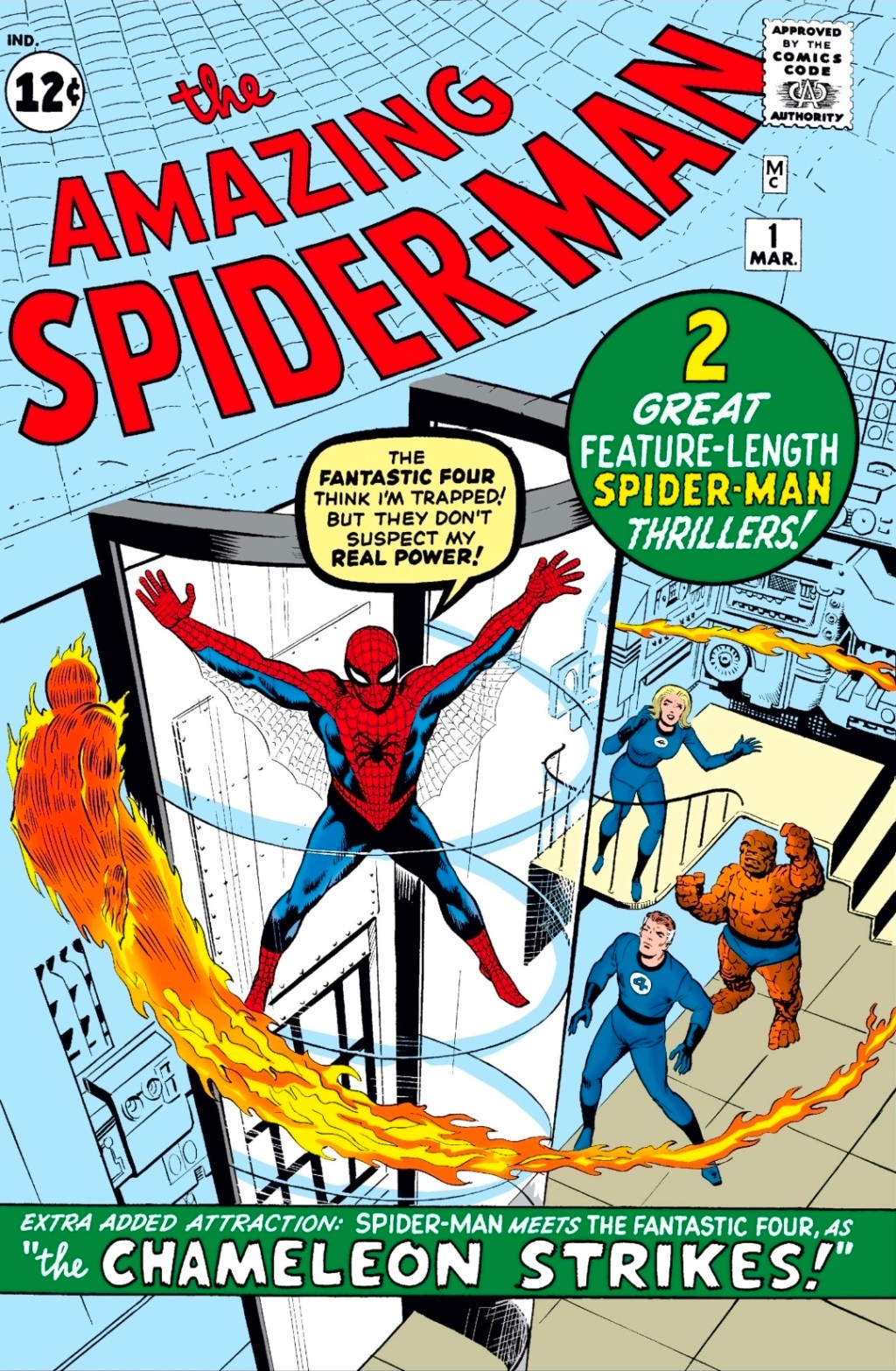
Written by Stan Lee – Art by Steve Ditko – Lettered by Johnny Dee
This is the big one.
Not because Spider-Man finally gets his own series. And not because we get the first superhero crossover in Marvel history.
The Amazing Spider-Man #1 feels significant because, unlike most of Marvel’s superhero books at this moment, it arrives already knowing exactly what it wants to be.
Marvel is still figuring out who their heroes are.
Thor remains caught between mythology and Cold War adventure. The Hulk seems to develop a new personality every other issue. Ant-Man’s identity shifts depending on what kind of story Marvel wants to tell that month.
Spider-Man arrives and by the end of the issue we already understand the entire formula: the powers, the problems, the supporting cast, and the self-doubt.
And that changes what a Marvel comic can be.
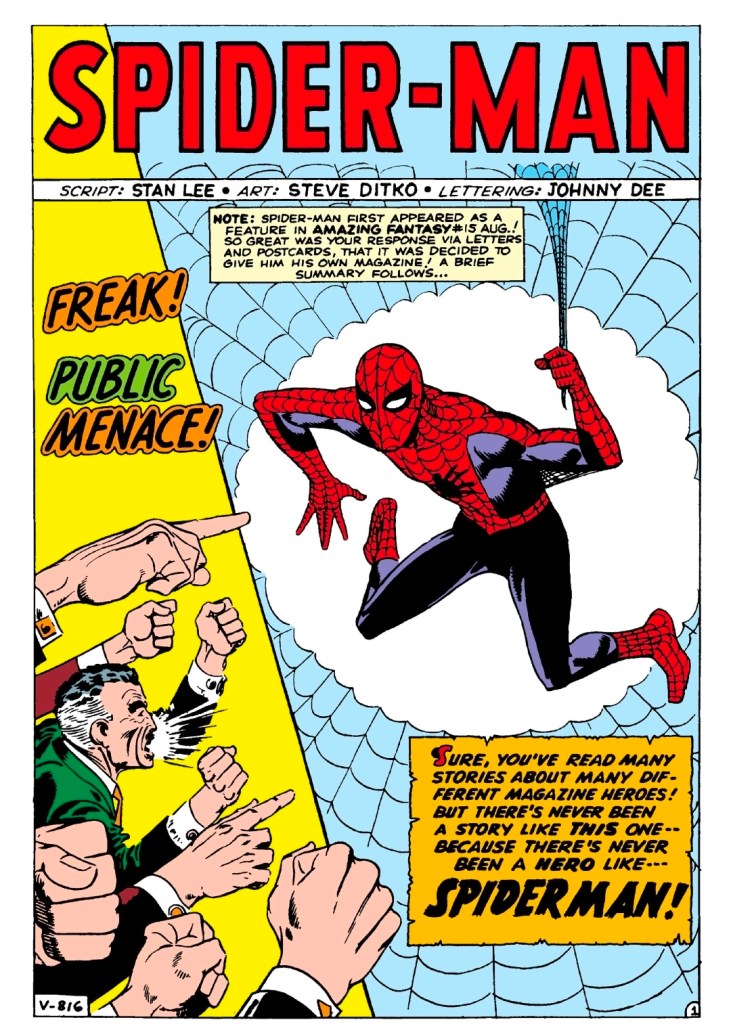
The issue opens with a brief refresher on Spider-Man’s origin before immediately introducing us to Peter Parker’s world.
And unlike Marvel’s other heroes, Peter actually feels like a teenager.
Johnny Storm is technically a teenager, but he spends most of his time with the Fantastic Four. He’s a superhero first and a teenager second.
Rick Jones, Marvel’s other prominent teen character, spends his days on military bases, battling aliens, communists, and whatever trouble the Hulk happens to find. Relatable isn’t exactly the word that comes to mind.
Peter Parker, though, goes to high school. We meet his classmates and teachers. Flash Thompson. Liz Allan. We experience his social awkwardness, his isolation, and the constant pressure of trying to fit in. For perhaps the first time in a Marvel superhero comic, homework feels just as important as fighting criminals.
We see his home life too. Aunt May. The financial strain left behind after Uncle Ben, the family’s primary breadwinner, died. Bills pile up. Family heirlooms are considered for sale. Everyday expenses become sources of anxiety.
It’s a different kind of struggle than anything we’ve seen elsewhere in Marvel’s line. The Fantastic Four deal with world ending threats. Thor battles gods and monsters. The Hulk fights armies. Peter Parker worries about whether his aunt can keep the lights on.
And, of course, we meet J. Jonah Jameson.
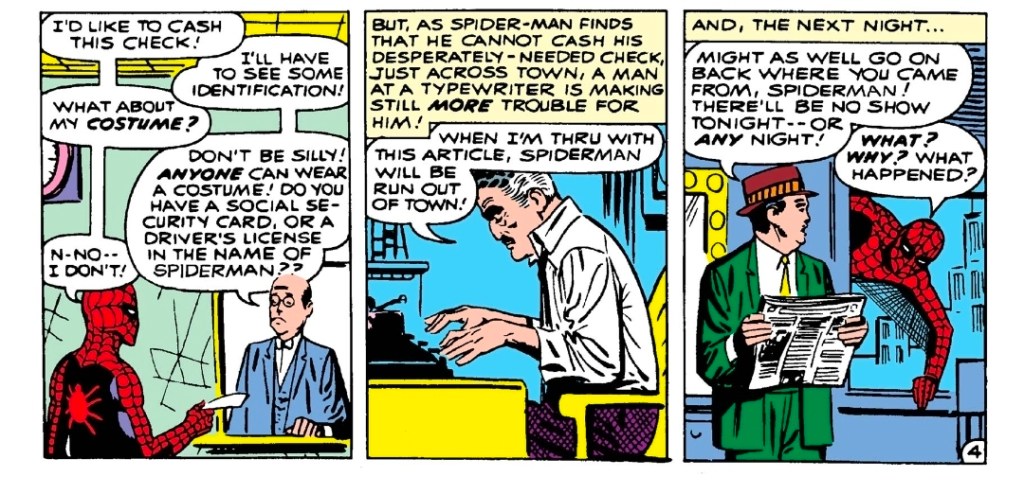
We encounter J. Jonah Jameson here much the same way we still know him today. This isn’t a rough draft that gradually evolves into a recognizable character over the next few years. Unlike Ben Grimm, whose personality is still taking shape, Jameson arrives fully formed.
He’s already writing his “Spider-Man Is a Menace!” headlines in the pages of the Daily Bugle. He’s already using sensationalism to shape public opinion. He’s already making Peter’s life harder by turning the city against him.
It’s a remarkably bold idea for a superhero comic. The title character isn’t feared because he’s a monster like the Hulk. He isn’t misunderstood because of some tragic accident. He’s being actively turned into a public villain by a newspaper publisher who controls the narrative.
Jameson becomes one of Spider-Man’s greatest enemies without ever needing a costume, a death ray, or a secret lair.
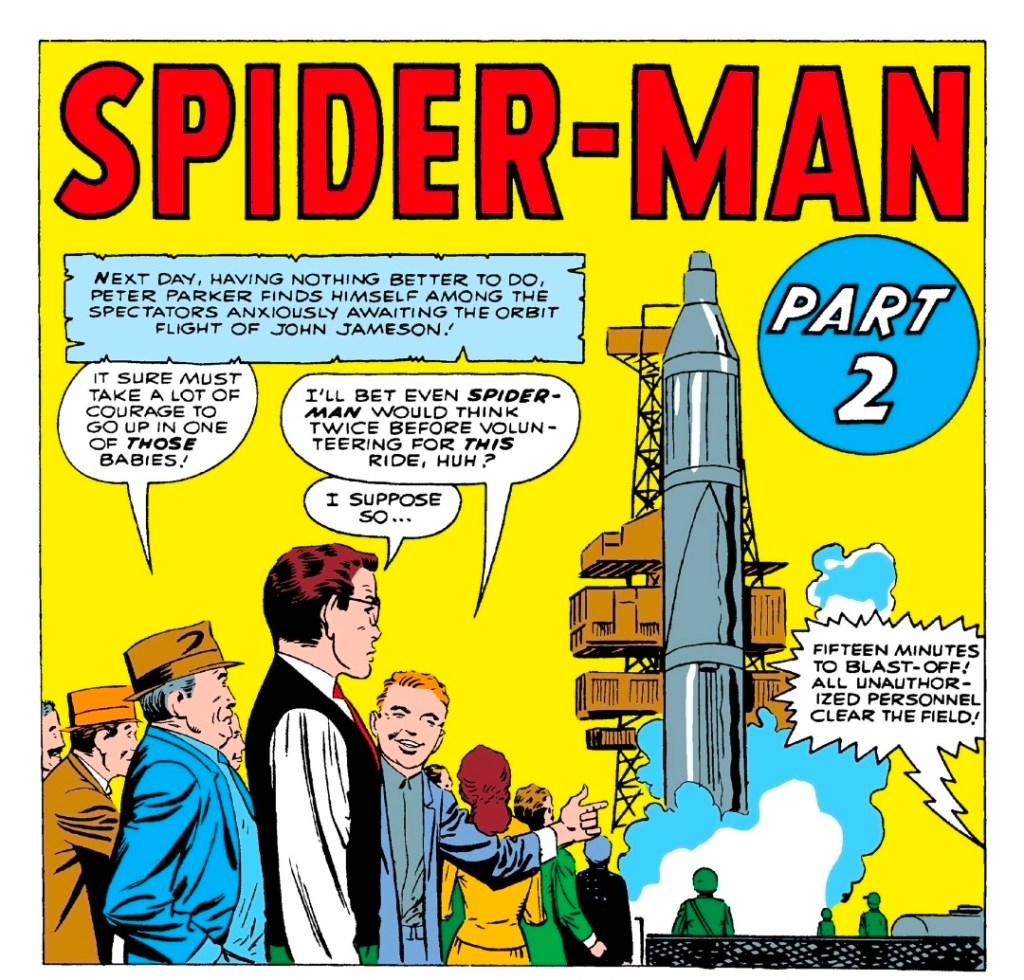
The first story in this issue revolves around J. Jonah Jameson’s son, John Jameson, and an experimental space flight gone wrong. It’s one of the few early Marvel stories that directly taps into the Space Race, which still loomed large over American culture in 1963.
The plot itself is fairly straightforward. When John becomes stranded during the mission, Spider-Man volunteers to deliver equipment that can save both the astronaut and the flight.
But what matters isn’t the rescue. It’s what happens afterward.
Spider-Man saves the day. Jameson attacks him anyway.
The hero succeeds and still loses.
In the second story we meet the Chameleon, Marvel’s newest villain and one who will remain part of Spider-Man’s rogues gallery for decades.
More importantly, we get the Fantastic Four.
Marvel’s first true superhero crossover.
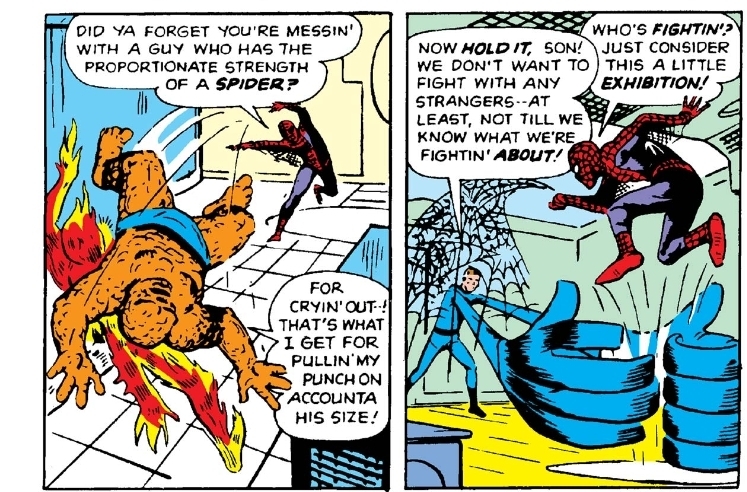
Peter needs money. So he decides to join the Fantastic Four. It’s such a wonderfully human motivation. Peter is still trying to use his powers as a source of income, still looking for a way to turn Spider-Man into a practical solution for the financial pressures he and Aunt May face.
The crossover also gives us something fascinating: Steve Ditko drawing the Fantastic Four.
And the difference between Ditko and Marvel’s other artists couldn’t be clearer.
Kirby’s heroes feel larger than life. Heck’s figures look like romantic leads. Ayers emphasizes clean, straightforward storytelling.
Ditko feels like something else entirely.
If those artists are The Beatles, Ditko is jazz. His figures are thinner. His pages more anxious. His action more intimate. Even when Spider-Man is standing beside the Fantastic Four, he doesn’t feel larger than life.
He feels trapped inside it.
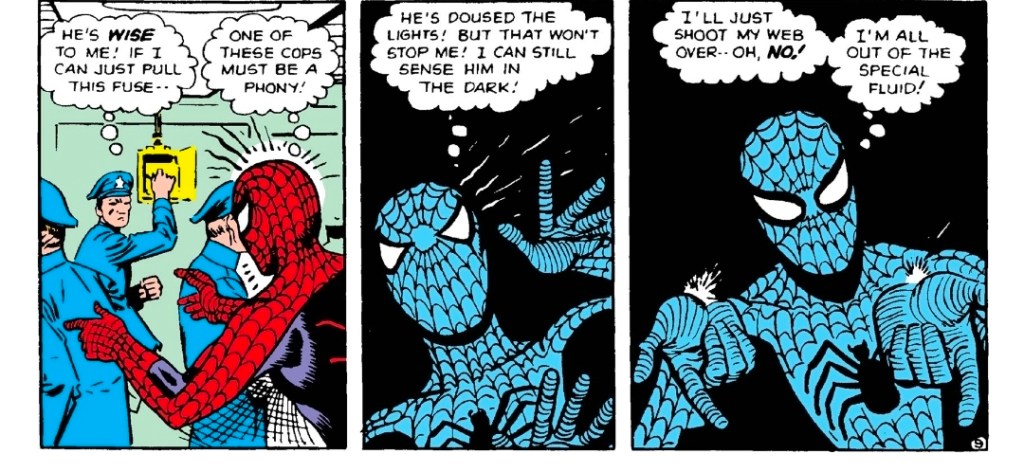
The Chameleon plot itself is essentially a Cold War spy story built around stolen defense secrets, disguises, and framing Spider-Man as the thief.
Eventually the Chameleon is exposed. The police realize Spider-Man is innocent. The crisis is resolved.
Except Peter never learns any of that.
He walks away believing he has failed.
And that’s what makes both stories in this issue so interesting.
On paper, neither is particularly memorable. One revolves around a space rescue. The other is a spy thriller. But both arrive at the same conclusion.
Spider-Man saves the day.
Peter Parker feels defeated.
Most superheroes end their adventures celebrated. Spider-Man ends his first issue discouraged.
The hero wins.
The person loses.
That tension becomes one of the defining pillars of Spider-Man. No matter how many lives Peter saves, there will always be someone ready to paint him as a menace. There will always be bills to pay. There will always be another problem waiting for Peter Parker when the mask comes off.
What’s remarkable is how quickly Lee and Ditko understand this.
By the end of Spider-Man’s first issue, one of the character’s most enduring conflicts is already fully formed.That shift in perspective—focusing as much on the person behind the mask as the hero wearing it—would have a lasting impact on Marvel.
It’s a simple idea.
But it demonstrates that Spider-Man doesn’t just join the Marvel Universe.He fundamentally changes it.
Marvel in the 60s – Entry #39
 Everything (not really)
Leave a comment