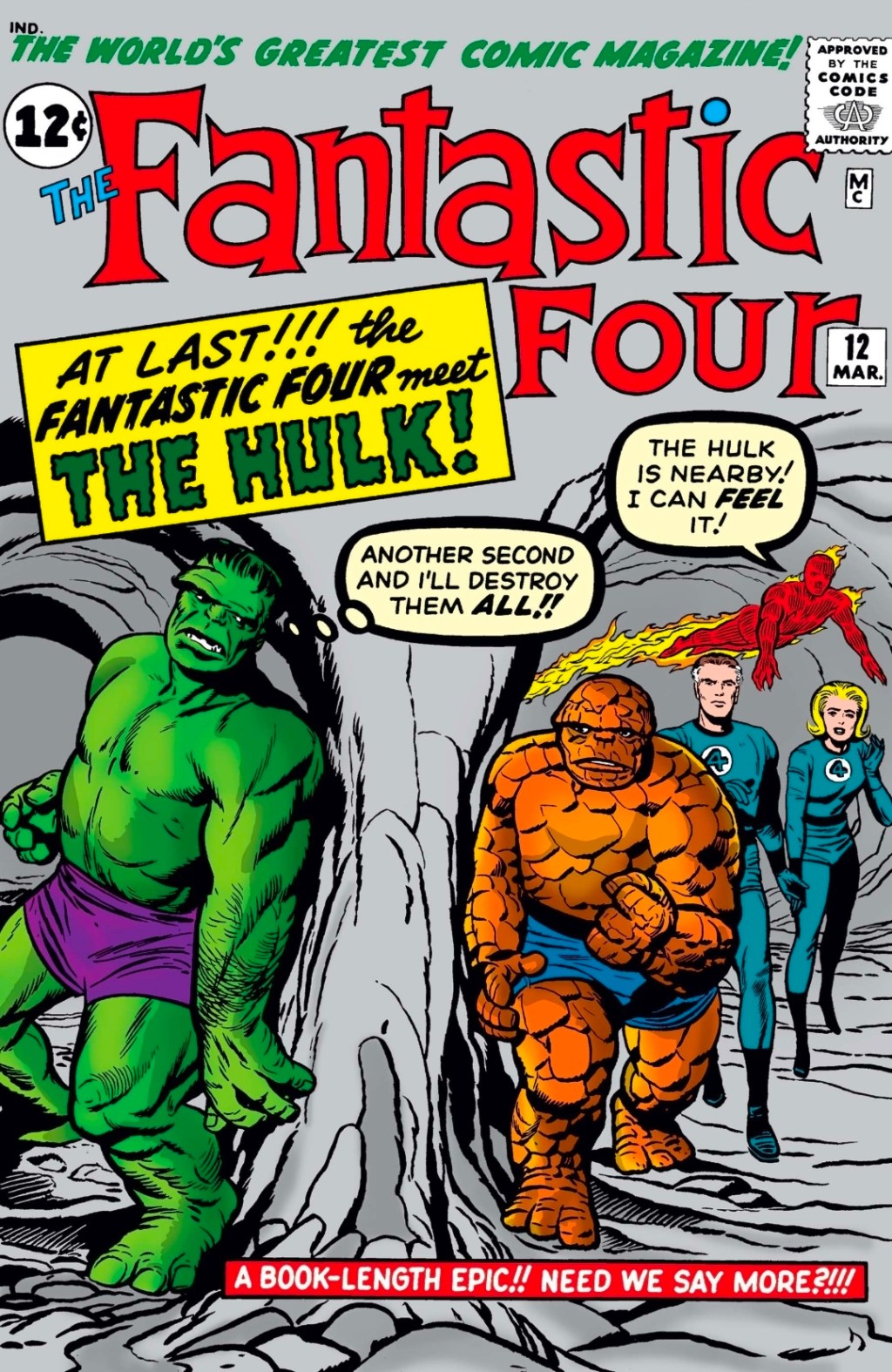
Written by Stan Lee – Art by Jack Kirby – Inks by Dick Ayers – Letters by Art Simek
If Amazing Spider-Man #1 introduced the idea of a shared Marvel Universe, Fantastic Four #12 proves Marvel knows how to use it.
The Fantastic Four’s appearance in Spider-Man was little more than a glorified cameo. Here, the crossover is much more substantial.
Marvel’s heroes no longer feel like characters who happen to star in separate comic books.
They feel like they inhabit the same world.
There are other changes happening too.
Whether it’s because Kirby is focusing on fewer superhero titles or simply because his confidence continues to grow, Fantastic Four #12 feels more polished than many of the issues that came before it.
The opening pages immediately stand out.
The Thing gets into a skirmish with the military after soldiers mistake him for the Hulk, and even in these early scenes the artwork feels sharper. Ben’s design continues to evolve. The soldiers look distinct from one another. The civilians have unique faces. The military hardware is packed with the kind of elaborate Kirby technology that increasingly defines Marvel’s visual identity.
There simply feels like there’s more on the page.
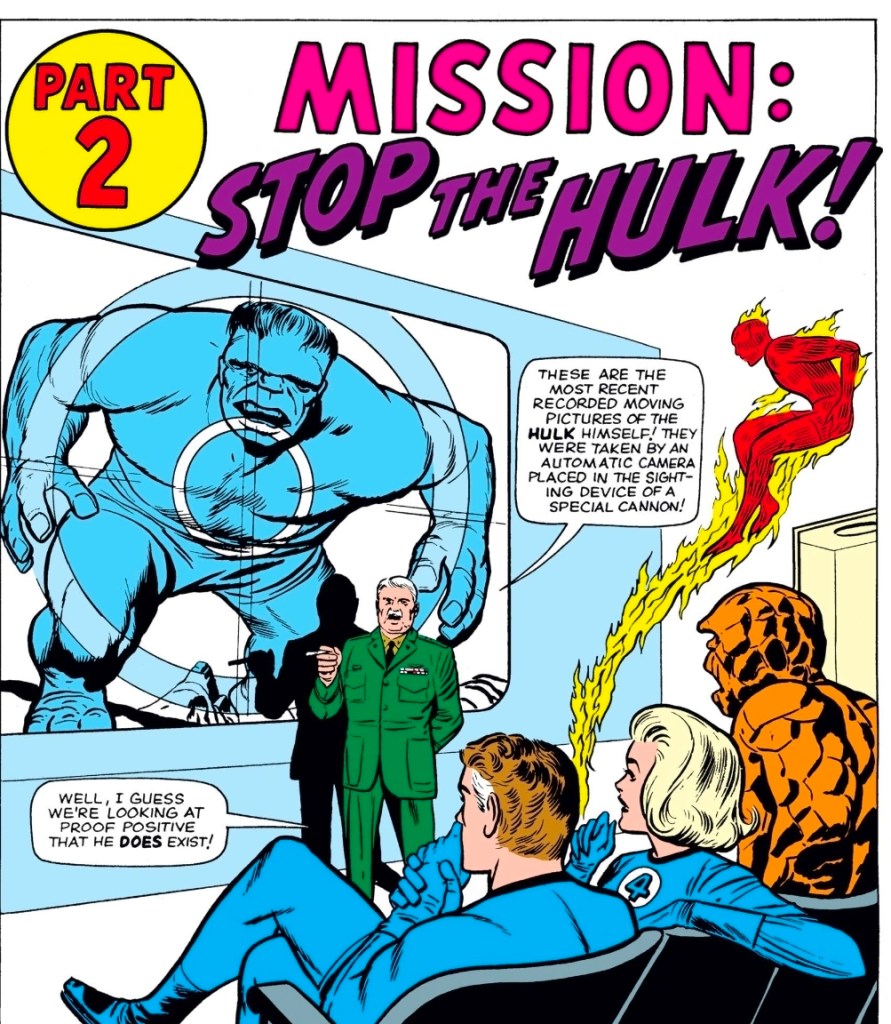
The crossover begins when General Ross arrives at the Baxter Building looking for help capturing the Hulk.
The issue uses the meeting to give readers another introduction to the team, with each member demonstrating their abilities for Ross. It’s a familiar Marvel trick by now, but one that works naturally within the story.
But in 1963, not everything in the Marvel Universe is evolving at the same pace.
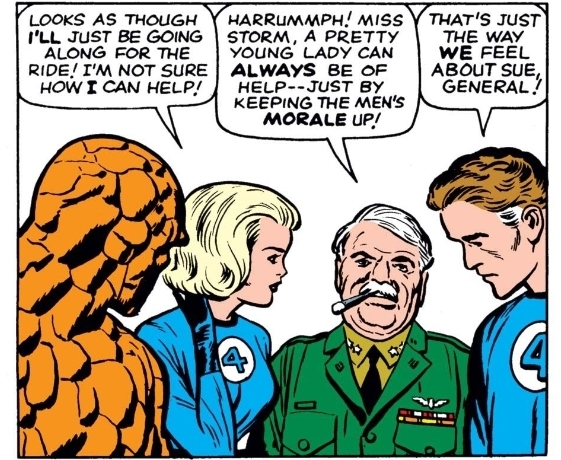
After spending last issue defending Sue Storm from reader criticism, Lee and Kirby immediately take a step backward here. Sue suggests she’ll be little help against the Hulk, while Ross insists her value lies in keeping the men’s morale high because she’s pretty. Reed then agrees.
It’s an awkward moment made even stranger by the fact that one of the men supposedly drawing inspiration from Sue’s beauty is her own brother.
Thankfully, the story moves on.
We’re reintroduced to Bruce Banner, Rick Jones, and Dr. Karl Kort, a scientist so suspiciously drawn that he practically arrives wearing a sign that says “future villain.”
Banner himself continues to evolve.
Gone is the gray-skinned monster who transformed according to the time of day. This version of Banner actively controls his transformations using gamma technology, and the tension between Banner and the Hulk continues to feel like one of Marvel’s most interesting ongoing ideas.
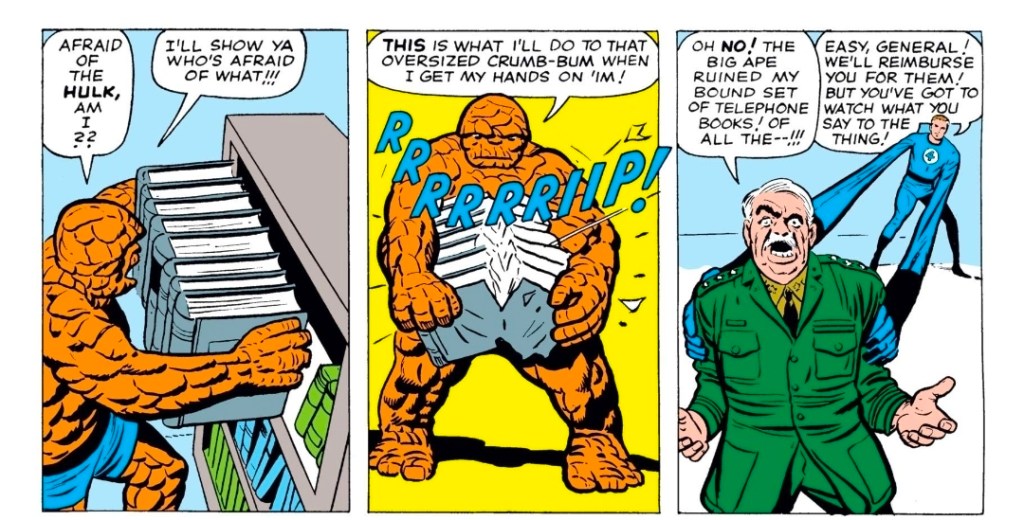
Meanwhile, Ben Grimm spends much of the issue proving that General Ross may have legitimate concerns about uncontrolled superhumans.
For a story about hunting the Hulk, the Thing causes an astonishing amount of property damage.
He smashes walls. Destroys equipment. Starts arguments. And generally behaves like a one-man disaster area.
The issue also gives us another first.
Johnny Storm and Rick Jones meet. Two of Marvel’s most prominent teenagers finally cross paths, and they immediately seem to dislike each other. Johnny shows off. Rick remains unimpressed.
It’s a small moment, but another reminder that Marvel is beginning to think about its characters as residents of the same world rather than stars of isolated books.
The central mystery revolves around a saboteur known as The Wrecker, who has been destroying military projects and causing Ross to believe the Hulk is responsible.
At one point the entire plot seems to revolve around a misplaced wallet that keeps changing hands until Rick discovers the crucial piece of evidence: a membership card for a communist organization, revealing Dr. Kort as the real culprit.
If you’re planning a life of espionage and sabotage, printing membership cards may not be the best strategy.
It’s the kind of Silver Age plotting that’s simultaneously ridiculous and charming.
Mostly, though, the mystery exists to get the Hulk and the Fantastic Four into a fight.
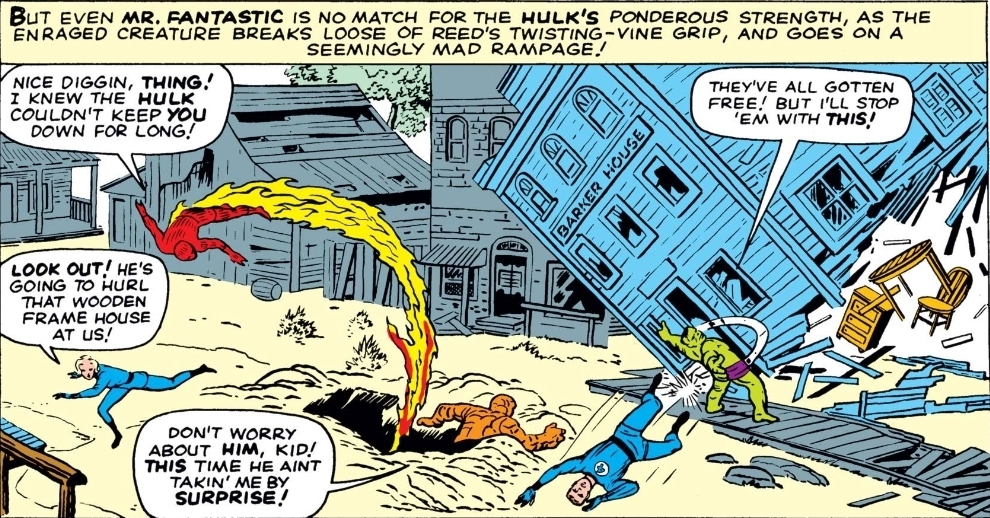
Kirby absolutely shines once the action begins.
The Hulk has never looked better. The Fantastic Four’s powers are used creatively. The story stops being a mystery and becomes a showcase.
A showcase for Kirby.
A showcase for the Hulk.
A showcase for Marvel’s growing universe.
Eventually the Wrecker is exposed, Rick is rescued, and Sue gets the satisfaction of helping bring down the villain despite everyone insisting she was only there for decoration.
Banner parts ways with the Fantastic Four on surprisingly friendly terms, and the adventure comes to a close.
The Wrecker himself isn’t particularly memorable. The mystery is mostly an excuse. But that’s exactly why this issue matters.
For the first time, Marvel’s heroes don’t feel like they simply occupy neighboring comic books.
They feel like they inhabit the same world.
General Ross can walk into the Baxter Building. Johnny Storm can meet Rick Jones. Bruce Banner can work alongside the Fantastic Four.
The connections themselves are becoming part of the appeal.
With this issue, Marvel stops feeling like a collection of superhero books and starts feeling like a universe.
Marvel in the 60s – Entry #40
 Everything (not really)
Leave a comment