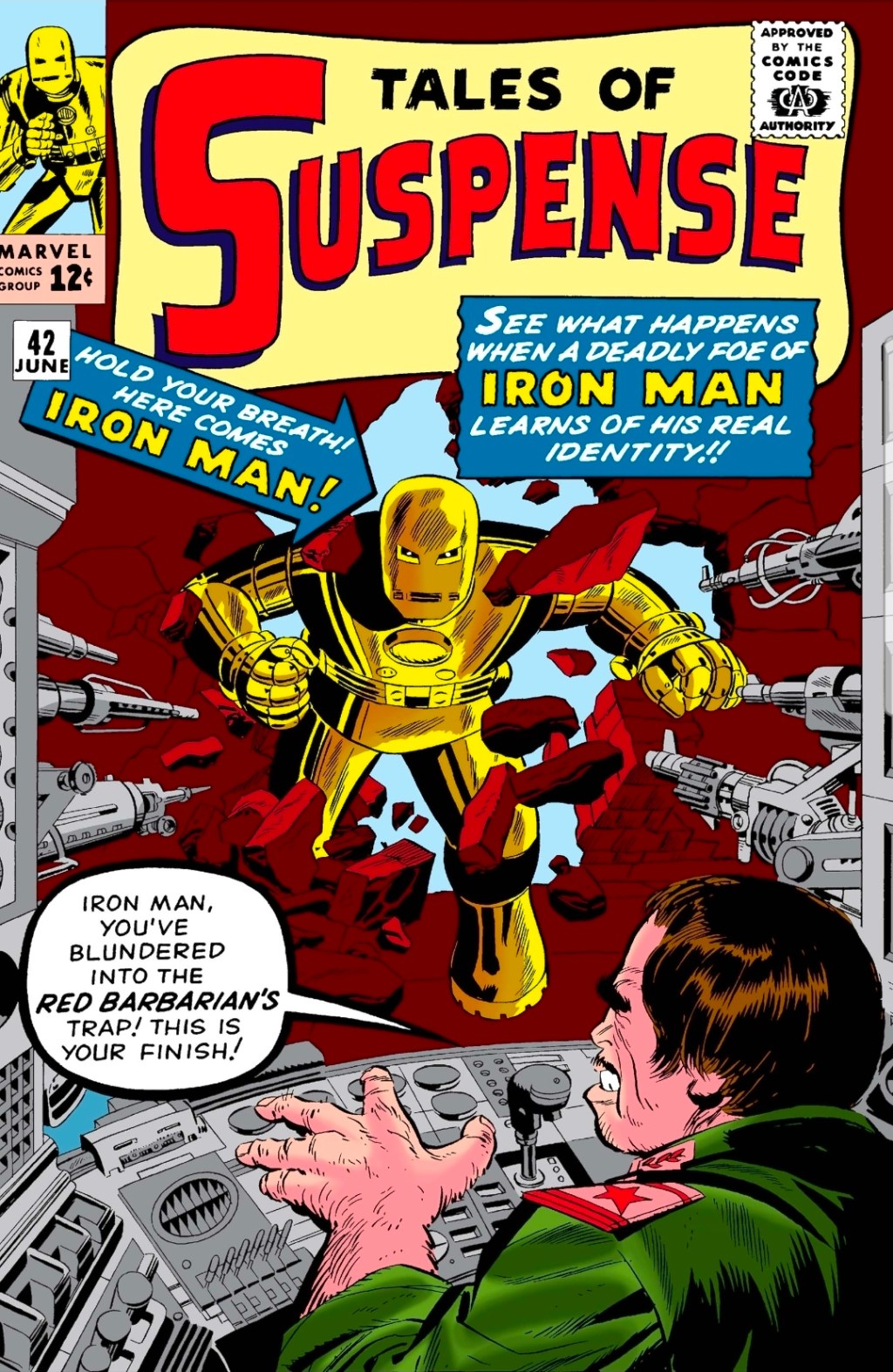
Plot by Stan Lee – Script by Robert Bernstein – Art by Don Heck – Letters by E. Thomas
After Fantastic Four demonstrated Marvel could build an entertaining comic around its characters, Tales of Suspense #42 reminds us that not every title was evolving at the same pace.
The biggest development isn’t the story itself but the creative team. Don Heck takes over as the regular artist, immediately giving Tony Stark a more familiar identity. Gone is some of Jack Kirby’s rougher interpretation, replaced by the handsome industrialist readers would come to associate with the character for decades. Heck seems perfectly suited for Stark’s double life. He looks just as comfortable mingling with celebrities as he does building advanced weapons in his laboratory.
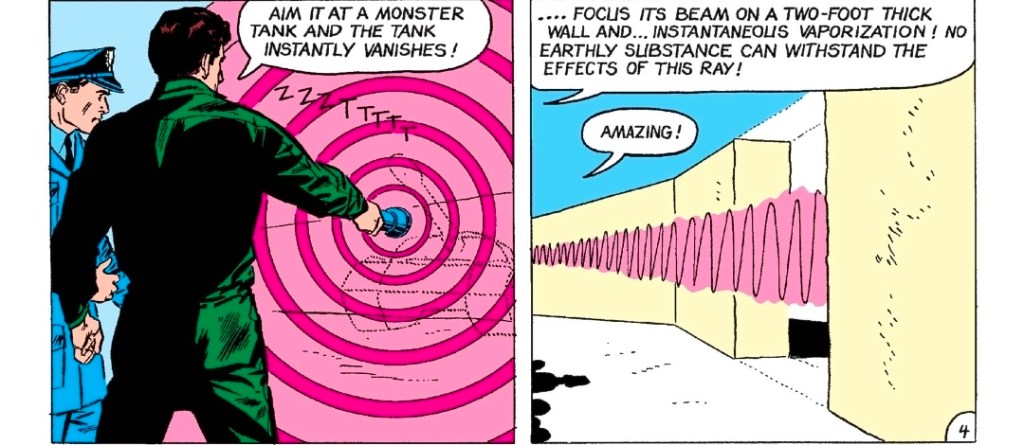
Tony unveils a new Disintegration Ray while also revealing that he’s working alongside the FBI to break up Communist spy rings across America. It’s another reminder that early Marvel was still drawing heavily from the Cold War anxieties of the 1950s.
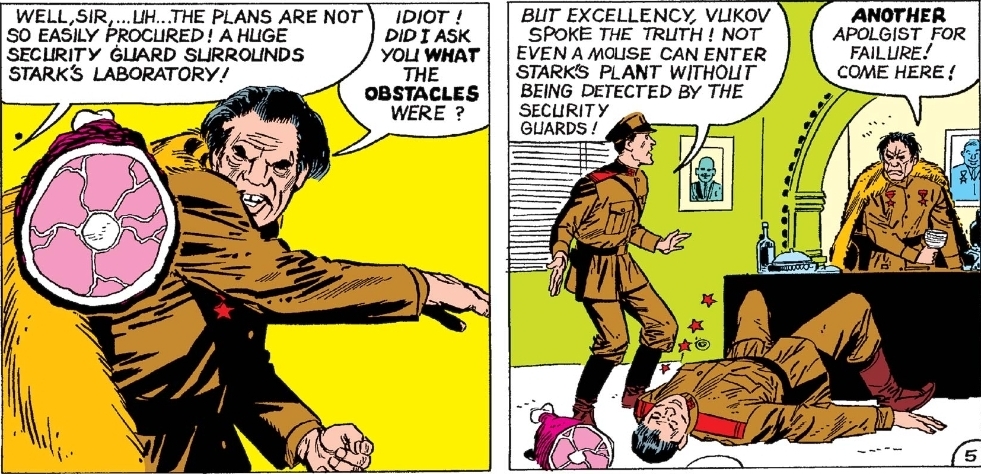
The Red Barbarian is little more than another interchangeable Communist warlord, continuing a trend that was already beginning to wear thin. His most memorable moment isn’t his master plan or his personality—it’s knocking out one of his own men with a ham.
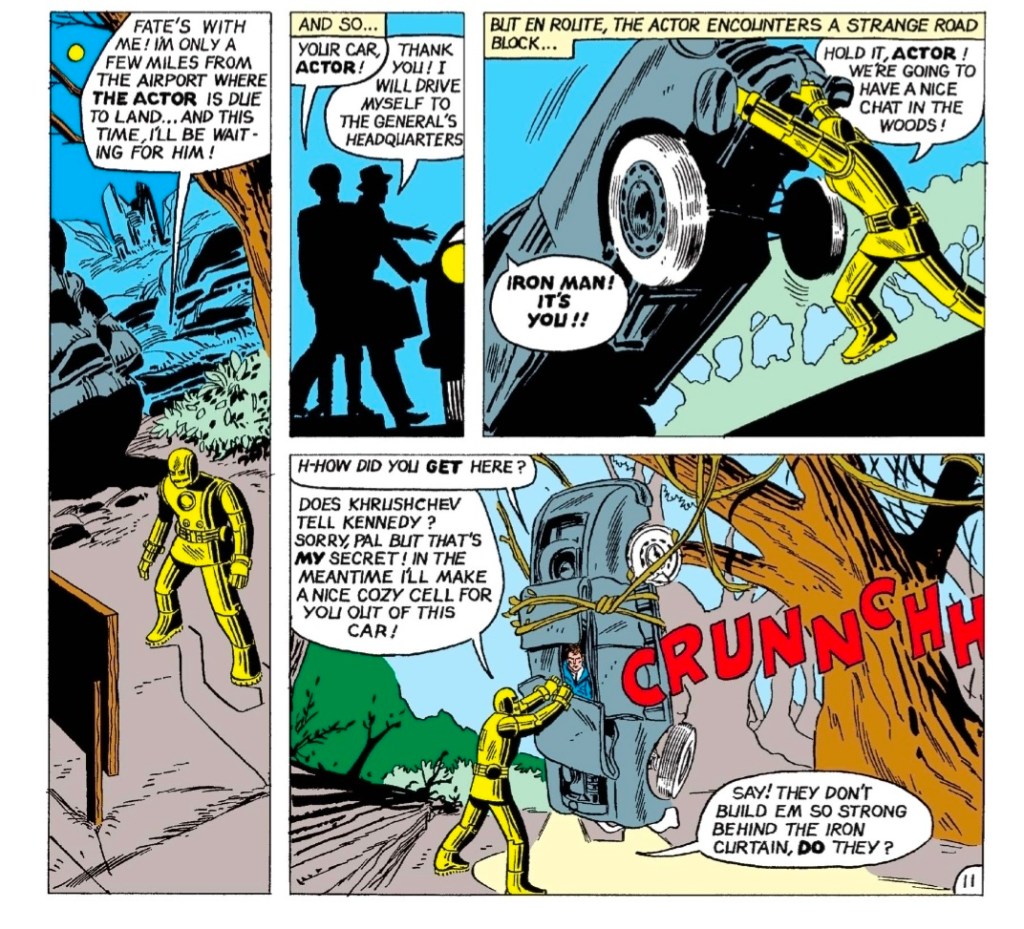
Desperate to steal Stark’s latest invention, the Red Barbarian recruits a master of disguise known as the Actor. Essentially Iron Man’s version of Spider-Man’s Chameleon, the Actor infiltrates Stark’s laboratory, discovers pieces of the Iron Man armor, and correctly concludes that Tony Stark is Iron Man.
It’s an intriguing twist. Unfortunately, the comic doesn’t seem to know what to do with it.
What follows is a tangled spy story full of disguises, convenient escapes, and action scenes that exist more because the comic needs a fight than because the plot naturally leads there.
The ending is especially strange. Iron Man tricks the Red Barbarian into believing the Actor betrayed him, then releases the real Actor, who unknowingly walks straight back into the Communist camp and is executed for his apparent failure.
It’s a surprisingly dark ending. Even stranger, Iron Man never learns that the Actor uncovered his secret identity, making the entire subplot feel oddly disconnected from the resolution.
Like Strange Tales #109, this issue feels caught between two eras. It has superheroes, secret identities, and recurring villains, but it’s still driven by the same disposable spy plots and interchangeable Communist masterminds that fueled Marvel’s anthology comics only a few years earlier.
The saving grace is Don Heck, whose polished artwork gives Tony Stark a personality and visual identity that would define Iron Man for years to come.
Don Heck’s artwork points Iron Man toward the future. The writing is still stuck in the past.
Marvel in the 60s – Entry #59


 Everything (not really)
Leave a comment