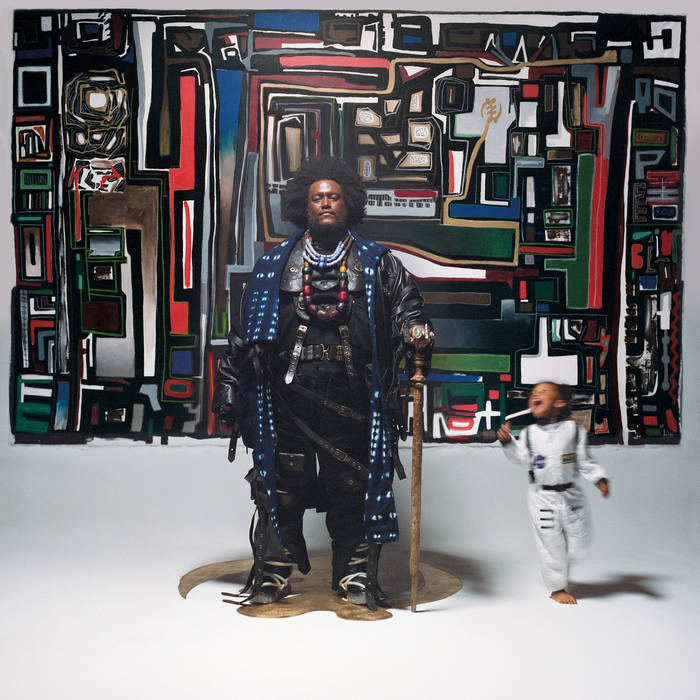
Album by Kamasi Washington
I’m not enough of a jazz expert to break down every influence, improvisational choice, or musical lineage at work on this album. There are people far more qualified to explain exactly what Kamasi Washington is doing here.
What I can tell you is how it made me feel.
The title Fearless Movement suggests motion, and that’s exactly what this album is about. Not just physical movement, but movement through culture, history, family, spirituality, technology, politics, and identity. The music constantly travels between places and ideas, yet never feels fragmented.
What struck me most is that the album doesn’t seem interested in melting its influences down into a single sound. Everything stands shoulder to shoulder. Jazz, funk, soul, hip-hop, R&B, electronic music, traditional sounds, and the contributions of numerous collaborators all maintain their identity while existing together. The album feels less like fusion and more like conversation.
The opening track, “Lesanu,” immediately establishes that idea. It begins in a place that feels ancient and spiritual before opening into a familiar jazz language. Just when the groove settles in, the music surges again. Five minutes into the track, it felt like suddenly looking directly into the sun. Traditional sounds give way to modern jazz, which then erupts into an emotional crescendo led by Washington’s saxophone. It pulled me in immediately and was a wonderful way to start the album.
“Asha the First,” shifts the focus inward. Where “Lesanu” feels expansive and outward-looking, this track feels rooted in family and personal lineage. The funk and soul influences are impossible to miss, particularly as the bass and keys lock into a groove that, to my ears, occasionally recalls Parliament. Yet the song never stays in one place for long. Choir-like vocals, jazz improvisation, and hip-hop textures all drift through the track without disrupting its momentum.
One of the album’s most fascinating moments for me is Washington’s interpretation of “Computer Love”. Musically, it’s gorgeous. Warm, soulful, romantic, and seductive. The vocals glide over the arrangement while the drums and harmonies create an atmosphere that feels deeply human.
I went back and decided to compare this to the original song, which wore its artificiality openly. The talk box sounded mechanical. The technology announced itself. For a track released in the mid-80s, it was eerie, funky, and prescient.
Washington’s version smooths those artificial edges away. The machine is still present, but it’s hidden inside warmth and beauty. That contrast gave the song an unexpected resonance for me. It feels like a warning disguised as a love song, showing how easily artificial connection can mimic genuine intimacy if we’re willing to be seduced by it. In an era where AI increasingly blurs the line between authentic and artificial connection, both versions of the song feel surprisingly prescient in different ways.
After the brief atmospheric interlude of “The Visionary,” the album pivots into “Get Lit,” featuring George Clinton, D Smoke, and other collaborators. It’s one of the most joyous moments on the record, blending funk, hip-hop, jazz, and live instrumentation into something that feels alive and constantly evolving. What I love most is how the song fades away. The groove drifts off into the distance as if the party existed before you arrived and will continue after you leave. You were merely allowed to visit for a while.
“Dream State,” featuring André 3000 on flute, picks up that thread and carries it into more ambient territory. This is one of the album’s most meditative pieces. Rather than moving through clear structures, it invites you to sit inside the music and explore its textures. The flute becomes an essential part of that atmosphere, drifting alongside electronic flourishes, gentle horns, and floating melodies to create a feeling of weightlessness.
“Together” returns to a soulful groove but wraps it in cosmic imagery and lush production. There’s a tenderness to the performance that keeps it from becoming showy. The vocals work together rather than competing for attention. The result feels romantic, intimate, climactic, and deeply human.
Then comes “The Garden Path,” one of the album’s most urgent tracks. The repeated phrases about bright minds, dark lies, and misery create a sense of anxiety that feels increasingly relevant with each passing year. I couldn’t help hearing a politically charged frustration underneath it all, along with a sense of betrayal and disillusionment. The music itself sounds restless, almost frantic. It feels like racing through a city while trying to outrun something that keeps gaining ground.
The centerpiece of the album may be “Road to Self (KO).” If the earlier songs often place different influences side by side as equals, this one feels fully immersed in all of them at once.
The best metaphor I can come up with is water.
Other tracks feel like traveling through time. This one feels like time collapsing into a single pool. Jazz, electronic music, ambient textures, funk rhythms, and Washington’s saxophone all exist simultaneously. You’re not dissecting the music into separate influences anymore. You’re swimming in it.
That idea continues into “Lines in the Sand.” The title itself suggests boundaries, divisions, and self-imposed separations. The music reflects that tension. Smooth R&B grooves sit beside bursts of jazz improvisation that repeatedly interrupt the flow. At first they seem opposed to one another. By the end, the distinction begins to disappear.
Which makes the closing track, “Prologue,” feel perfectly placed in respect to the entire album.
The song explodes with energy. Funk, jazz, soul, cinematic arrangements, and modern production all move together at full speed. What makes it so effective is that it doesn’t feel like catharsis. It feels like celebration.
If “Lines in the Sand” is about the boundaries we create between people, cultures, traditions, and even parts of ourselves, then “Prologue” is about their joyful destruction.
By the time the song reaches its frenetic climax, the music isn’t screaming in agony. It’s shouting in exhilaration.
And titling the final track “Prologue” transforms the entire album.
This isn’t an ending.
It’s a beginning.
Everything that came before it—every tradition, influence, collaborator, and idea—has been moving toward this realization. The lines were never as permanent as they seemed. The walls were never as solid as we imagined.
All that’s left is to move forward.
Verdict: Masterpiece
Explore more from Kamasi Washington
 Everything (not really)
Leave a comment